
Music History Curriculum Made Easy: Less Planning, More Teaching
Teaching Music Across Multiple Year Groups? Make Your Curriculum Planning Easier.
Teaching a music history curriculum across several year groups can be overwhelming, especially when you’re expected to plan engaging lessons, cater for different abilities and keep students interested in learning.
And if you’ve inherited a music program with little or no music history curriculum already prepared, knowing where to start can be one of the biggest challenges.
You need a complete music history curriculum with music lessons that are ready to teach, activities that work with real students and enough flexibility to build a program that suits your classes.
That’s exactly why I created the Music History Curriculum Bundle.
This flexible music history curriculum brings together 17 classroom-tested units covering music history, instruments, genres and musical traditions.
Whether you’re introducing students to rock music, exploring jazz, teaching about musical instruments or developing music appreciation skills, you’ll have a collection of ready-to-use resources to help you plan meaningful lessons across multiple year groups.
Spend less time planning from scratch and more time teaching music.
Want to know more about planning Music History? Read this blog post – Music Appreciation Curriculum: How to Plan Lessons That Actually Work
CHECK OUT THE MUSIC HISTORY CURRICULUM BUNDLE ON TPT
A Flexible Music History Curriculum That’s Ready When You Are
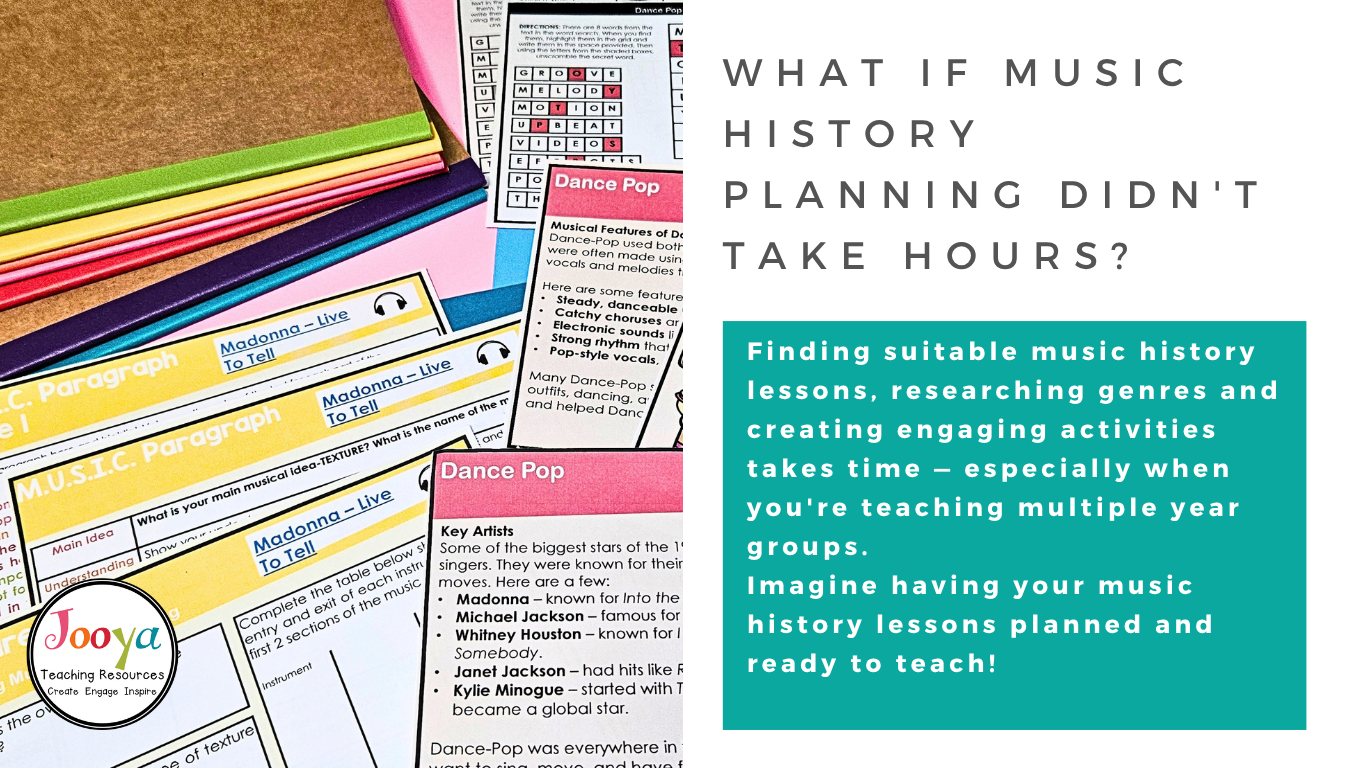
Imagine having a collection of music history lessons you can use across different year groups, without having to create every reading passage, worksheet or listening activity yourself.
The Music History Curriculum Bundle combines music history and music appreciation lessons into 17 units designed for middle school music classrooms.
Students explore musical styles, instruments, musicians and historical influences while developing their listening skills, music vocabulary and understanding of the elements of music.
And because the lessons follow a consistent structure, you can easily select the activities that suit your students, teaching time and curriculum goals.
Everything You Need to Make Music Planning Easier
Ready-to-Use Music History Lessons
Spend less time preparing resources with structured lessons, reading passages, music history worksheets and listening activities that help students explore different musical periods, styles and traditions.
Flexible Multi-Year Music History Curriculum
Organise the units by year group, historical period, instruments or musical genres to create a teaching program that works for your school.
Built-In Differentiation
Choose from different activities to support students with varying literacy levels, musical experience and learning needs. Use introductory activities with younger students or extend the learning with more detailed listening and analysis.
Meaningful Music Appreciation Lessons
Help students connect what they’re learning about music history with real musical examples. Structured listening activities encourage students to recognize instruments, identify musical features and develop their understanding of the elements of music.
Printable and Digital Teaching Resources
Whether you’re building a music program from scratch, refreshing your existing lessons or looking for engaging music appreciation activities for a particular year group, this bundle gives you the flexibility to teach music your way.
Ready to get started? YES! I WANT THE COMPLETE MUSIC HISTORY BUNDLE →
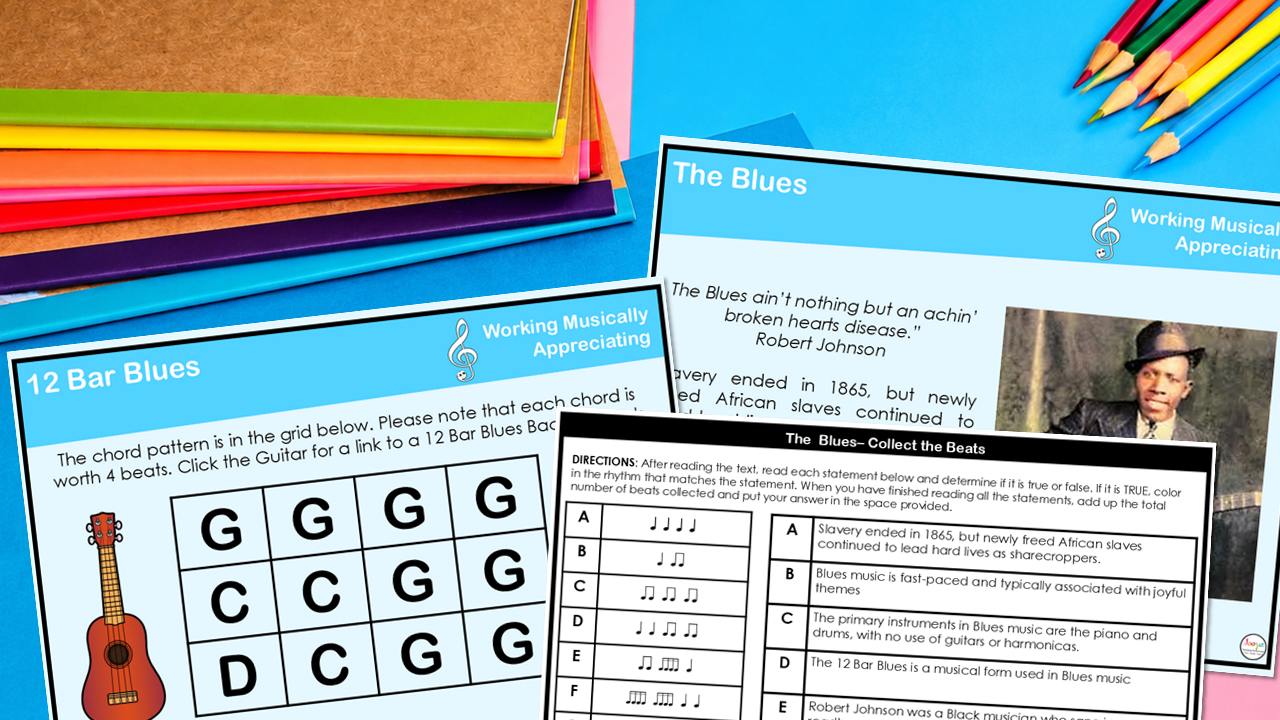
Not Ready for the Complete Curriculum? Try a Free Blues Music Lesson!
Want to see how the music history lessons work before committing to the complete bundle?
Start with a free Blues Music Lesson and explore the type of activities you can use to introduce students to an important musical genre.
It’s a practical way to bring music history into your classroom while helping students explore the musical characteristics and influences of blues music.
SEND ME THE FREE BLUES LESSON →
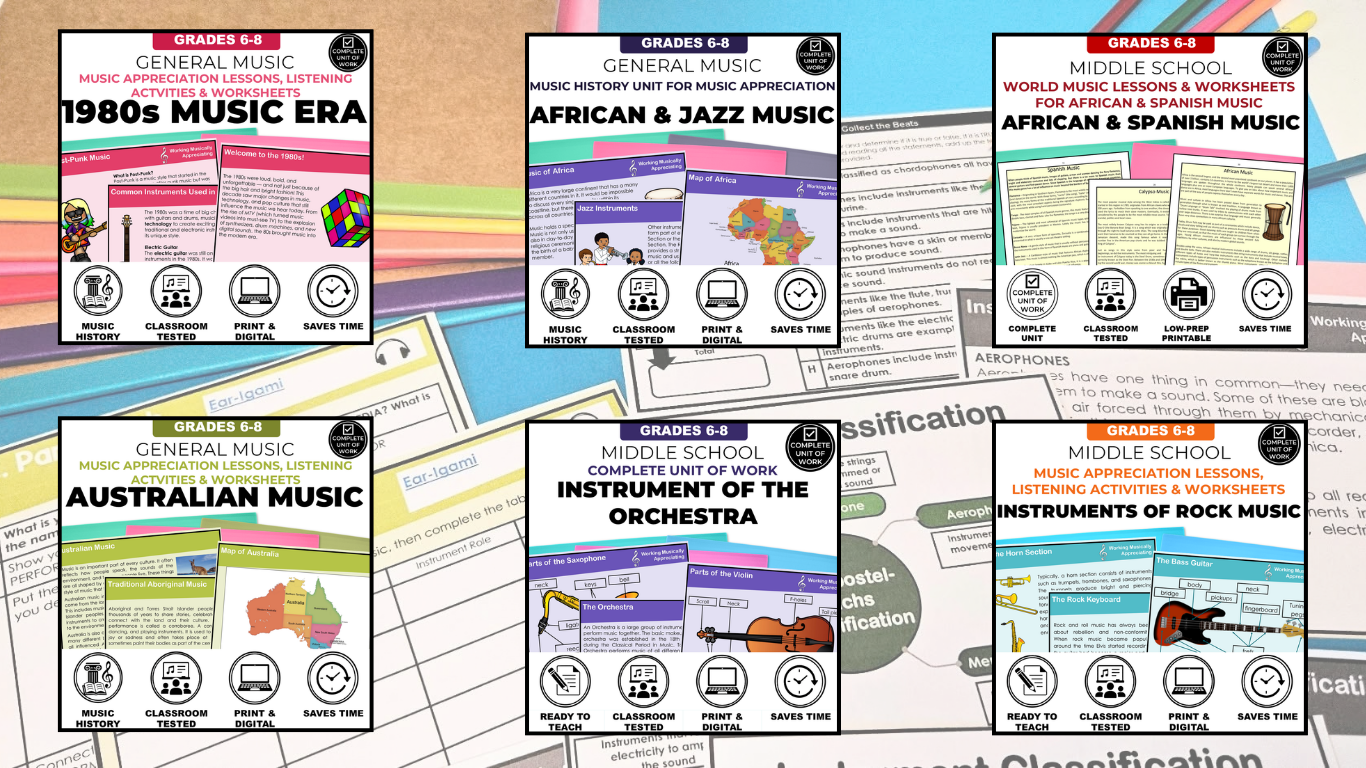
Explore 17 Units in This Music History Curriculum Bundle
From the instruments of the orchestra to rock music, jazz, world music and popular music, this music history curriculum gives you a wide variety of topics to explore with your students.
With 17 music history and classroom instrument units, you’ll have the flexibility to build a program across different year groups or select individual units to complement your existing curriculum.
Music History, Genres & Musical Influences
Explore the development of musical styles, the musicians who shaped them and the historical and cultural influences that contributed to their development.
- Rhythm and Rap
- World Music
- Film Music
- Beginnings of Rock Music
- Rock Music History
- Rock and Pop Musicians
- Jazz Music
- 1980s Music Era
- Australian Music
- Spanish & African Influence
These music history lessons provide opportunities for students to explore musical genres through reading, listening, discussion and written activities.
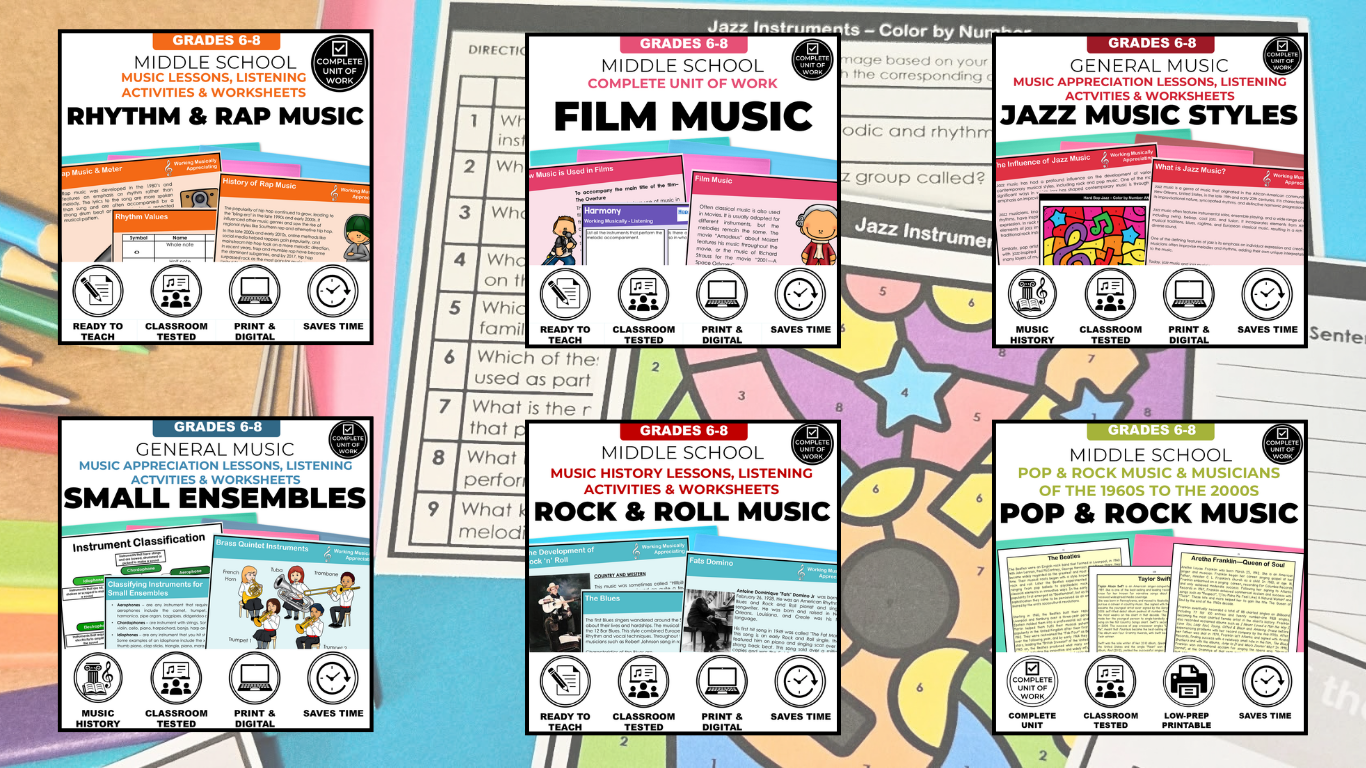
Instruments & Ensembles
Help students recognize the instruments, sounds and performing groups associated with different musical styles.
- Instruments of the Orchestra
- Instruments of Rock and Pop
- Small Ensembles
These units support music appreciation by connecting instrument knowledge with the music students hear and study.
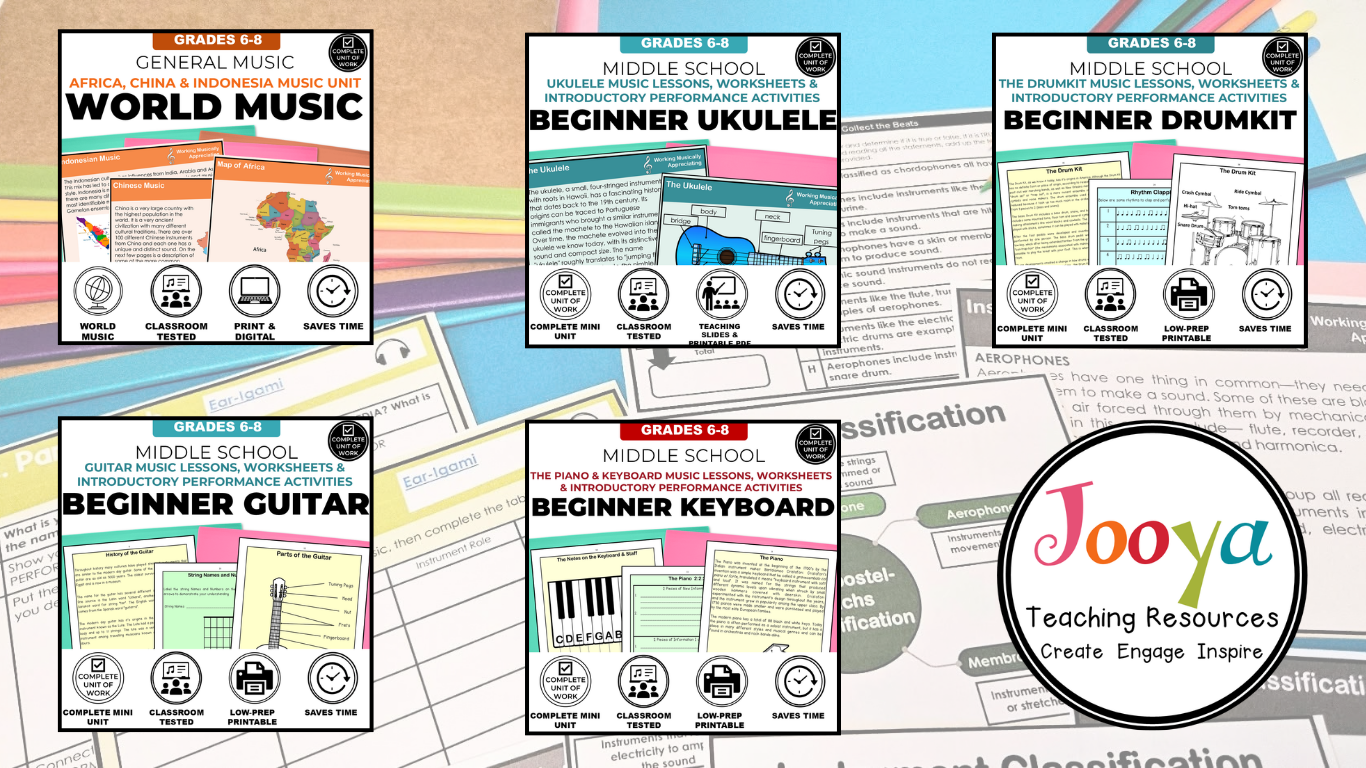
Classroom Instrument Mini Units
Extend your music history curriculum with introductory learning about classroom instruments.
- Guitar
- Piano
- Drum Kit
- Ukulele
These mini units can complement your listening and appreciation lessons while helping students develop their understanding of musical instruments.
You don’t need to teach everything in a particular order. The resources are designed to give you choices.
Looking for more ideas on how to sequence your music history lessons? Check out this blog post!
A Simple Way to Sequence Music Units for Middle School That Saves Planning Time

What’s Included in the Music History Lessons?
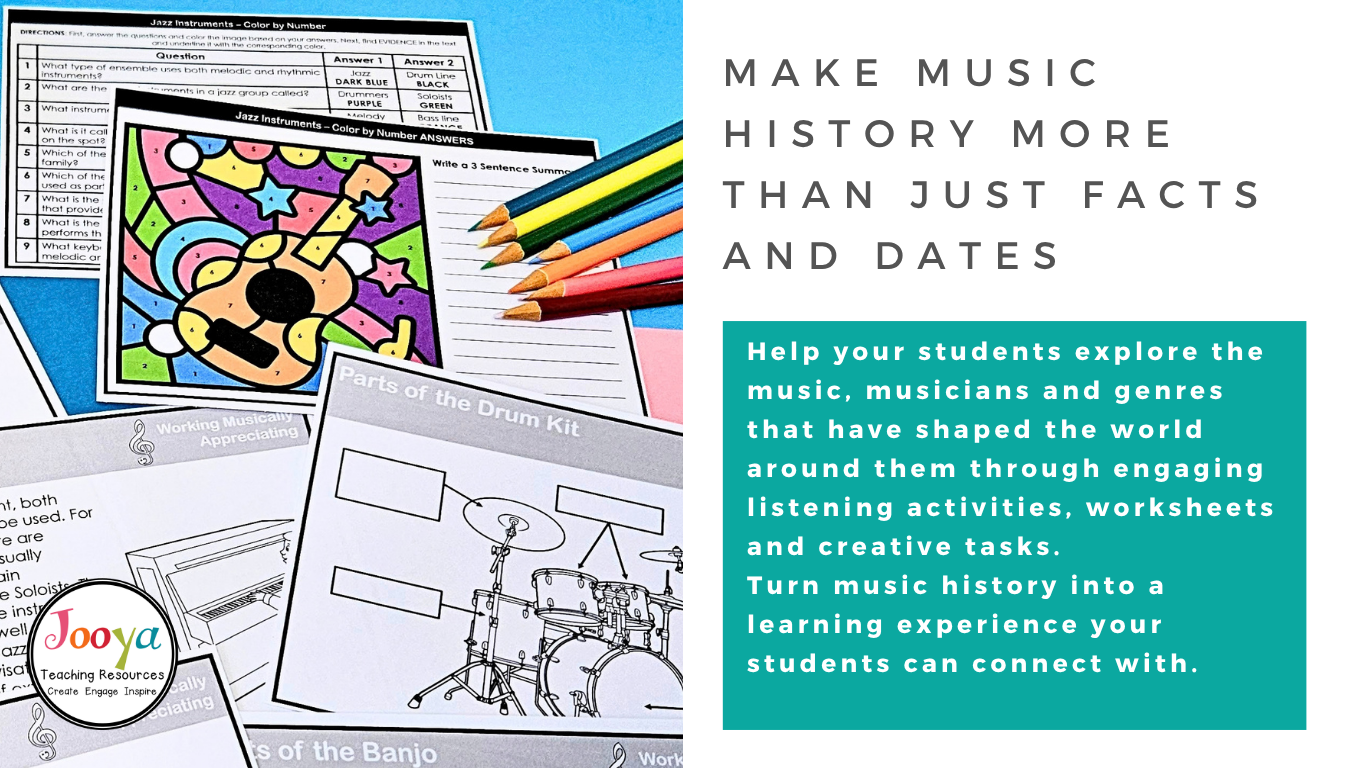
Each unit provides a selection of teaching materials designed to help you introduce topics, reinforce learning and develop students’ musical understanding.
Teaching Slides
Colorful teaching materials introduce and explain musical topics, helping students understand historical events, musical styles, instruments and musicians.
Reading Passages
Accessible information helps students explore music history, musical traditions, genres and instruments while developing their music vocabulary.
Music History Worksheets
Printable worksheets, comprehension questions, puzzles and activities reinforce learning and give students opportunities to demonstrate their understanding.
Music Genres Worksheets
Explore the characteristics, development and influences of different musical genres through activities that connect historical knowledge with musical understanding.
Music Appreciation Lessons & Listening Activities
Structured listening questions encourage students to recognize musical features, identify instruments and apply their knowledge of the elements of music to real listening examples.
Music Literacy Activities
Develop students’ ability to describe music using appropriate vocabulary and organise their ideas into meaningful written responses.
Google Slides Activities
Digital teaching and learning options are available in most units, providing additional flexibility for classroom delivery.
Teaching Support
Answer keys, suggested listening examples, extension activities and links to instructional videos help support lesson delivery.
Most units include colorful teaching PDFs, printable materials and Google Slides versions, giving you different ways to present and use the resources.
Choose the lessons you need, select the activities that suit your students and start teaching.
SEE THE COMPLETE MUSIC HISTORY CURRICULUM ON TPT →
See How Easy It Is to Teach a Music History Lesson
Every music teacher knows that having resources is one thing. Knowing how to turn them into a lesson that works with your students is another.
That’s why these music history units follow a practical, repeatable teaching structure that I’ve used in my own classroom for over 15 years.
Each lesson combines musical knowledge with activities that help students understand, listen to and describe music.
Step 1 — Introduce the Music History Topic
Start with a reading passage that introduces students to the musical style, instrument, musician or historical context.
Use the colorful teaching materials to work through the information as a class, or have students read independently.
This gives students the background knowledge they need before moving into more detailed music appreciation activities.
Step 2 — Choose Your Music History Worksheets & Activities
Each lesson includes accompanying activities to help students reinforce what they’ve learned.
Depending on the lesson, these might include comprehension questions, music history worksheets, puzzles or vocabulary activities.
Choose one activity or complete several, depending on your students’ needs and the time available.
Step 3 — Connect Music History with Music Appreciation
Bring the learning to life by connecting the lesson content to actual musical examples.
Students use structured listening questions to identify instruments, musical features and the elements of music.
These music appreciation lessons help students make connections between the historical background of a musical style and what they can actually hear.
Listening can be teacher-led, completed through class discussion or used as an independent activity.
Step 4 — Extend into Music Analysis and Writing
Want to develop your students’ music literacy skills?
Extend the listening activity into a written response using musical vocabulary and the elements of music.
Supporting videos help teachers and students understand how to listen for musical features and organise their ideas into a music analysis paragraph.
One lesson. Several activity options. You decide how much to teach.
You can keep the lesson simple or extend it into a more detailed listening and writing activity.
That’s the flexibility I rely on when teaching students with different literacy levels, musical backgrounds and learning needs.
For more details on how to structure your music history lessons for better student understanding, read this blog post
Music History Lessons: How to Teach Them in a Way Students Actually Understand

Want to Try This Lesson Structure in Your Classroom?
My free Blues Music Lesson is a great starting point for exploring music history and appreciation with your students.
Get a closer look at the teaching approach before deciding whether the complete music history curriculum is right for you.
GET MY FREE BLUES MUSIC LESSON →
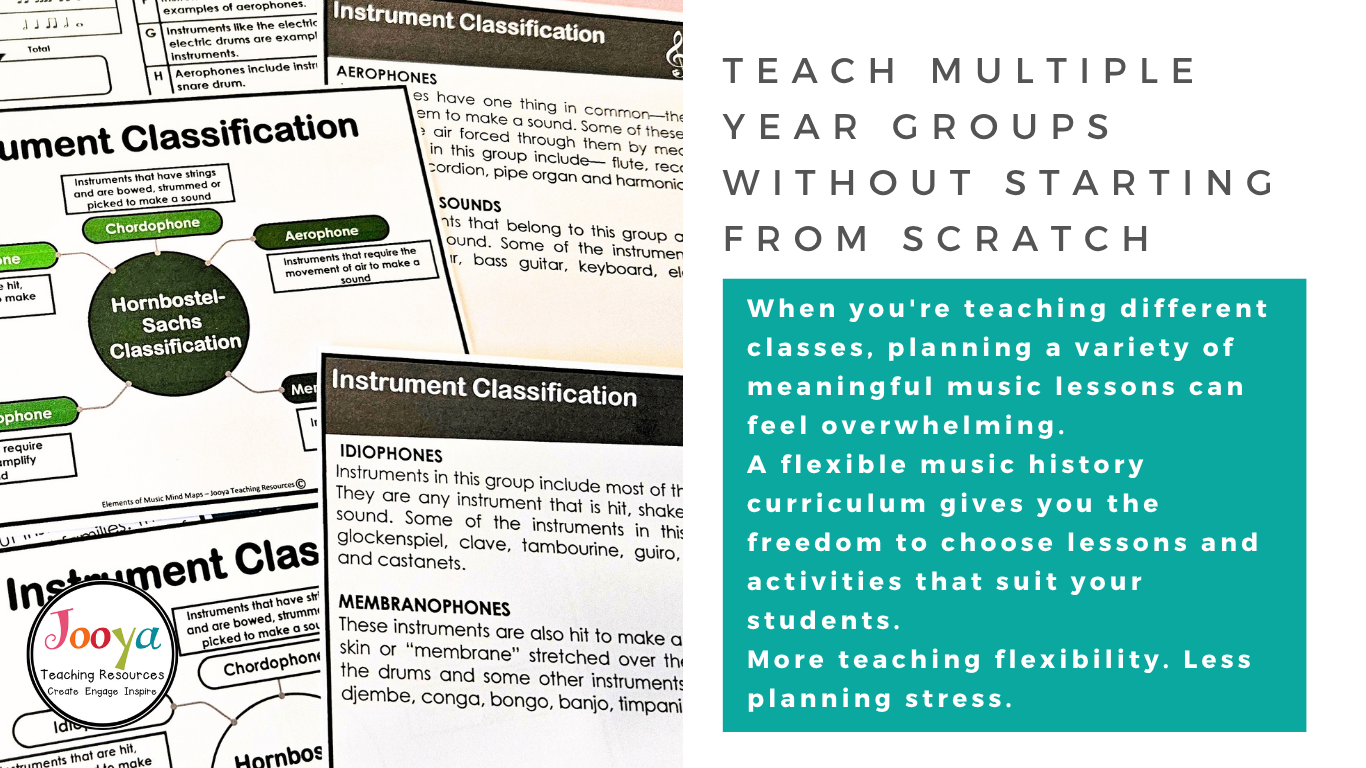
One Music History Curriculum. Different Year Groups. Your Choice.
Teaching several year groups doesn’t mean you need to create a completely new collection of resources for every class.
The Music History Curriculum Bundle gives you the flexibility to organise lessons into a sequence that suits your students, school and available teaching time.
Rather than following a rigid course, you can select music history and music appreciation lessons that match the knowledge, experience and interests of each class.
Start with the Foundations
For younger students or classes with limited music experience, begin with topics such as Rhythm and Rap, Instruments of the Orchestra, World Music and Film Music.
These units introduce students to musical styles, instruments, rhythm and listening skills.
The accompanying worksheets and listening activities help students develop the vocabulary and understanding needed for more detailed music appreciation lessons.
Explore Musical History and Influences
As students develop their musical knowledge, explore the beginnings of rock music, rock and roll history, instruments of rock and pop, and influential musicians.
Students can begin connecting different musical traditions, historical developments and musical styles.
Music history worksheets and listening activities help reinforce these connections while encouraging students to explain what they hear.
Extend into Different Genres and Traditions
For older students, explore Jazz Music, Small Ensembles, Spanish & African Influence, 1980s Music and Australian Music.
These units provide opportunities to investigate different musical genres, historical influences and stylistic characteristics.
Use the music genres worksheets and listening activities to encourage students to compare musical features and develop more detailed written responses.
These units can be taught in different orders, depending on your curriculum and students’ interests.
Add Practical Music-Making Along the Way
Complement your music history lessons with the Guitar, Piano, Drum Kit and Ukulele mini units.
Choose the instruments that are available in your classroom and integrate practical activities whenever they suit your program.
This allows students to connect their understanding of musical instruments and styles with their own music-making experiences.
In my own teaching program, I’ve used these units to support up to four years of music learning, with approximately three hours of music classes per week, alongside practical lessons and assessments.
You can follow a similar sequence, create your own teaching pathways or simply select the individual units you need.
I’M READY TO PLAN MY MUSIC HISTORY CURRICULUM — GET THE BUNDLE →
A Music History Curriculum Created by a Teacher, Tested in Real Classrooms
These aren’t lessons created in theory. They’re lessons I’ve taught, used and refined with thousands of real students.
I’ve been teaching classroom music since 2001, and I’ve used the units in this bundle for over 15 years.
During that time, I’ve taught students with very different musical backgrounds, abilities and learning needs.
Some arrive in my classroom with years of musical experience. Others have had very little exposure to formal music education.
I’ve worked with gifted and high-potential students, reluctant learners and students who struggle with reading and writing.
And I’ve learned that successful music history and music appreciation lessons need to be more than informative.
They need to be accessible, flexible and engaging.
That’s why I’ve designed these lessons with a choice of activities, structured listening questions, music history worksheets and opportunities to build music literacy at different levels.
I know what it’s like to teach multiple year groups, manage different abilities and find time to prepare lessons.
These are the resources I’ve created to make that job easier.
And now you can use them in your own classroom.
Happy Teaching,
Julia — Jooya Teaching Resources

What Other Music Teachers Are Saying
★★★★★
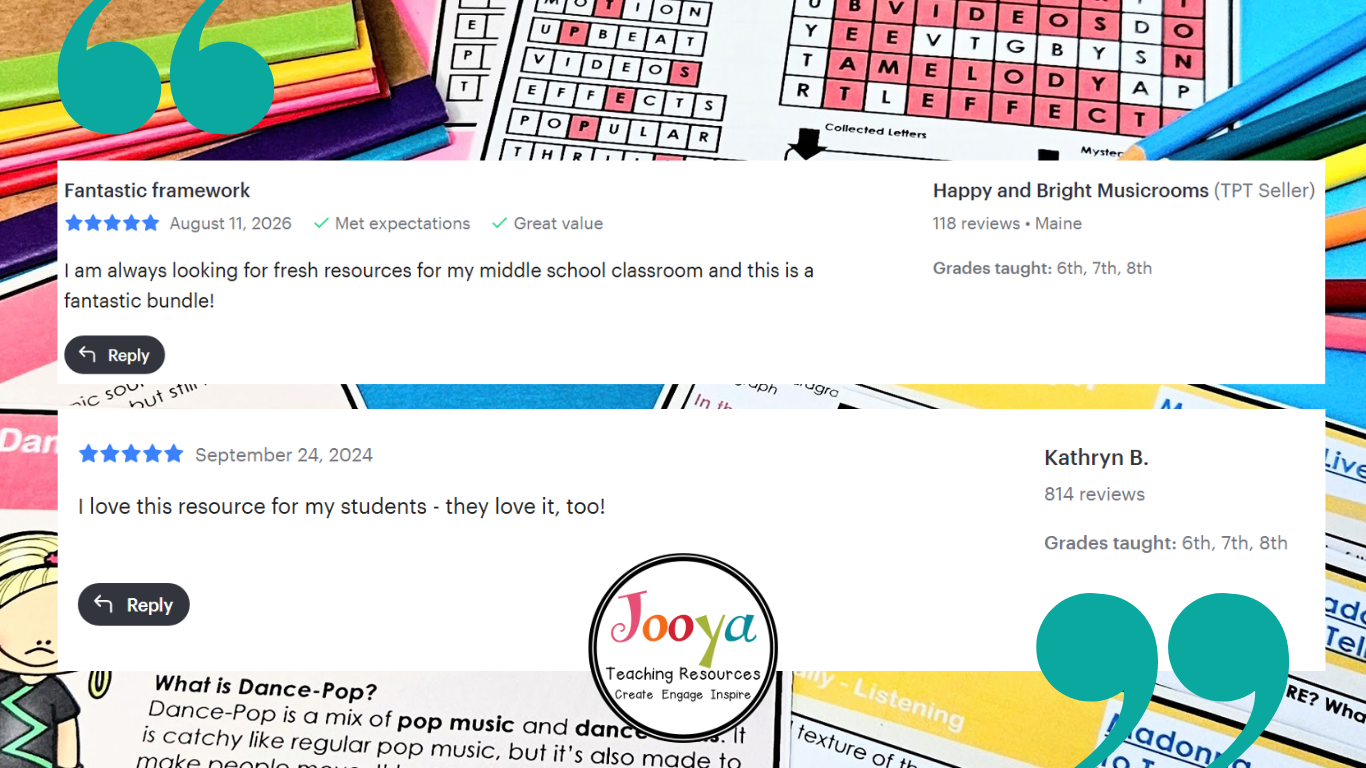
“I am always looking for fresh resources for my middle school classroom and this is a fantastic bundle!”
— Happy and Bright Musicrooms, August 2026
★★★★★
“I love this resource for my students – they love it, too!”
— Kathryn B., September 2024
Music History Curriculum: Frequently Asked Questions
What grade levels is this music history curriculum suitable for?
The bundle is designed for middle school and general music classrooms, particularly Grades 7–10, with resources that can also be adapted for Grades 5–6.
You can choose introductory music history lessons for younger classes and explore more detailed musical styles, history and analysis with older students.
Can I use this music history curriculum across multiple year groups?
Absolutely! You can organise the 17 units into different teaching sequences or select individual topics to suit each year group.
In my own classroom, I’ve used these units to support up to four years of music teaching, alongside practical instrument lessons and assessments.
Is this also suitable as a music appreciation curriculum?
Yes. Alongside the historical information, many units include music appreciation lessons and structured listening activities.
Students explore different musical styles, instruments and traditions while developing their ability to identify and describe musical features.
This makes the bundle useful for teachers wanting to combine music history with listening and appreciation.
Do I need to be a specialist music teacher?
No. The lessons include structured teaching materials, reading passages, music history worksheets and listening activities that can help non-specialist teachers deliver music lessons.
There are also supporting videos explaining the elements of music and how to develop music analysis paragraphs.
How much preparation is required?
The music history lessons and activities are already prepared, so you don’t need to create them from scratch.
Simply select the unit, review the teaching materials, choose the activities that suit your students and prepare any required worksheets or digital resources.
You’ll also need to organise the suggested music listening examples.
Are the music history worksheets suitable for mixed-ability classes?
Yes. I’ve used these units with students across a wide range of literacy levels, musical abilities and learning needs.
Many lessons provide several activity options, allowing you to simplify, extend or adapt the work.
Are the music history and music genres worksheets printable or digital?
Most units include colorful teaching PDFs, printable worksheets and Google Slides activities.
The exact materials and formats vary between units, so you can select the options that work best for your classroom.
Can I teach the music history units in any order?
Yes! You can organise the curriculum by historical development, musical styles, instruments or your own teaching priorities.
Each unit can also be taught separately, making the bundle useful for shorter courses and individual topics.
Does this music history curriculum support music curriculum standards?
The bundle provides learning opportunities connected to music listening, analysis, musical understanding and historical and cultural context.
These activities can support relevant strands of the National Core Arts Standards for Music, particularly the Responding strand.
Teachers should select and adapt activities to match their own school, state or curriculum requirements.
Can I try a music history lesson before purchasing the bundle?
Yes! You can download my free Blues Music Lesson to explore the teaching approach and see how music history can be introduced through engaging classroom activities.
More Than Music History Worksheets. A Curriculum You Can Keep Coming Back To.
When you’re teaching several year groups, planning doesn’t stop after one lesson or even one unit.
There’s always another class to prepare for, another topic to teach and another group of students with different learning needs.
The Music History Curriculum Bundle gives you a collection of ready-to-use teaching resources you can return to throughout the school year and beyond.
Instead of creating lessons from scratch, you can choose from 17 music history and classroom instrument units, select the activities that suit your students and organise them into a teaching sequence that works for your school.
Make the Most of Your Planning Time
Plan Across Multiple Year Groups
Use different music history units with different classes, or revisit topics with activities suited to your students’ experience.
Keep Your Music Appreciation Lessons Flexible
Choose from reading passages, music history worksheets, listening activities and writing extensions without needing to complete every activity.
Build a Curriculum That Suits Your School
Organise the units by musical history, instruments, styles or your own curriculum requirements.
Use Your Resources Year After Year
Return to the units with new classes, adjust your teaching sequence and build on the materials you’ve already prepared.
Looking for some more ideas on how to easily differentiate in your music history lessons? Read this blog post
How to Differentiate Music Appreciation Lessons That Save Planning Time
Get the Complete Music History Curriculum Bundle and Save
All 17 units for $113.39 USD
Purchased individually: $194.72 USD
Bundle savings: $81.33 — approximately 42% off individual prices.
Prices are subject to change. Please check the current price on Teachers Pay Teachers.
17 units. One flexible music history curriculum. More options for your music classroom.
YES! I WANT TO SAVE WITH THE COMPLETE MUSIC HISTORY BUNDLE →
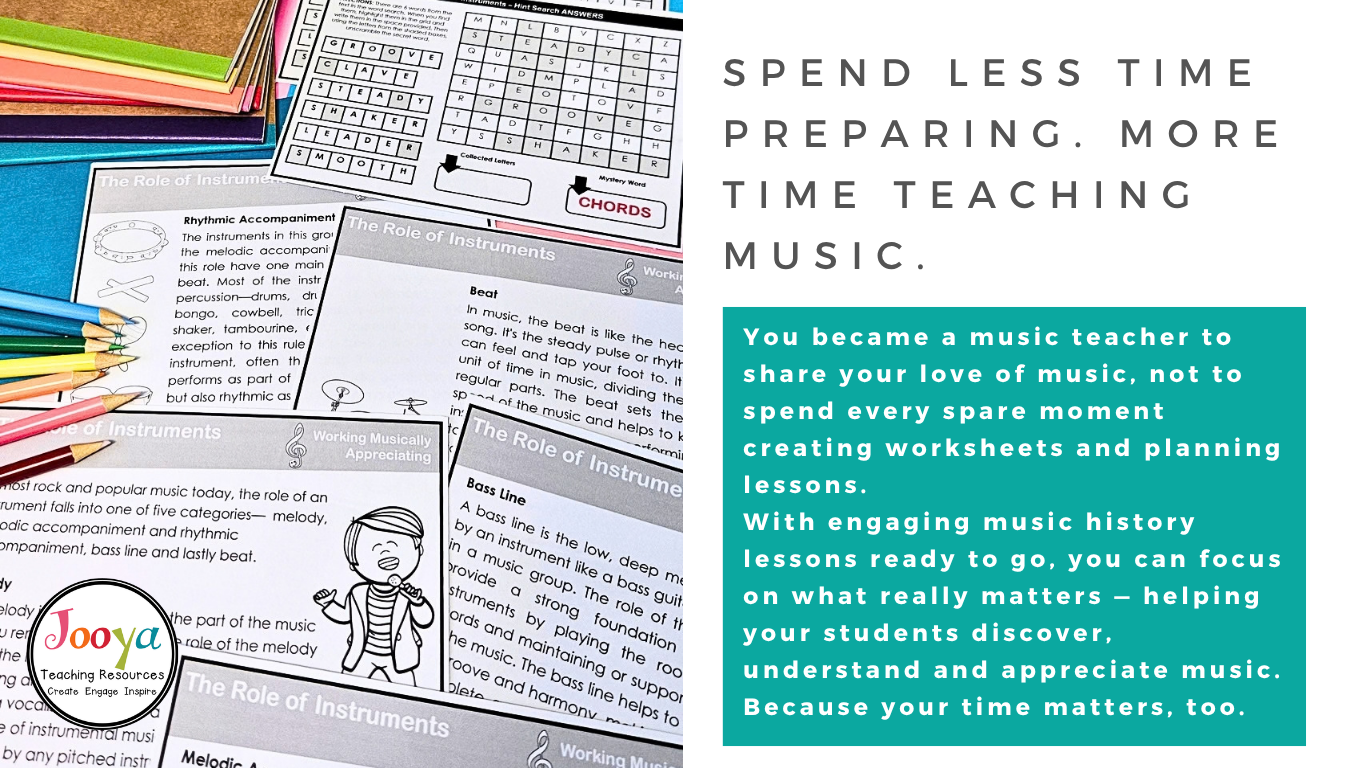
Spend Less Time Planning Your Music History Curriculum. More Time Teaching Music.
Teaching music history and appreciation across multiple year groups doesn’t have to mean starting from scratch every time you plan a lesson.
With the Music History Curriculum Bundle, you’ll have 17 classroom-tested units filled with ready-to-use music history lessons, music appreciation activities, worksheets and structured listening opportunities.
Whether you’re building a new music history curriculum, refreshing your existing program or simply looking for lessons that work with real students, this bundle gives you a flexible starting point.
Choose your units. Adapt the activities. Build a music program that works for you and your students.
Ready to Make Music History Planning Easier?
Explore the complete Music History Curriculum Bundle on Teachers Pay Teachers and see everything included.
GET THE MUSIC HISTORY CURRICULUM BUNDLE NOW →
Created by an experienced classroom music teacher, for music teachers who want practical resources they can use with confidence.
Not Quite Ready? Start with a Free Blues Music Lesson
You don’t need to purchase the complete bundle to start exploring music history with your students.
Download the free Blues Music Lesson and try the teaching approach in your own classroom.
YES! SEND ME THE FREE BLUES LESSON →
Until next time
Happy Teaching
Julia from Jooya