

If you have ever spent hours searching for a music history curriculum only to end up disappointed once you start teaching it, you are definitely not alone.
I think most music teachers have experienced this at some point.
You buy a resource hoping it will make your life easier… only to realize:
- the reading passages are too difficult
- the activities do not suit your students
- the lessons feel disconnected
- the music examples are outdated
- or the entire resource focuses heavily on western classical music while your students are far more interested in popular music, folk music, film music, or contemporary styles.
After years of teaching middle school music, I eventually realized that choosing a music history curriculum is not really about finding the “perfect” resource.
It is about finding the right resource for:
- your teaching style
- your students
- your classroom structure
- your school setting
- and the reality of your workload.
Because let’s be honest:
a curriculum resource that creates more work for you is not actually helping.
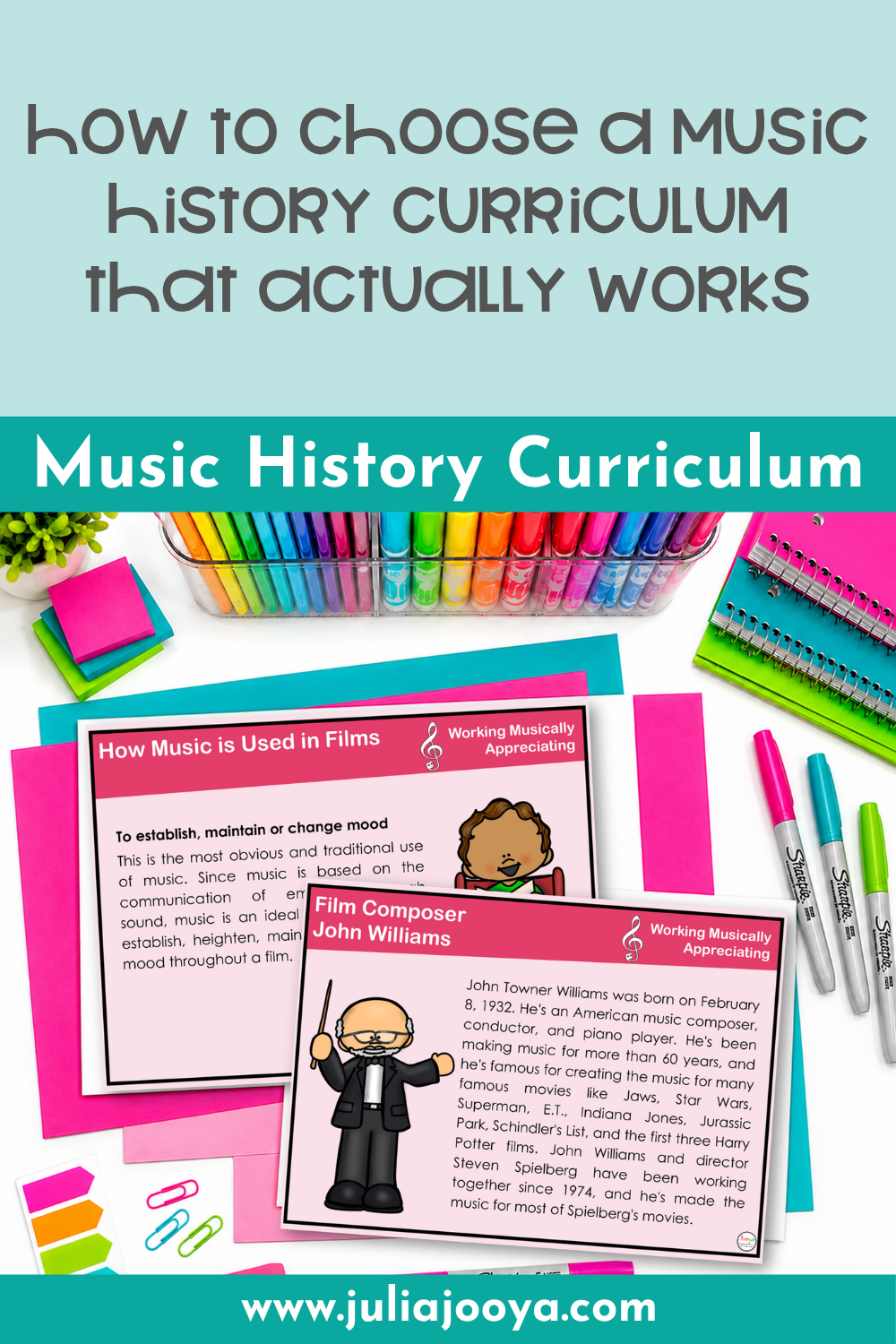
Why Choosing the Right Music History Curriculum Matters
As music teachers, we all want the same basic things.
We want:
- our students to enjoy music appreciation and music history
- our students to stay engaged
- our students to experience different historical periods and styles
- our students to develop musical understanding
- and ultimately, we want students to continue appreciating music long after they leave our classroom.
The problem is that many music history course resources are built like textbooks.
They are often:
- heavily content-focused
- difficult for mixed ability classes
- overloaded with information
- centered mostly around western art music
- and not always designed for real classroom implementation.
That was one of the biggest struggles I had in my own classroom.
I could teach the middle ages, medieval chants, western classical music, chamber music, influential composers, and the history of music all day long…
…but if my students were not connecting to the learning, the lessons became very difficult to sustain.
That is when I realized something important:
Your music appreciation curriculum should support student learning through doing — not just reading.
What I Personally Look For in a Music History Curriculum
Over time, I became far more selective about what I used in my classroom.
Now, whenever I compare music history curriculum options, these are the things I look for first.
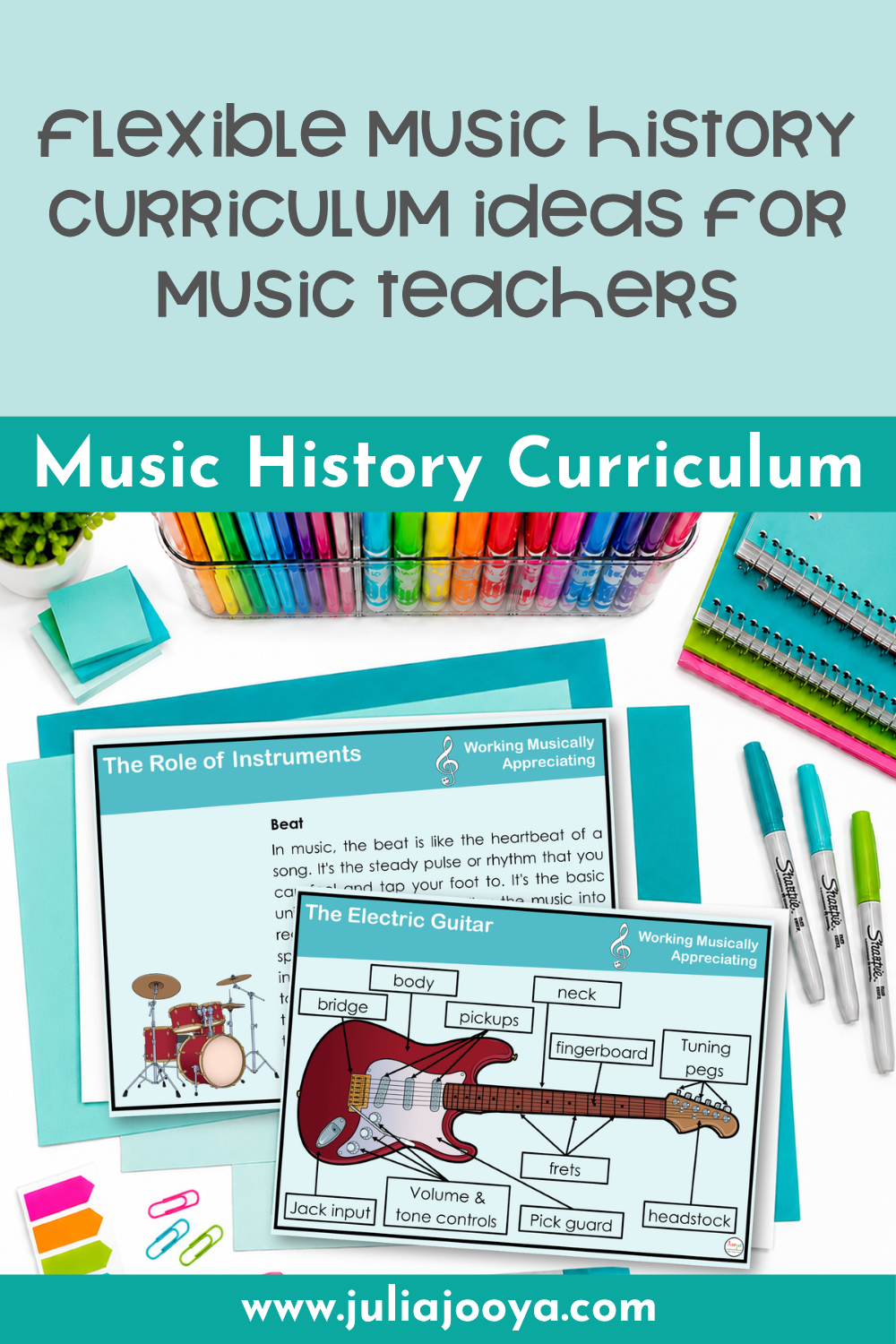
A Music History Curriculum Needs Flexible Lesson Structure
One of the biggest things I learned as a music educator is that rigid curriculum resources rarely work long term.
Every class is different.
Some groups need:
- more literacy support
- more listening examples
- more discussion
- more scaffolded activities
- or more hands-on music making.
Other groups move quickly and need extension opportunities.
That is why flexibility matters so much.
I personally need lesson plans that allow me to:
- simplify tasks quickly
- extend stronger students
- swap activities easily
- and adjust pacing without completely rewriting the curriculum.
This is also why I eventually started creating my own resources.
I needed lessons that actually worked for the students sitting in front of me.
The Music History Curriculum Bundle Lessons Activities Middle School General Music was built around that exact idea.
The goal was never to create a fixed textbook-style program.
The goal was to create a flexible music history curriculum that real teachers could adapt to their own classrooms.

A Good Music History Curriculum Should Include More Than Reading
One thing I realized very quickly is that students learn music history best when they can connect historical context to actual musical experiences.
That means students need opportunities to:
- listen
- perform
- discuss
- compare
- analyze
- and create.
I personally love embedding listening activities directly into lessons.
If we are learning about western classical music or the 20th century, I want students hearing authentic examples immediately.
If possible, I prefer live performances because students can actually see instruments being played.
That visual connection matters.
The same thing applies to folk music, popular music, medieval chants, and music from different cultures and time periods.
Students engage far more when music appreciation becomes active rather than passive.
That is why I always look for resources that include:
- listening worksheets
- music analysis activities
- music vocabulary work
- comprehension tasks
- performance opportunities
- and writing scaffolds.
The strongest music appreciation curriculum resources are the ones that help students interact with music in multiple ways.

Why Teaching Mixed Ability Classes Change Everything
This was honestly one of the biggest turning points in my teaching.
My classroom has always had an enormous range of abilities.
Some students read well above grade level.
Others struggle significantly with literacy.
Some students play instruments outside school.
Others have never touched an instrument before entering middle school music.
Trying to find one music history course resource that suits everyone can feel impossible.
For me, the solution was simplifying the underlying content while differentiating the tasks around it.
That changed everything.
I stopped worrying about whether reading passages were “too easy” for stronger students.
Instead, I focused on:
- deeper analysis
- extended responses
- comparison activities
- creative tasks
- and differentiated questioning.
This approach made my music appreciation lessons far more manageable.
If you want more ideas around this, you may also find this blog post helpful:
How to Differentiate Music Appreciation Lessons That Save Planning Time

Your Music History Curriculum Should Save Planning Time — Not Add To It
This is probably the biggest thing I would encourage music teachers to think about before purchasing any curriculum resource.
Ask yourself:
Will this actually make my life easier?
Because sometimes resources look impressive…
…but still require huge amounts of additional preparation.
Personally, I need resources that already include:
- teaching slides
- printable worksheets
- listening links
- scaffolded writing
- literacy activities
- music vocabulary
- assessment ideas
- and differentiated options.
I do not want to buy five separate resources just to teach one unit.
That is one reason why I created the Music History Curriculum Bundle Lessons Activities Middle School General Music as a full curriculum bundle rather than disconnected standalone units.
Everything was designed to work together.
That consistency helps both teachers and students.
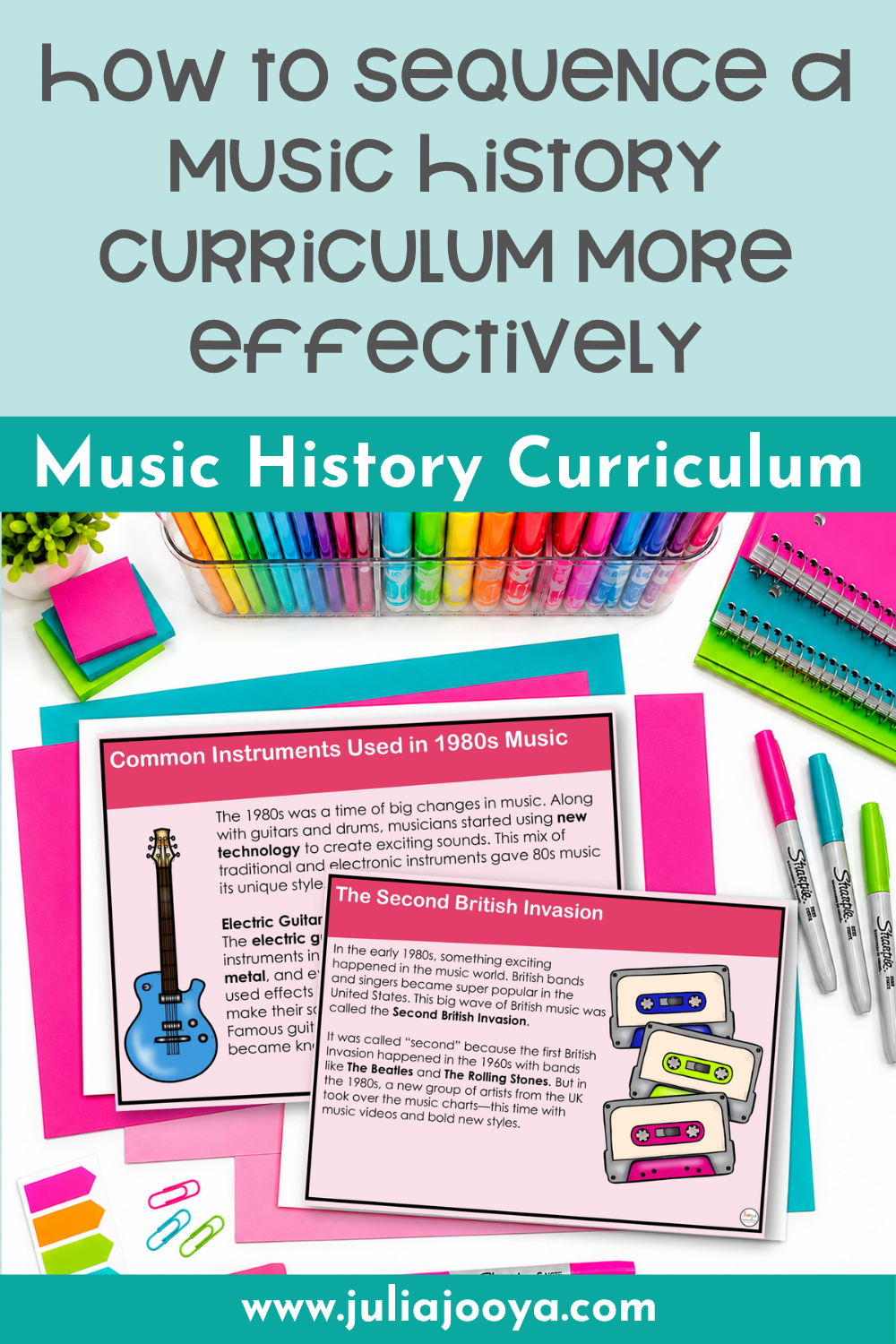
A Music History Curriculum Needs Clear Sequencing
One of the biggest mistakes I made early in my career was teaching disconnected units without a clear learning flow.
Students struggled because the curriculum felt random.
Once I started sequencing my music appreciation curriculum more intentionally, everything became easier:
- lesson planning
- classroom routines
- assessment
- differentiation
- and student understanding.
Students began recognizing recurring musical concepts across different historical periods and genres.
That consistency matters far more than teachers sometimes realize.
If sequencing is something you are currently struggling with, I highly recommend reading:
A Simple Way to Sequence Music Units for Middle School That Saves Planning Time

The Best Music History Curriculum Resources Continue Growing With You
One thing I personally dislike about traditional textbooks is how quickly they become outdated.
You buy one edition…
…and suddenly a newer version appears.
What I prefer instead are curriculum resources that evolve over time.
That is another reason I structured the Music History Curriculum Bundle Lessons Activities Middle School General Music as a growing bundle.
New units and updates are added over time based on:
- classroom use
- teacher feedback
- curriculum needs
- and practical implementation.
Because real classrooms are always evolving too.
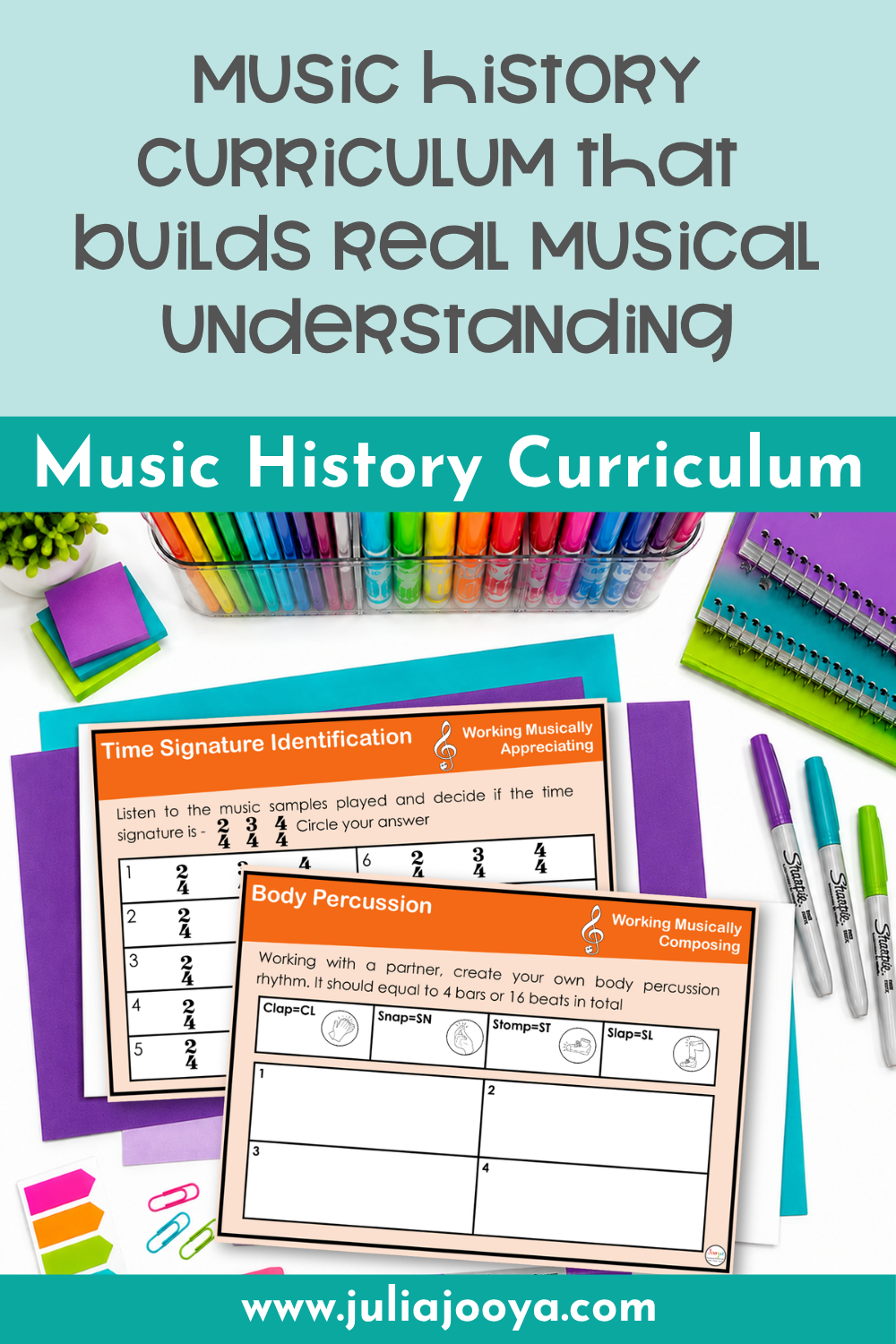
Music Appreciation Should Connect To Real Musical Understanding
One thing I strongly believe is this:
Music history should never just be about memorizing facts.
For me, music history is the vehicle that helps students:
- listen more carefully
- understand musical styles
- recognize instruments
- analyze music
- build vocabulary
- and connect music to culture and context.
That is why I rarely assess pure historical recall.
Instead, I focus on how students apply their understanding through:
- listening
- performing
- composing
- and music analysis.
That approach keeps music appreciation meaningful.
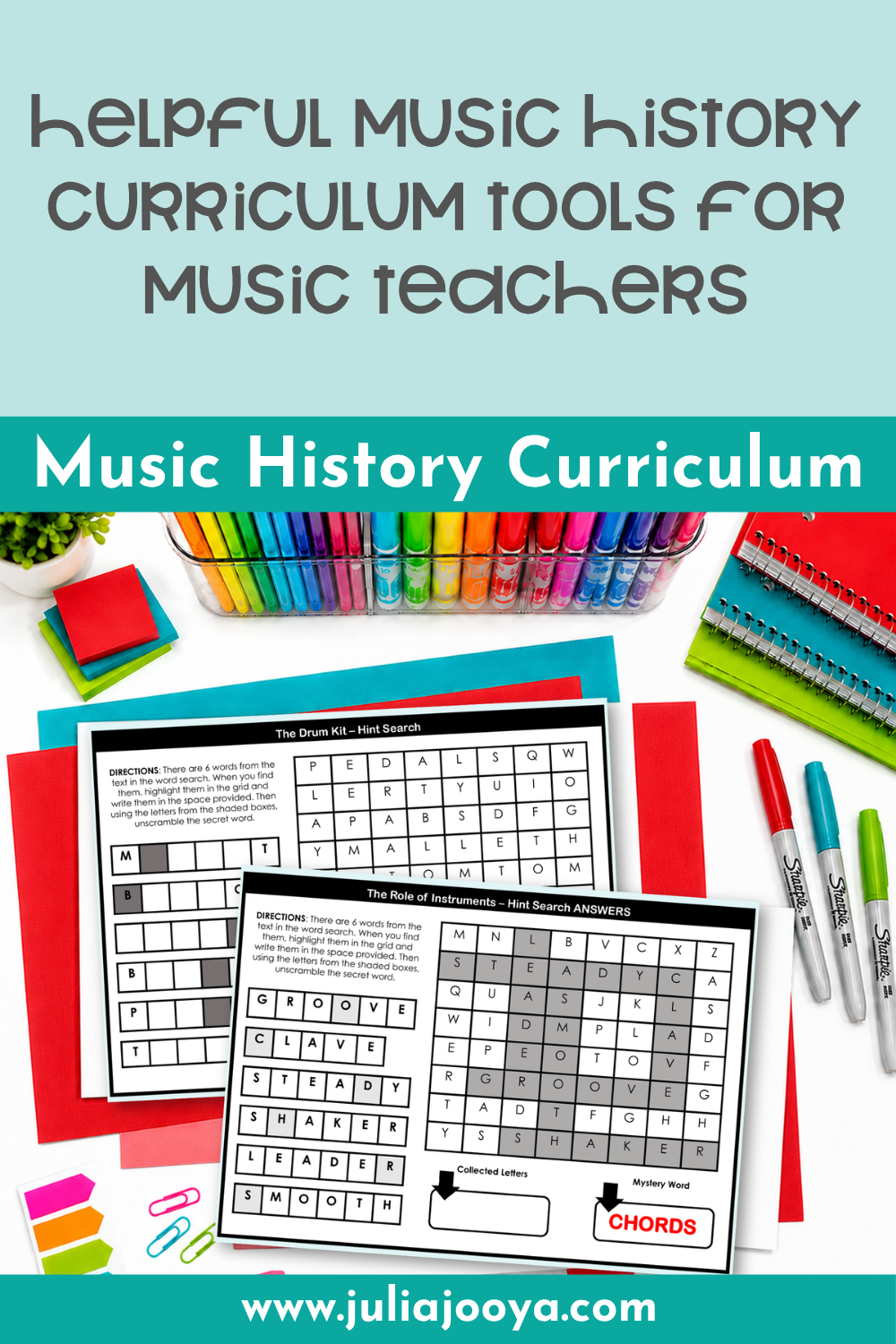
Helpful Tools That Can Support Your Music History Curriculum
If you are currently reviewing or rebuilding your music history curriculum, these free resources may also help simplify the process:
Elements of Music Mind Maps
These help students organise music vocabulary and connect musical concepts more clearly across listening, performing, and analyzing activities.
Elements of Music Mind Maps link here
Makeover Your Curriculum
This resource helps you think through curriculum structure, sequencing, and classroom implementation more strategically.
Makeover Your Curriculum link here
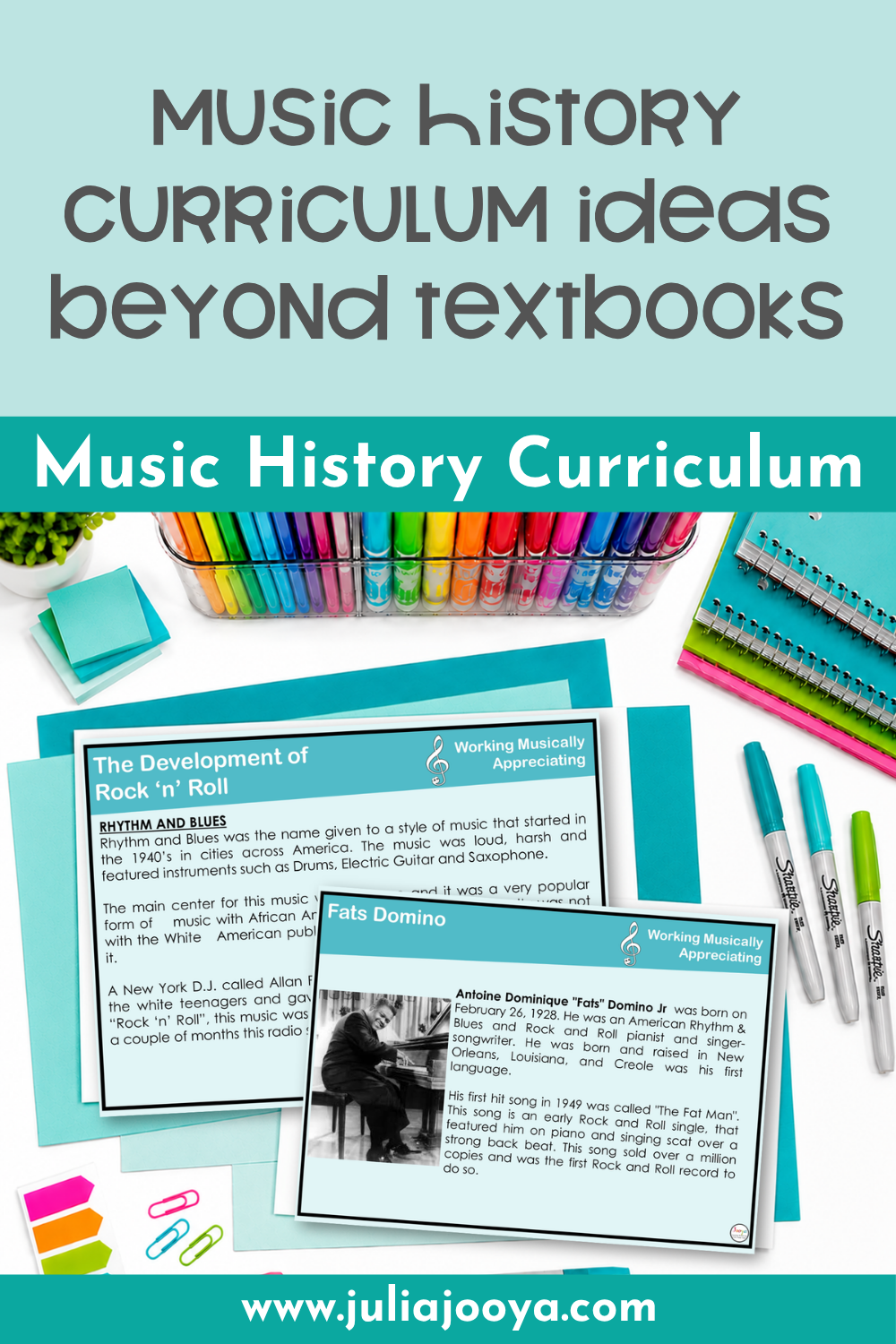
Final Thoughts About Choosing the Right Music History Curriculum
You do not need a perfect curriculum.
You need a curriculum that:
- works for your students
- supports your teaching style
- reduces planning stress
- and helps students genuinely connect with music.
That is the real goal.
If you are currently comparing options, try focusing less on how “impressive” a resource looks and more on whether it will realistically support your day-to-day teaching.
And honestly?
That practicality matters far more in the long run.
If you would like a ready-to-use option that includes music history units, listening activities, music analysis, vocabulary work, literacy support, and flexible lesson structures, you can take a look at the Music History Curriculum Bundle Lessons Activities Middle School General Music.
Or simply start with one small change in your current curriculum this week.
Sometimes one clearer structure can completely change how manageable music appreciation feels in your classroom.
Until next time
Happy Teaching
Julia from Jooya
One Response