
Choosing the right music teaching resources can make or break how confidently you teach the 6 Elements of Music — especially when implementing the new NSW Music Syllabus across Stage 4 and Stage 5.
With so many options available, it’s easy to assume that all music teaching resources offer the same level of support. In reality, not all resources are created equal. Some are designed for reference only, while others are built to actively support teaching, learning, assessment, and differentiation in real classrooms.
This post will help NSW music teachers make informed decisions when choosing music teaching resources — particularly when deciding between traditional textbooks and more comprehensive, classroom-ready alternatives.
Why Choosing the Right Music Teaching Resources Matters
The 6 Elements of Music underpin everything students do in the music classroom — listening, performing, composing, and writing about music. When music teaching resources don’t support repeated exposure to these elements, students often struggle to build music literacy, confidence, and depth in their responses.
This is especially noticeable when students are asked to write about music. If the resource doesn’t explicitly support vocabulary, sentence structure, and analysis, teachers are left filling the gaps themselves.
If this is something you’re seeing in your own classes, this may help.
If your students struggle to explain what they hear in music, this will help.
Grab your free Stage 4 Listening Sentence Starters and Writing Pack and give them the structure they need.
These sentence starters are designed to work with any listening activity and pair well with strong music teaching resources that focus on literacy — not just content delivery.
Grab your FREE Stage 4 Sentence Starters here
For a deeper look at why this matters, you may also find this blog post helpful:
Why Music Terms are Important for your Students to Understand
Music Teaching Resources vs Textbooks: What’s the Difference?
Textbooks have long been a staple in music classrooms, and they certainly have their place. However, when viewed through the lens of modern teaching demands, they also have limitations.
In my own teaching experience, I found that:
- schools rarely had the budget for full class sets
- I was constantly photocopying selected pages
- resources needed heavy adaptation for mixed-ability classes
- multiple textbooks were required to cover listening, literacy, and assessment
When you consider that a single music textbook can cost around $70, purchasing class sets of 30 quickly exceeds $2,000 — often for a resource that still requires significant modification.
This is where well-designed music teaching resources offer a clear advantage: they are created to be used, not just referenced.
What to Look for in Music Teaching Resources That Support the 6 Elements of Music
Not all music teaching resources that claim to support the 6 Elements of Music are truly classroom ready. When choosing resources, NSW music teachers should look beyond surface content and ask how the resource actually supports teaching and learning.
High-quality music teaching resources should:
- support music literacy and vocabulary development
- allow repeated practice across different contexts
- be usable across Years 7–10
- save teacher time during planning and assessment
- align directly with the NSW Music Syllabus
If students are expected to analyse music clearly and confidently, resources also need to support how that analysis is taught — not just what students listen to.
If this is an area you’re actively refining, this post connects closely:
How to Teach How to Analyse Music in a Way That Actually Sticks

Why the 6 Elements of Music Bundle Is More Than a Textbook
The 6 Elements of Music Lessons & Worksheets Bundle for the New NSW Syllabus was designed specifically to address the gaps I experienced when relying on textbooks alone.
This bundle includes:
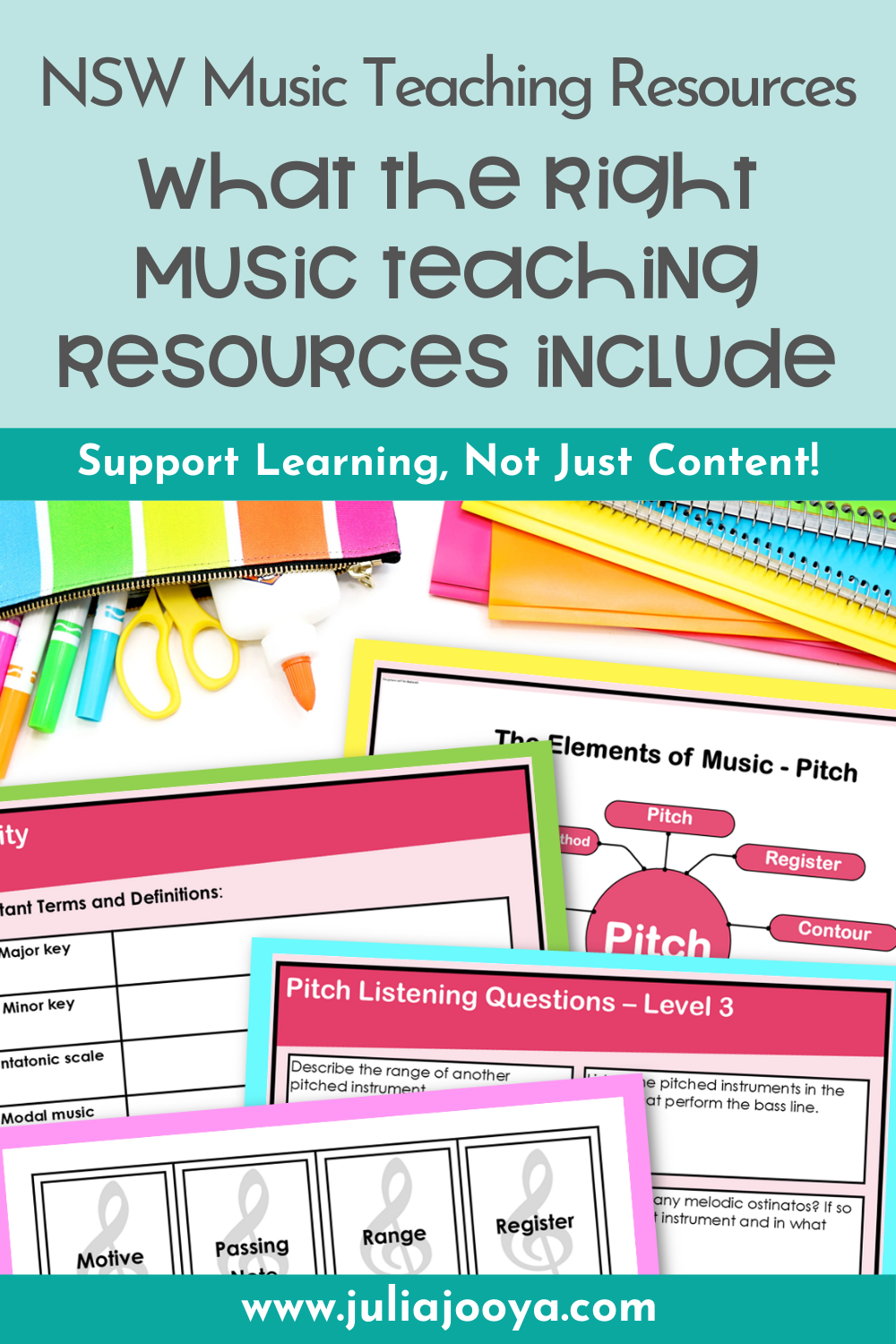
- colourful teaching slides with embedded YouTube listening links
- a printable teacher version (ideal for classroom reference)
- two printable student versions
- one with missing terms
- one requiring full definitions
- a Google Slides student version for LMS use
In addition, the bundle provides:
- three levels of listening questions using the M.U.S.I.C. scaffold
- three sample paragraphs modelling strong music analysis
- instructional videos explaining paragraph writing
- M.U.S.I.C. marking rubrics
- printable listening question cards for flexible classroom use
- multiple versions of 6 Elements of Music mind maps
- printable music terminology worksheets that become a student glossary
- 6 Elements of Music term card sets for games and revision activities
This makes the bundle a complete set of music teaching resources — not just a reference text.
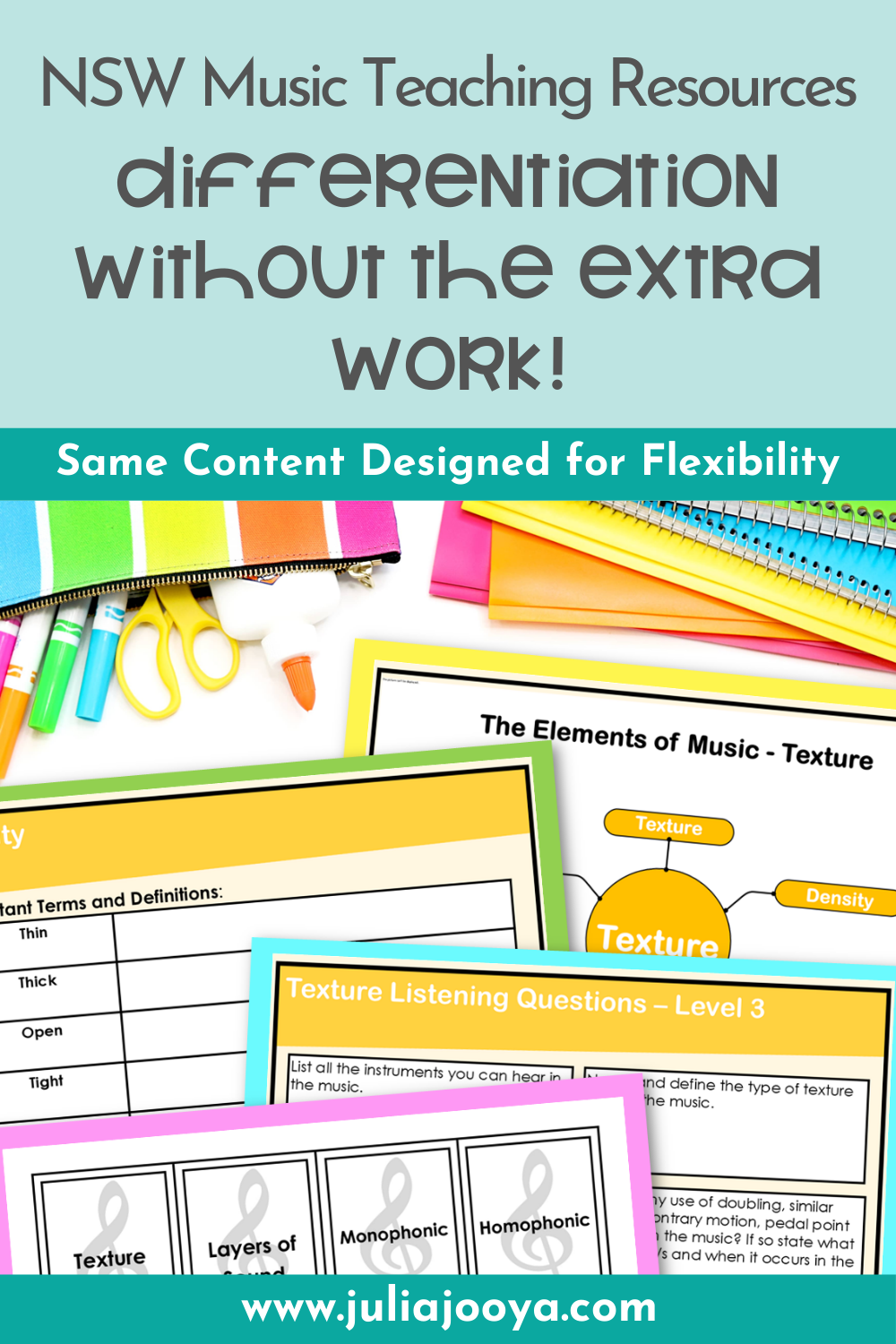
Music Teaching Resources That Support Differentiation and Extension
One of the biggest limitations of traditional music teaching resources is their lack of built-in differentiation.
This bundle was designed so:
- all students work with the same musical concepts
- levels of support are adjusted, not the content
- extension is available without creating extra tasks
- lessons remain cohesive across mixed-ability classes
This approach supports music differentiation, extension, and confidence — particularly for students who struggle with writing about music or music terminology.
If differentiation currently feels overwhelming, you might also find this useful:
How to Support Diverse Learners Using Classroom-Ready Music Activities
And if writing is the sticking point for your students:
I created a free resource to make music writing easier for your students.
Get your Stage 4 Listening Sentence Starters and Writing Pack here.
It’s designed to reduce teacher workload while giving students the structure they need to succeed.
Get your Listening Sentence Starters here
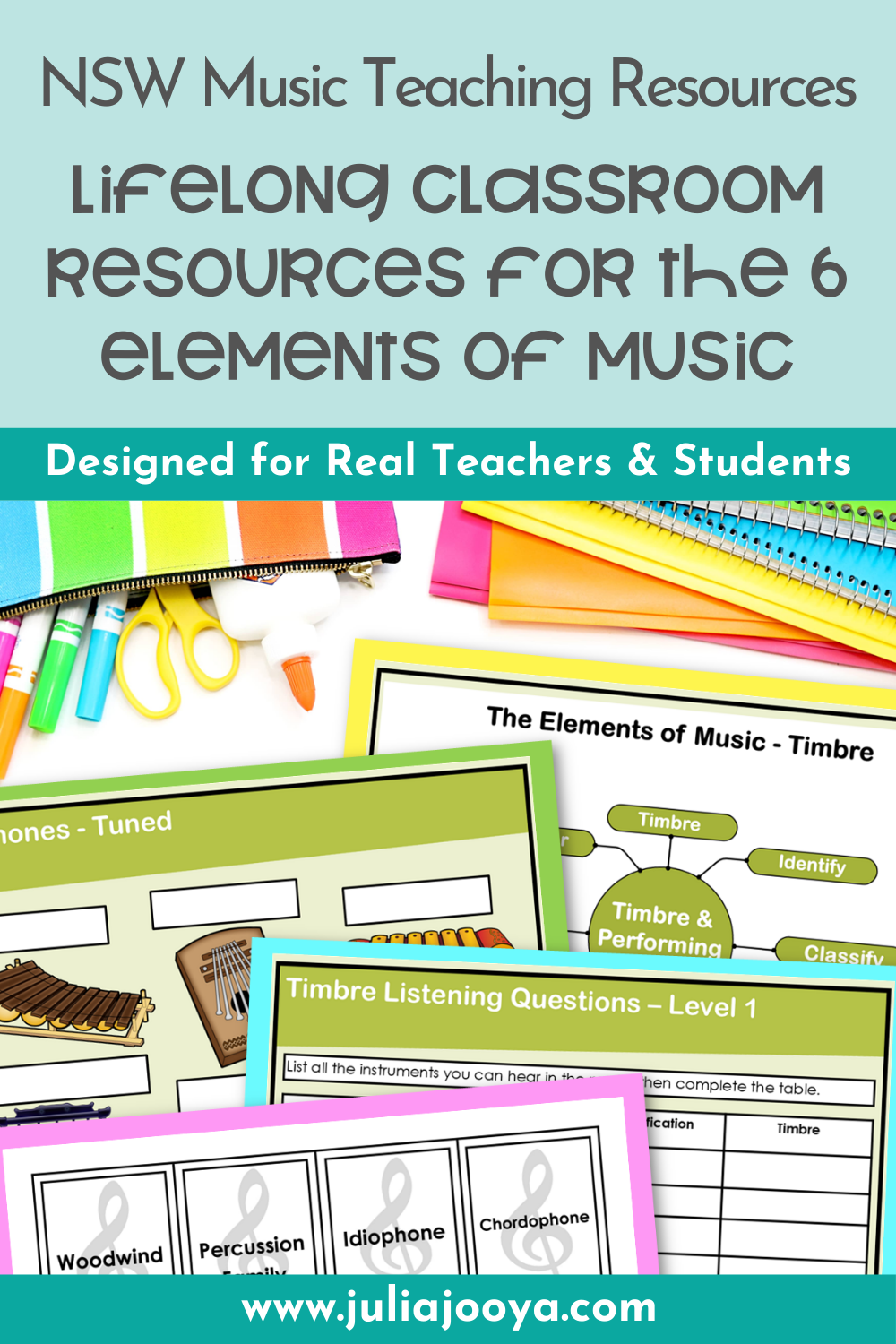
Music Teaching Resources That Grow With Your Program
Another key difference between textbooks and modern music teaching resources is adaptability.
Textbooks are static. If something doesn’t work, you wait for the next edition.
With this bundle:
- resources are updated and refined based on classroom use
- new components are added (including upcoming comparison listening cards)
- teachers receive updates without repurchasing materials
- the resource evolves alongside syllabus implementation
It is a one-time purchase with lifetime access — making it a far more cost-effective option for schools and teachers.
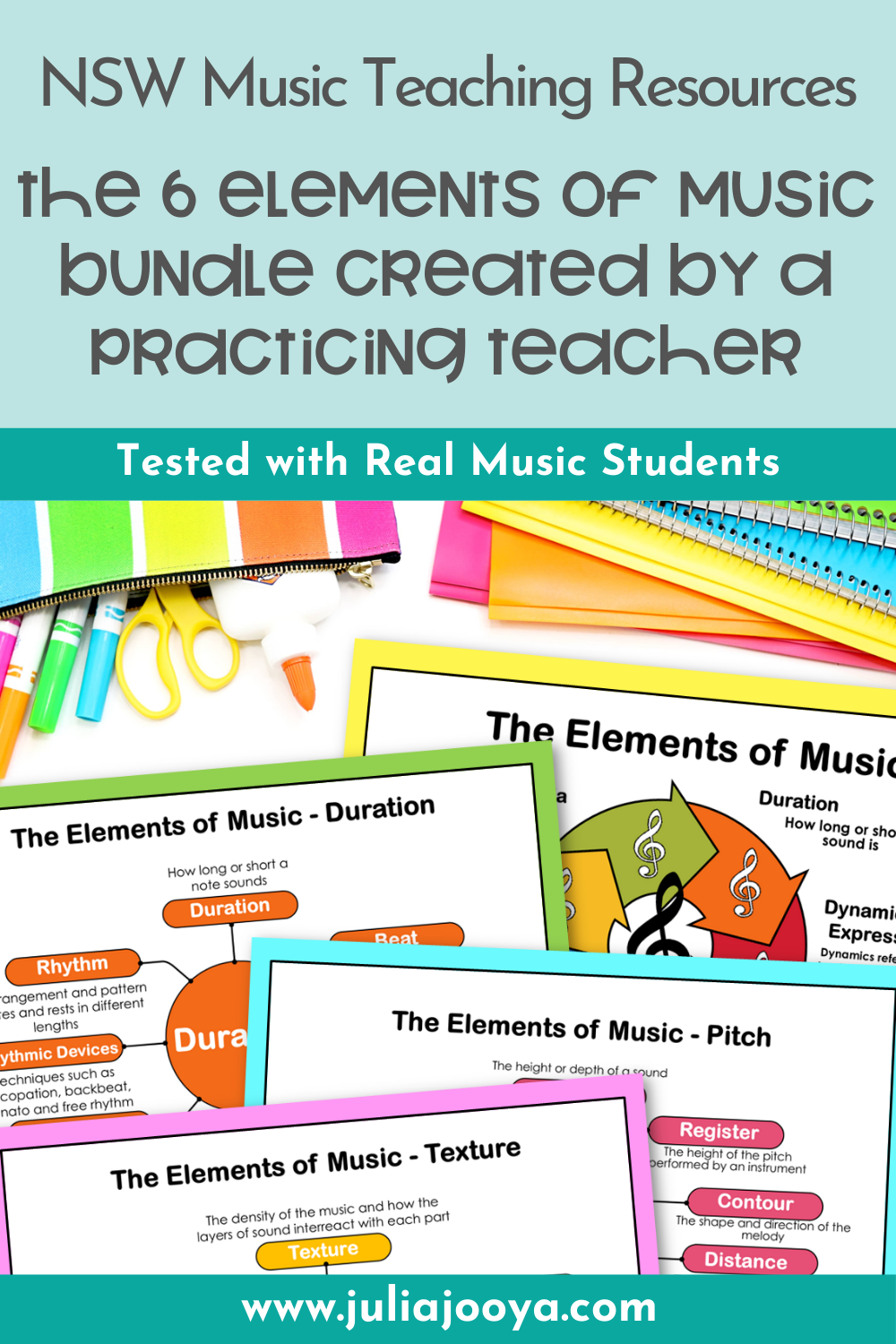
A Teacher-Created Resource Built for Real Classrooms
Before becoming a TPT author, I was a classroom teacher adapting resources daily — from overhead projectors to interactive whiteboards and everything in between. Every activity in this bundle has been tested with real students in Stage 4 and Stage 5 classrooms.
If something doesn’t work, it’s fixed — immediately.
That level of responsiveness simply isn’t possible with traditional textbooks.

How to Choose Music Teaching Resources for Your Classroom
When choosing music teaching resources to support the 6 Elements of Music, ask yourself:
- Does this resource support music literacy, not just content delivery?
- Can it be reused across multiple year levels?
- Does it reduce planning time?
- Does it support assessment and writing about music?
- Will it still be useful next year — and the year after?
If the answer is yes, you’re making a sustainable choice.
If you’re currently reviewing or updating your music teaching resources for the NSW Music Syllabus, take a closer look at what you already use — and where you’re still filling gaps manually.
And if you’d like a one-stop set of music teaching resources that supports the 6 Elements of Music across listening, literacy, assessment, and differentiation, the 6 Elements of Music Lessons & Worksheets Bundle was designed for exactly that purpose.
Until next time
Happy Teaching
Julia from Jooya