

Every music classroom is different.
Different students.
Different timetables.
Different school contexts.
Different levels of confidence, experience, and support.
So when it comes to teaching the 6 Elements of Music, there is no single “right” way to do it — only the way that works best for your music classroom and your students.
This final post in the series isn’t about telling you what to use.
It’s about helping you make calm, informed decisions that support learning — without pressure.
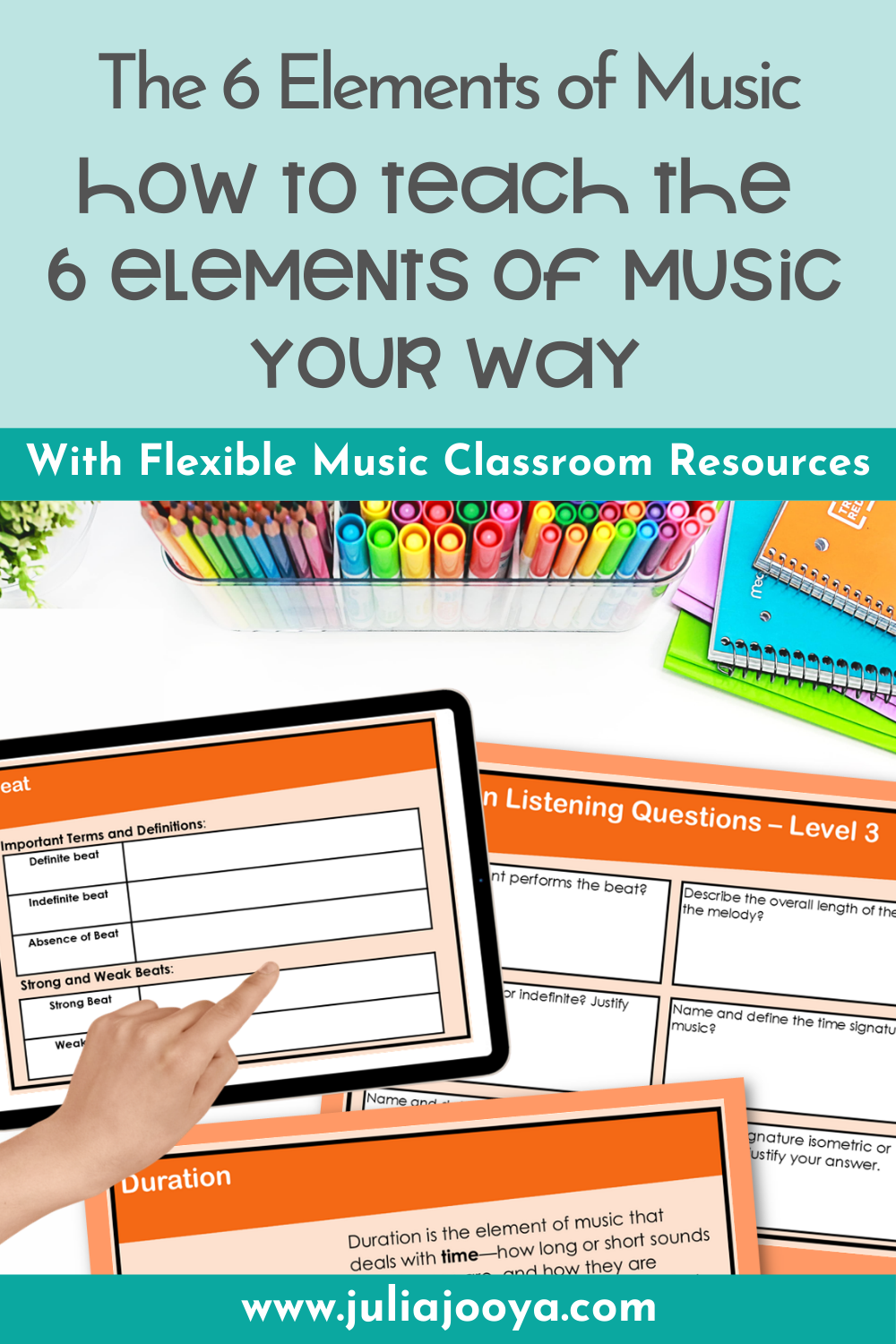
The Music Classroom Should Support Learning, Not Confusion for All Students
In the music classroom, clarity beats novelty.
Students learn best when they:
- hear the same musical ideas repeatedly
- encounter familiar language and structures
- understand what is being asked of them
- feel successful rather than overwhelmed
This is especially true when teaching the 6 Elements of Music across listening, composition, and written responses. When lessons constantly change format, students spend more time working out the task than engaging with the music.
A clear, consistent approach in the music classroom allows students to focus on:
- identifying musical elements
- developing music vocabulary
- improving music listening comprehension
- building confidence in writing about music
Good learning doesn’t come from flashy activities — it comes from understanding.
If writing is an area where students are losing confidence, small structural supports can make a big difference.
If your students struggle to explain what they hear in music, this will help.
Grab your free Stage 4 Listening Sentence Starters and Writing Pack and give them the structure they need to feel successful.
These sentence starters are designed to slot into any listening lesson — regardless of the approach or resources you use.
Get your Free Listening Sentence Starters here
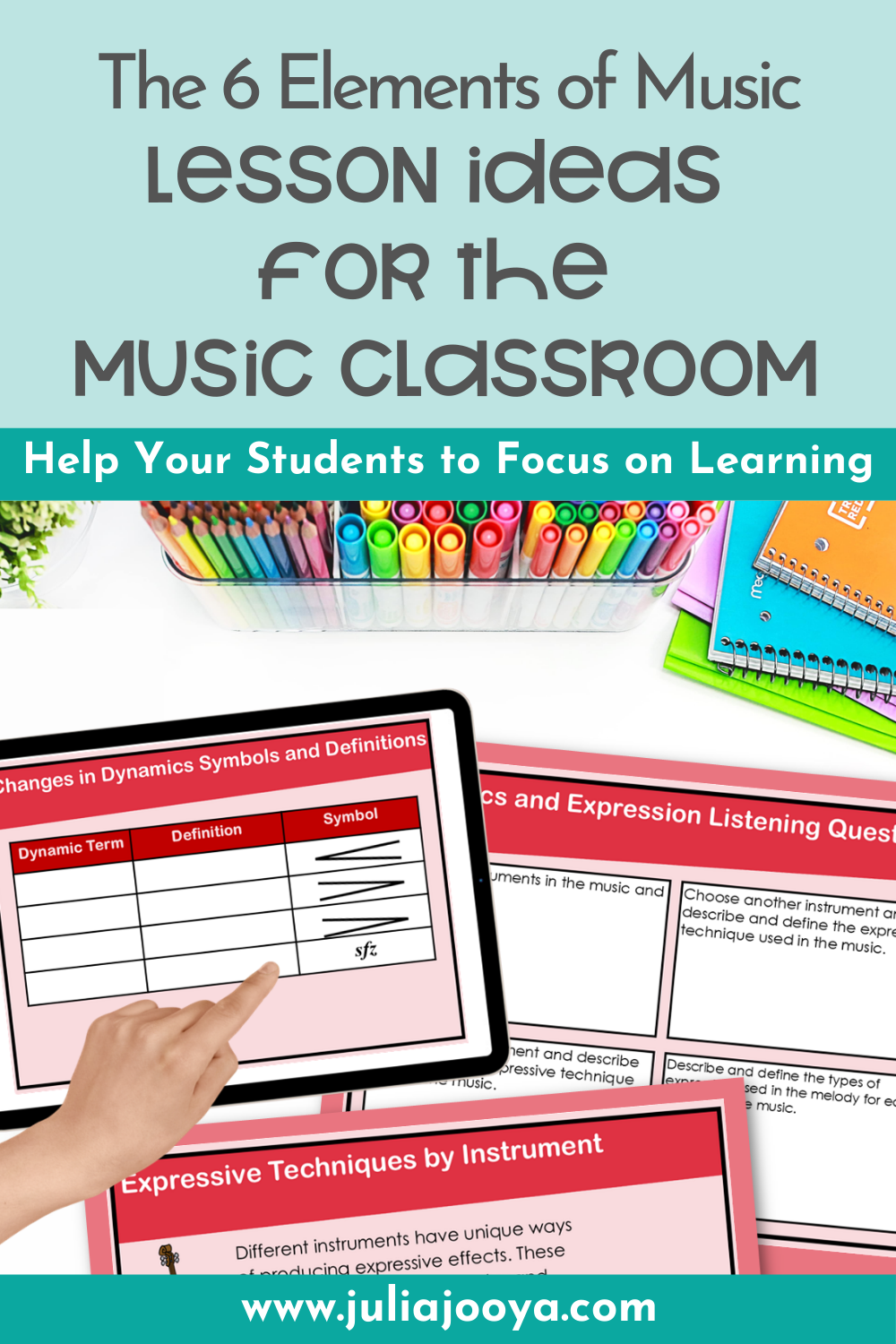
There Is No One “Right” Way to Teach in the Music Classroom
This is the part many teachers need to hear:
You are allowed to teach the 6 Elements of Music your way in your music classroom.
Some teachers prefer to:
- research the elements themselves
- build units from scratch
- design bespoke tasks for their students
Others prefer to:
- start with ready-made materials
- adapt existing resources
- focus their energy on delivery rather than creation
And many teachers use a mix of everything.
All of these approaches are valid.
What matters most is that the approach you choose:
- fits your teaching context
- supports your students
- is sustainable across the year
Autonomy in the music classroom isn’t a weakness — it’s professionalism.
If you’ve ever felt pressure to “do more” or constantly reinvent lessons, you may find this post helpful:
What Gets in the Way of Teaching Music Literacy Effectively
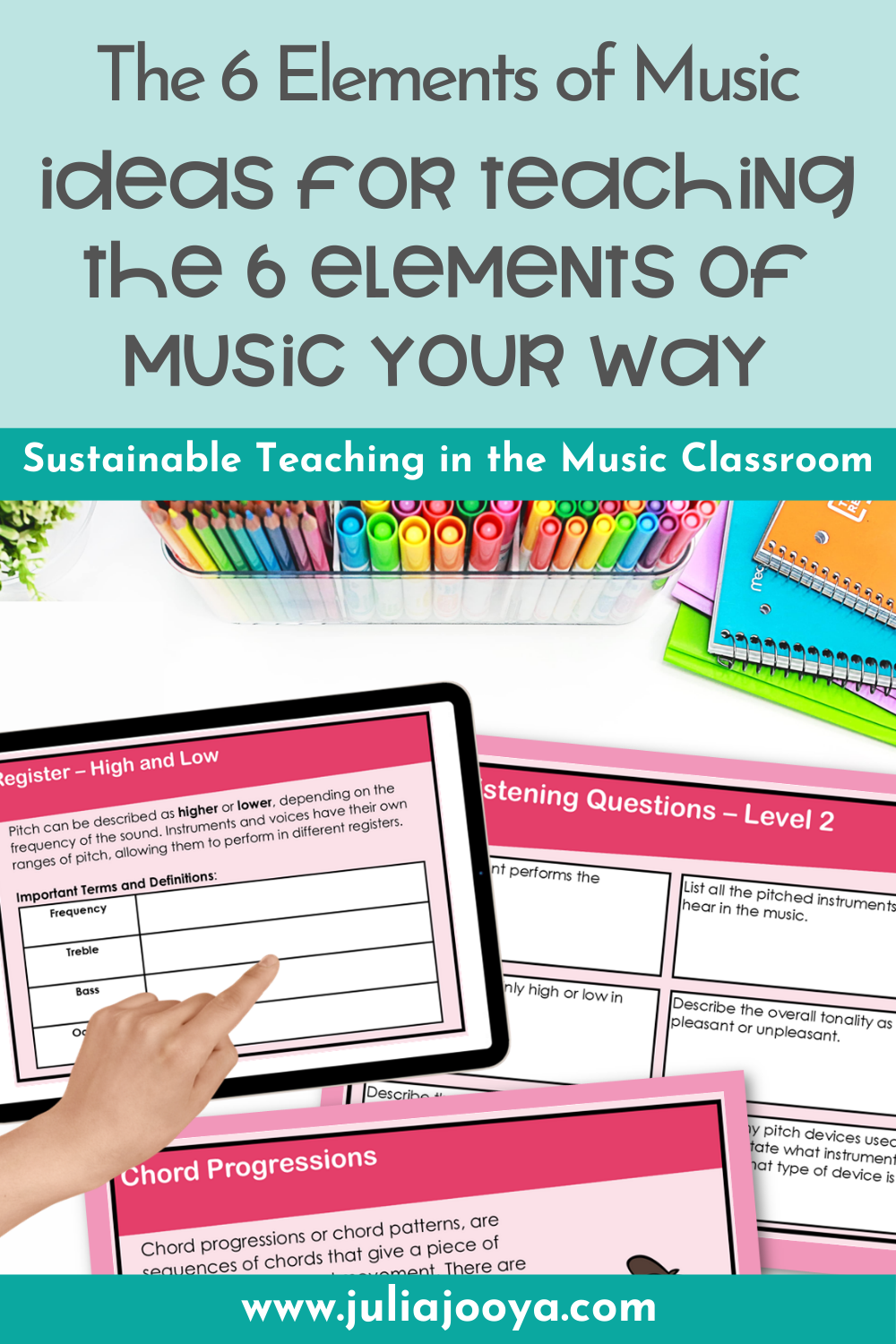
Preparing to Teach the 6 Elements of Music in the Music Classroom: Your Options
When preparing to teach the 6 Elements of Music, there are several ways you might approach planning for your music classroom.
You might choose to:
- Start from scratch
Research each element, create your own explanations, listening tasks, and worksheets, and build your program over time. - Use syllabus support materials
Draw on resources from the NSW Department of Education and adapt them to suit your students and teaching style.
NSW Music 7–10 support materials: Link to the NSW Music Syllabus Support Documents here. - Use a textbook
Select content that fits your needs and modify it to suit mixed abilities and your specific music classroom context. - Use a comprehensive bundle
Choose a classroom-ready set of materials that already includes teaching slides, worksheets, listening tasks, scaffolds, and assessment support — and adapt what you need. - Blend approaches
Combine your own materials with existing resources, taking what works and leaving the rest.
There is no hierarchy here. The best option is the one that helps you teach with confidence.
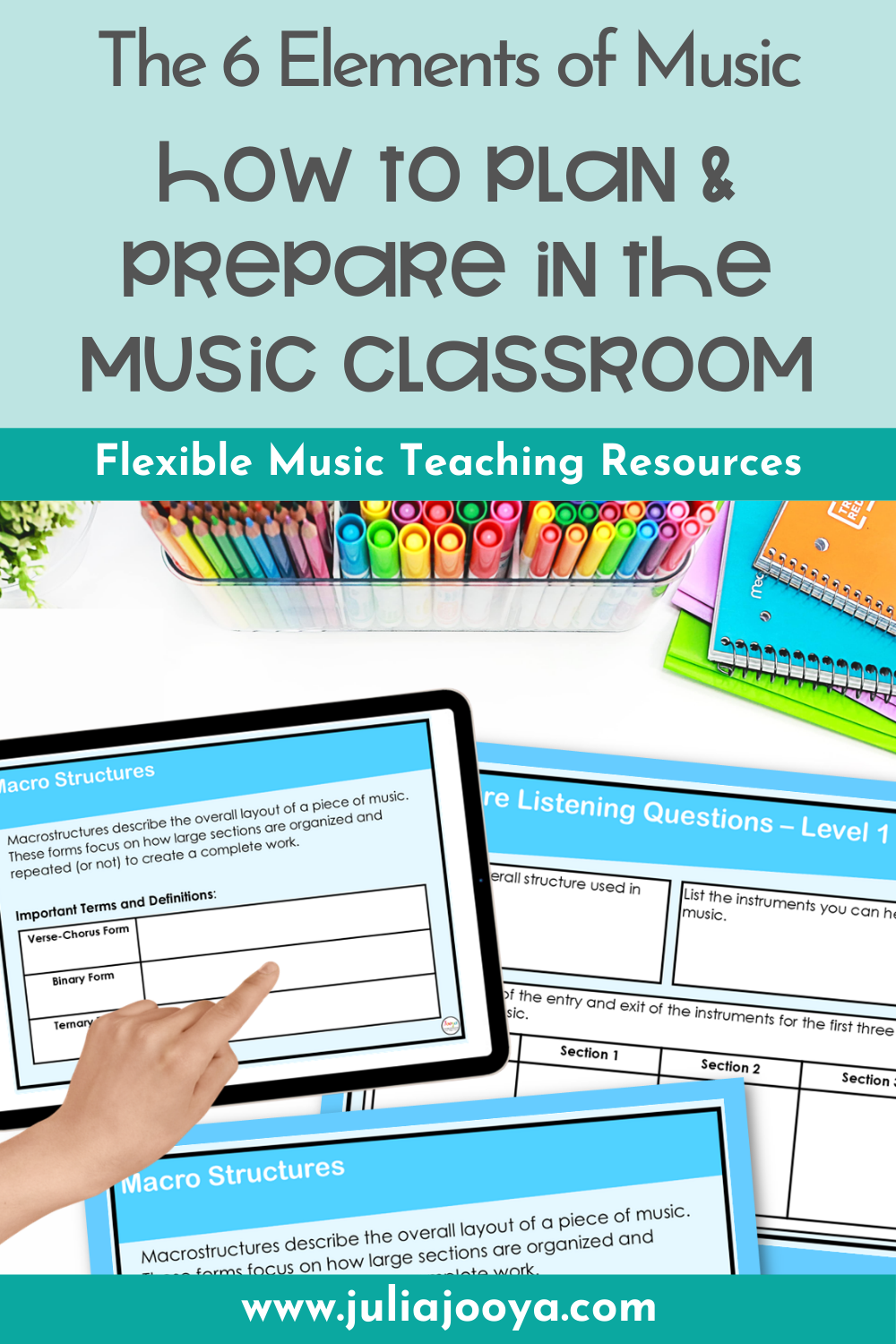
Music Classroom Resources Are Tools — Not the Teaching
Here’s the quiet but important reframe:
This isn’t about resources.
It’s about teaching.
Good music classroom resources should disappear into good teaching. They should:
- support your explanations, not replace them
- reduce planning time, not add to it
- make lessons flow more smoothly
- help students understand musical ideas more clearly
When resources are doing their job well, students don’t notice them — they notice that learning makes sense.
That’s when the music classroom feels calm, focused, and purposeful.
If you’re refining how students write about what they hear, this pairs well here:
A Simple 5 Step Process for Writing About Music
And if you’d like an easy way to support that process:
I created a free resource to make music writing easier for your students.
Get your Stage 4 Listening Sentence Starters and Writing Pack here.
It’s designed to support clarity — without locking you into a single teaching method.
Choosing Support That Works for Your Music Classroom
If you choose to use support, it should help you:
- save time when planning
- support a wide range of learners
- teach the 6 Elements of Music consistently
- reuse materials across Stage 4 and Stage 5
- focus on student understanding rather than resource creation
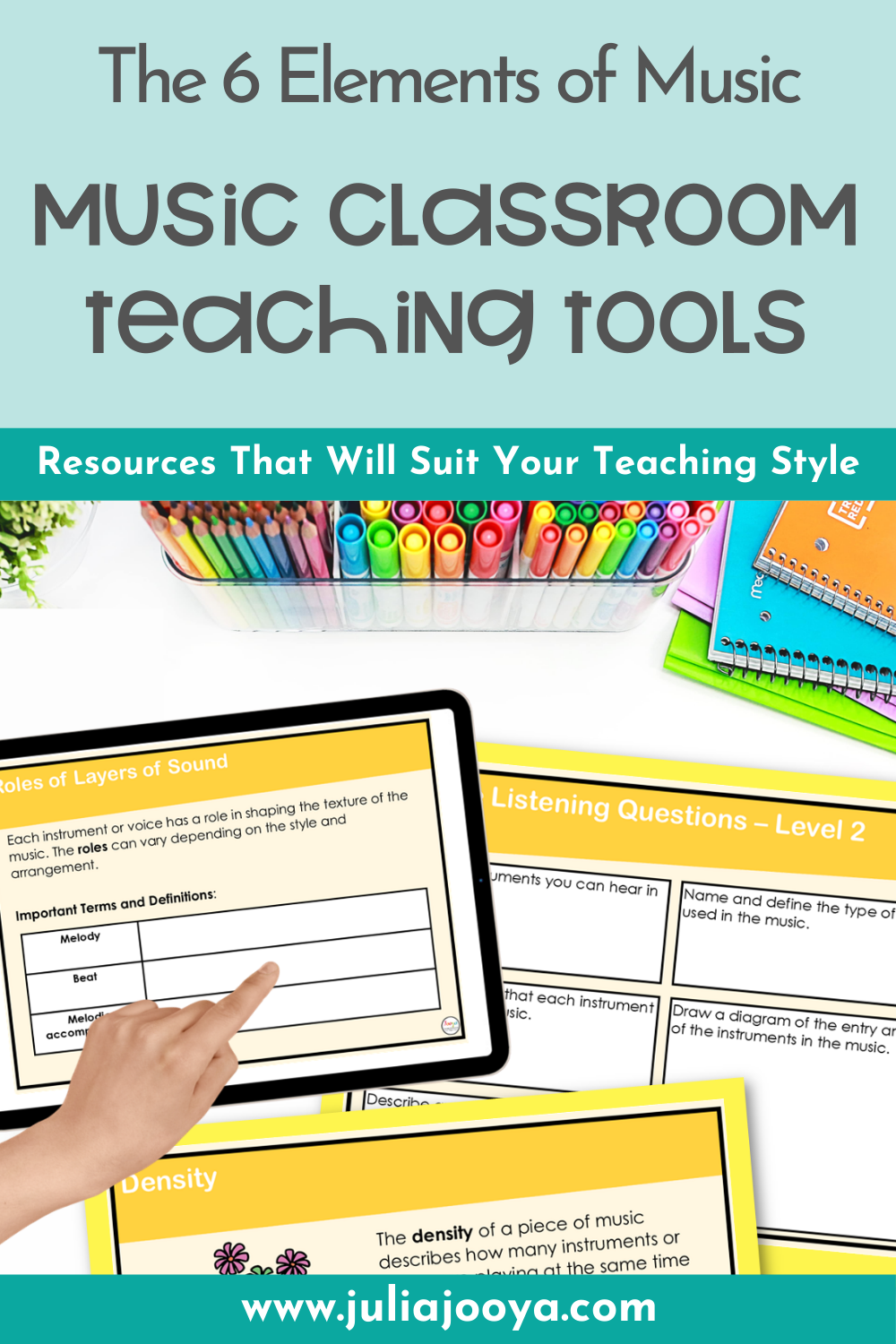
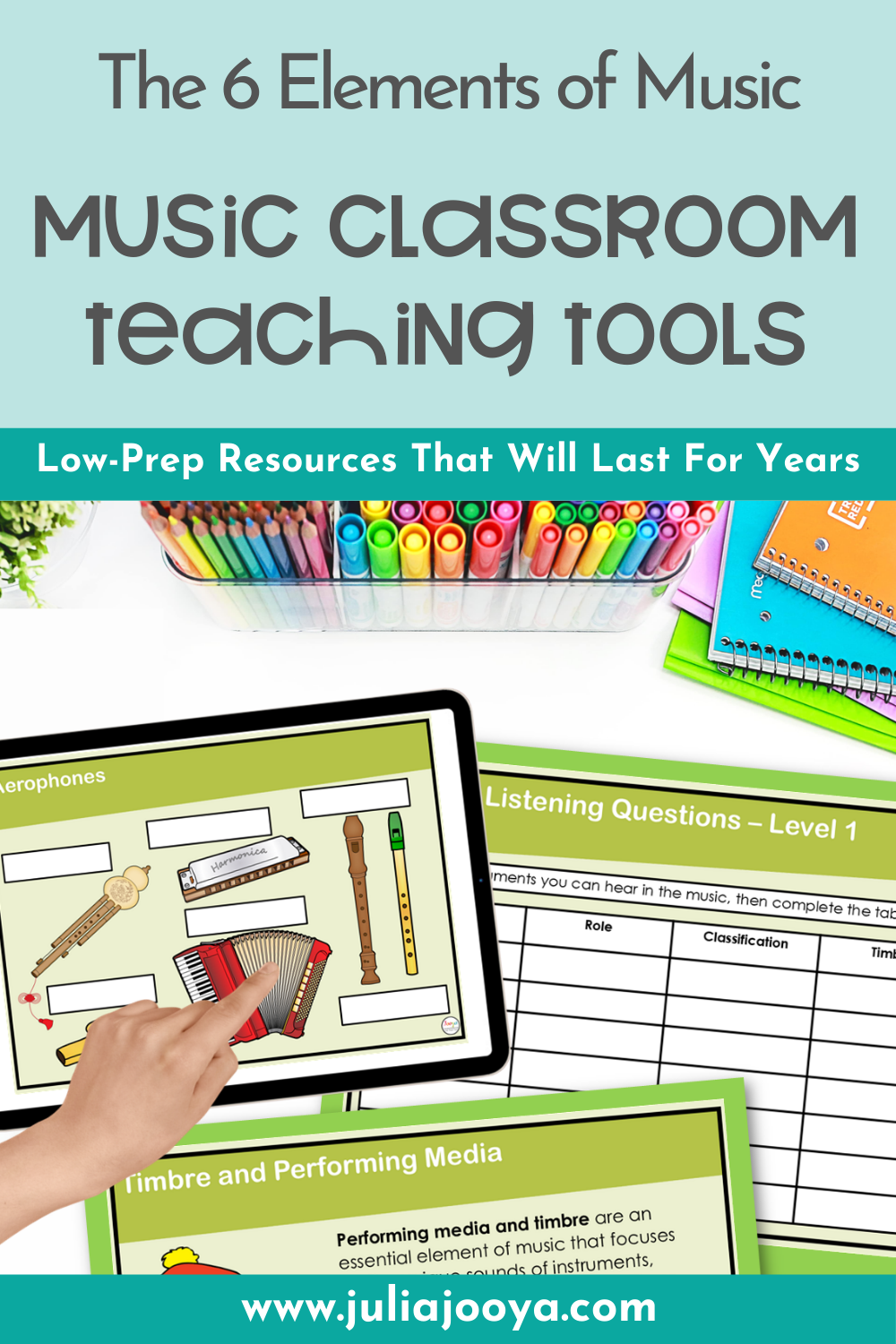
The 6 Elements of Music Lessons & Worksheets Bundle for the New NSW Syllabus was designed with exactly this in mind. It brings together:
- teaching slides with listening examples
- printable and digital student materials
- scaffolded listening questions
- extension and differentiation options
- assessment-ready tasks and examples
Think of it as an Elements of Music teaching toolkit for the music classroom. Like any good toolkit, you don’t use every tool every time — but having them available makes the job easier.
A Calm Way Forward for Your Music Classroom
As you plan for your music classroom, take a moment to reflect:
- What helps your students learn best?
- What saves you time and energy?
- What feels sustainable across the year?
You don’t need to overhaul everything.
You don’t need to follow one perfect method.
You just need an approach that works — for you and your students.
If you’d like to explore optional support, you can view the 6 Elements of Music Lessons & Worksheets Bundle here: Link to the Bundle
Use what helps.
Leave what doesn’t.
That’s what good teaching in the music classroom looks like.
Until next time,
Happy Teaching
Julia from Jooya