
Low student engagement is one of the biggest challenges when it comes to teaching music terminology. Many students see music terms as abstract or disconnected from what they actually do in music lessons, which can make vocabulary learning feel tedious or forgettable.
The reality is that music terminology plays a crucial role in music literacy. When students understand and can confidently use music terms, they are far better equipped to listen, perform, compose, and explain musical ideas across all areas of study in the music classroom.
Over the years, I’ve found that music vocabulary sticks best when students encounter it repeatedly, in different ways, and in collaborative learning situations — not as a one-off worksheet or glossary task.
Many of the strategies I use today were inspired by a professional learning session I attended years ago through Kagan Cooperative Learning. The ideas shared in that workshop completely changed how I approached vocabulary learning in my music classroom. While there were plenty of Kagan examples for subjects like English and Mathematics, there was very little designed specifically for music — so I adapted the strategies myself.
Here are five practical, classroom-tested ideas for teaching music terminology that work across Stage 4 and Stage 5 music classes.
How would you like a free, ready-made music writing scaffold for your students?
Grab the Stage 4 Listening Sentence Starters and Writing Pack to help your class use music vocabulary correctly and write clearer, more detailed music responses.
A perfect introduction for listening tasks, written assessments, and building confidence with musical terminology.
Click here to get your FREE Listening Sentence Starters
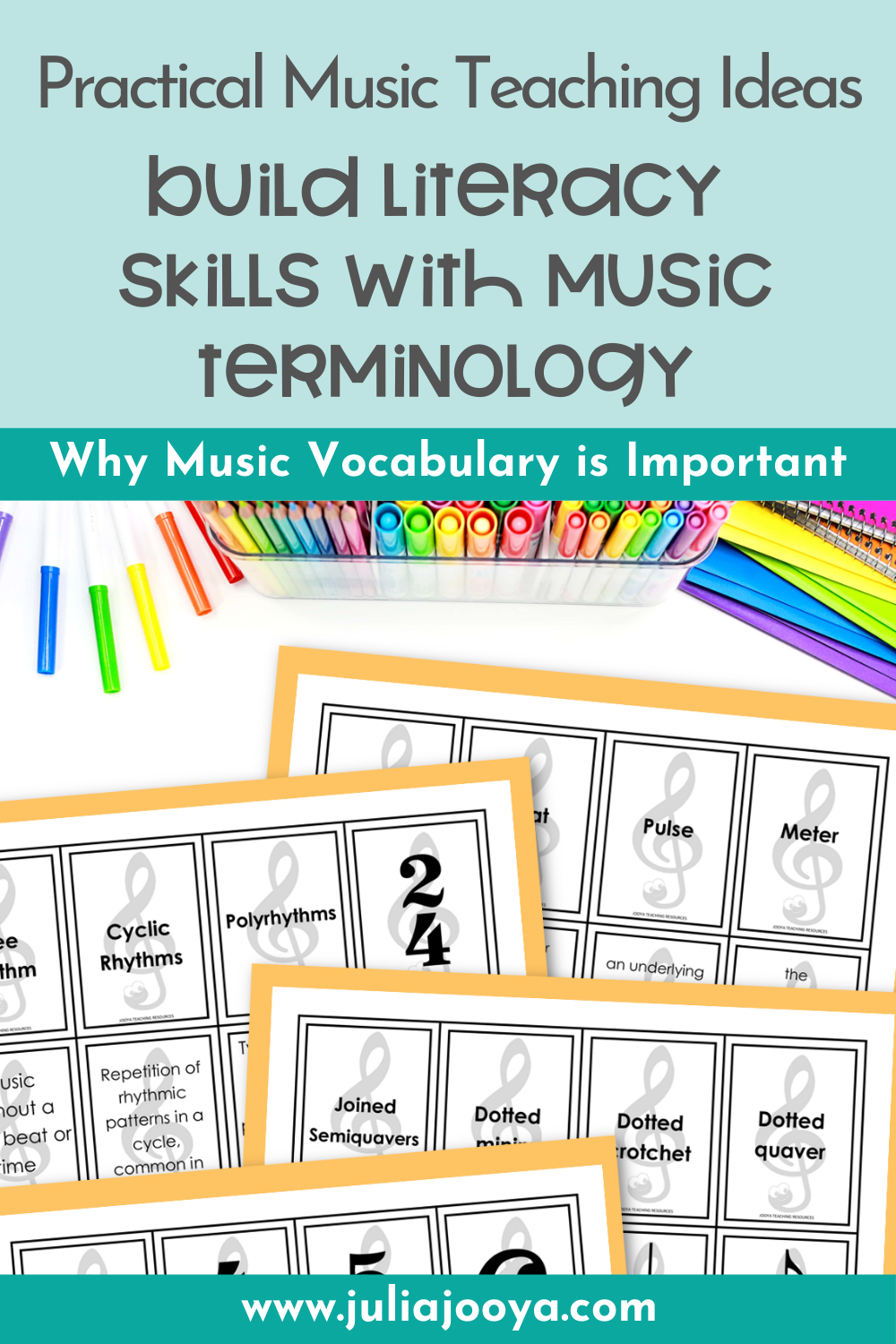
Why Teaching Music Terminology Matters for Music Literacy
Music terminology is more than just knowing definitions. It allows students to:
- describe what they hear using accurate musical language
- explain how musical elements are used in real pieces of music
- communicate ideas clearly in listening, performing, and composition tasks
- build confidence when responding to assessments and class discussions
Without explicit teaching of music terms, students often resort to guessing. Guessing does not lead to clarity, confidence, or strong music analysis skills.
-
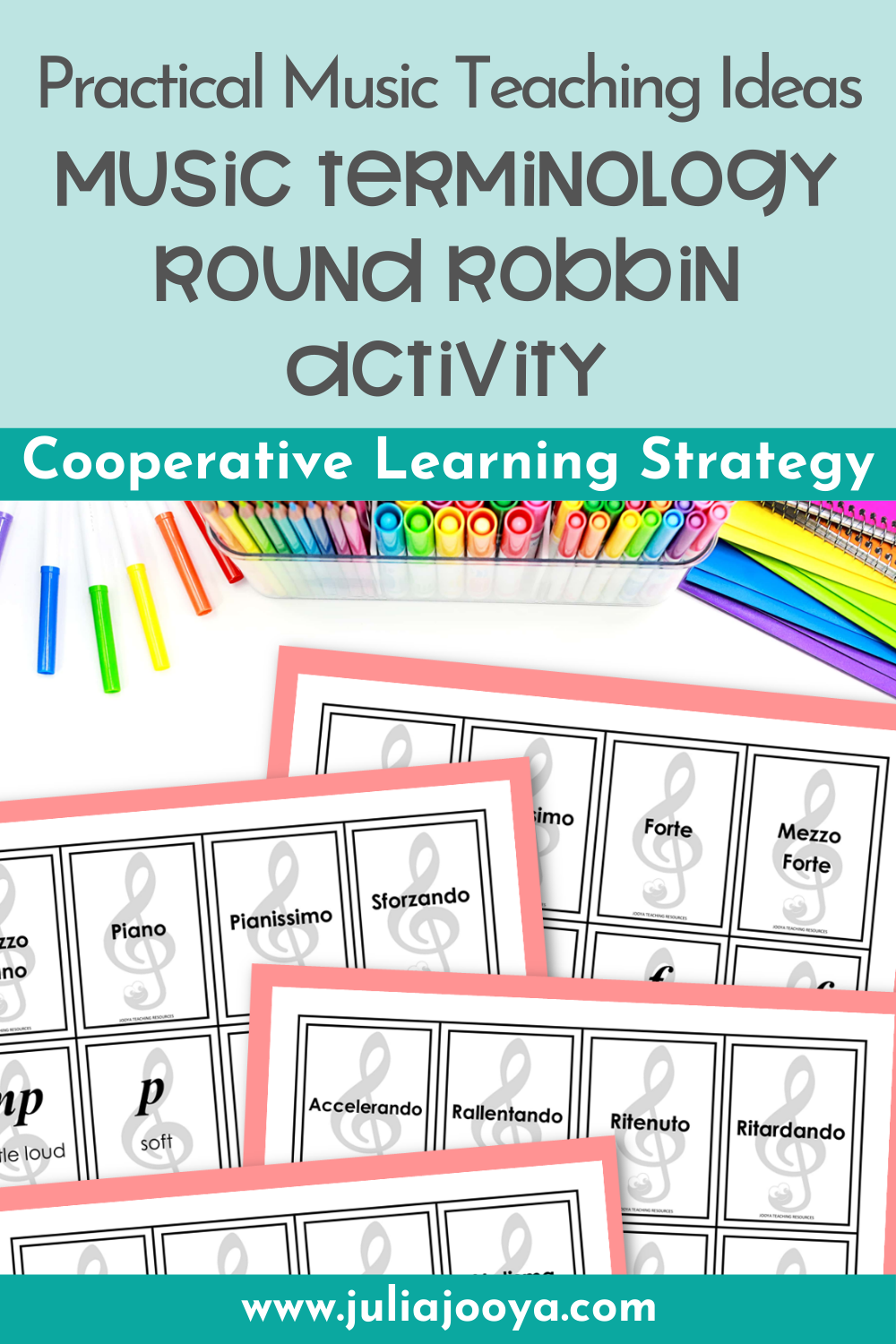
Music Terms Round Robin – a Small Group Strategy
This is one of my most-used music terminology activities, adapted from Kagan’s Round Robin strategy.
How it works:
- Students work in small groups of 3–5.
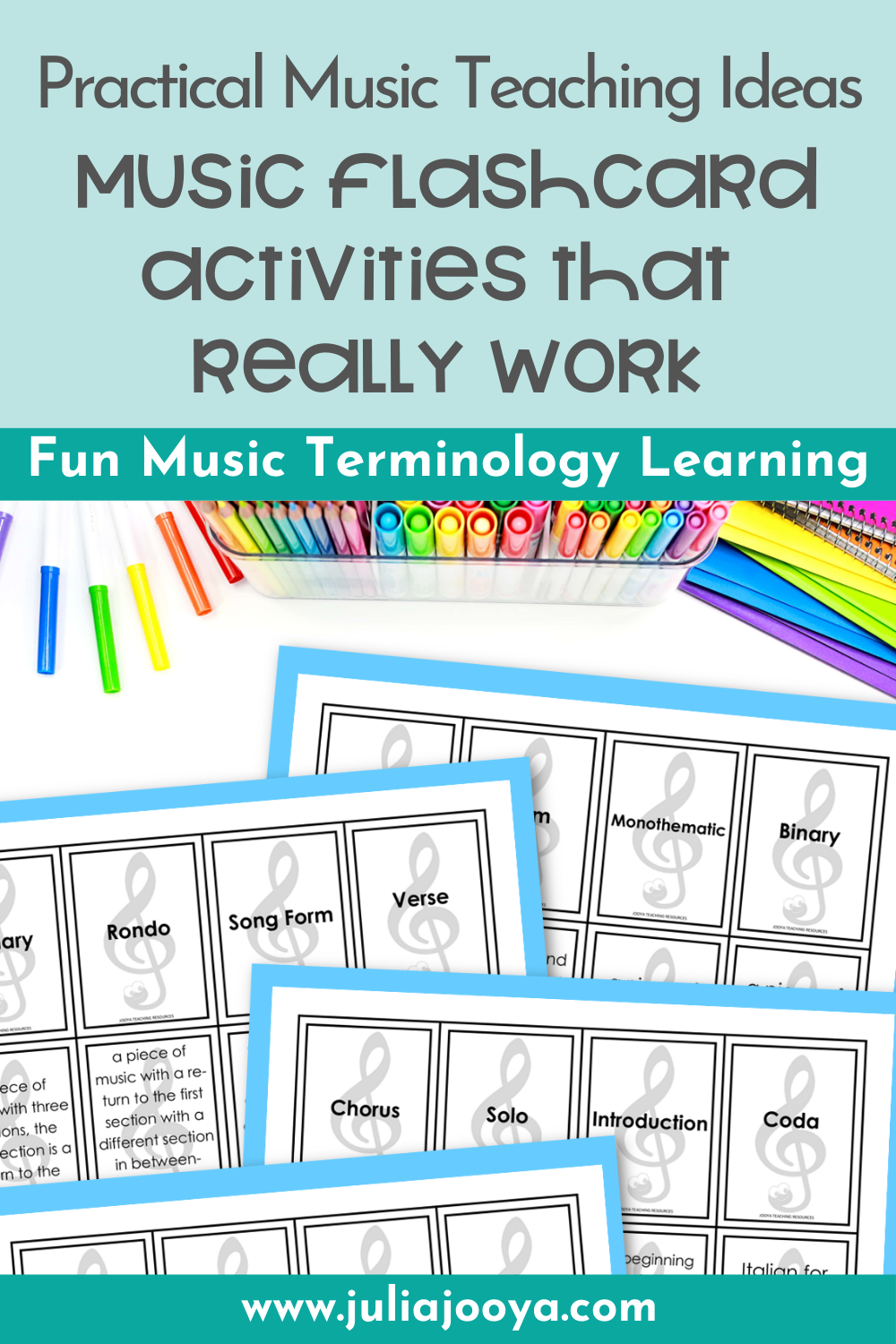
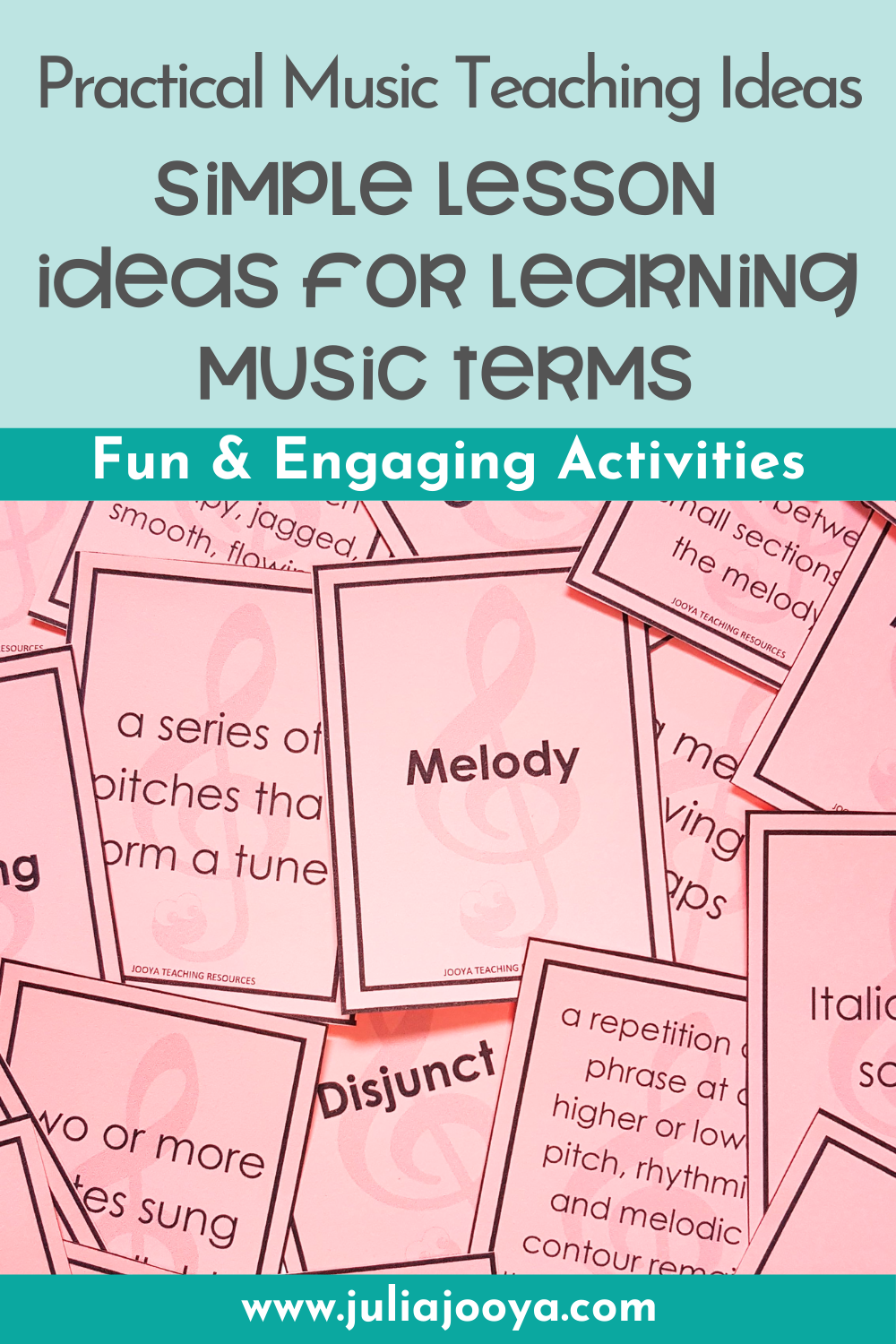
- Each group receives a set of music term cards.
- Cards are divided evenly between students.
- One student asks the person next to them for the definition of a term (for example, melody).
- If the answer is correct, the card is placed in the centre.
- If incorrect, the correct definition is shared, the question is repeated, and the card stays with the caller.
This continues until all cards are placed in the centre.
This activity keeps students engaged, encourages peer support, and provides repeated exposure to music vocabulary without pressure.
-
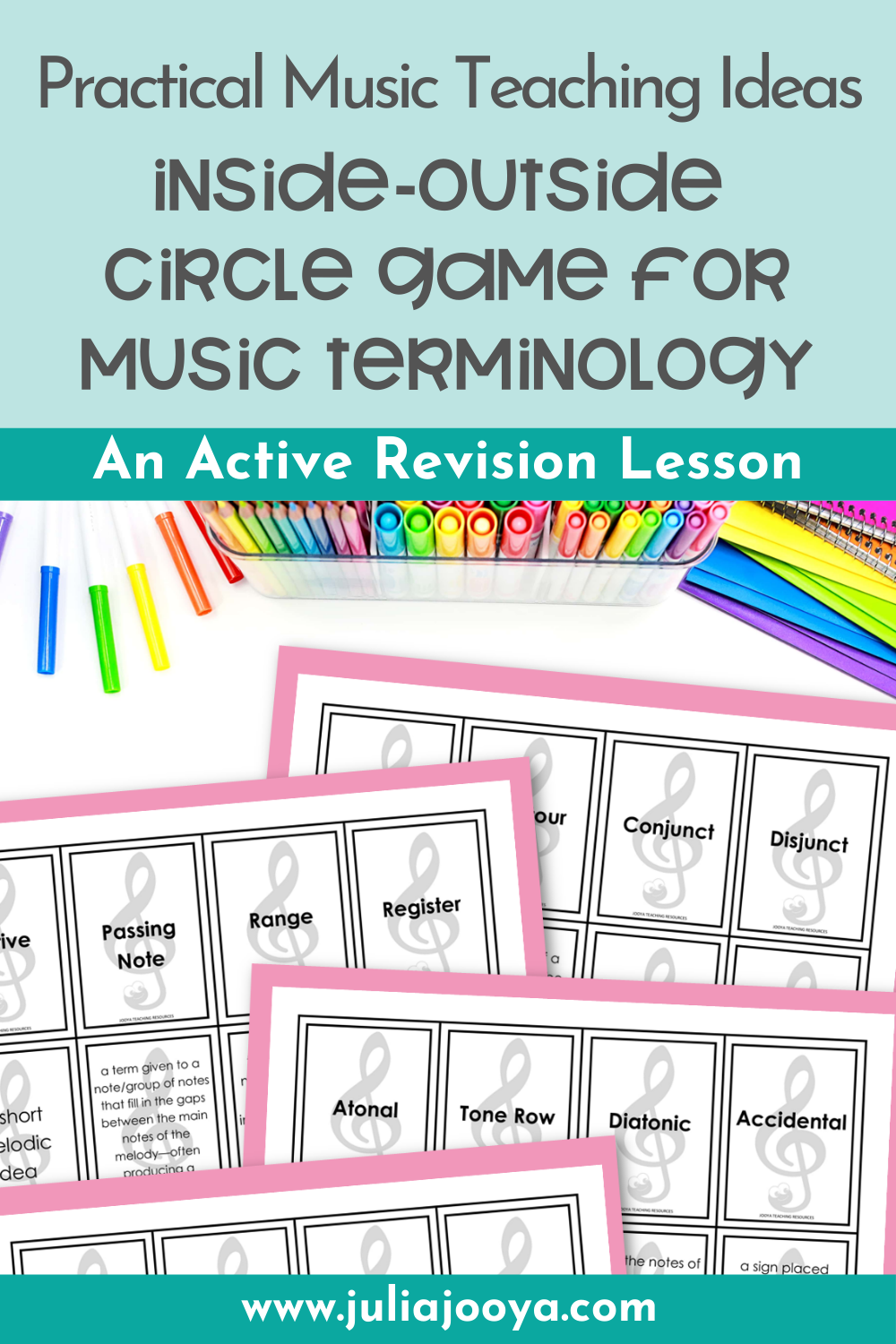
Music Terminology Inside–Outside Circle – a Whole Class Strategy
Another strategy adapted from Kagan Cooperative Structures, this works particularly well for revising music terminology.
How it works:
- Students form two concentric circles facing each other.
- One student asks a music terminology question.
- Their partner answers, then receives feedback or coaching.
- Students swap roles, trade cards, and rotate to a new partner.
This structure works beautifully for:
- revising musical elements
- reinforcing definitions
- encouraging verbal use of music terminology
A variation of this is the Inside–Outside Line, which works better in smaller classrooms.
You can learn more about these cooperative structures at Kagan Cooperative Structures
-
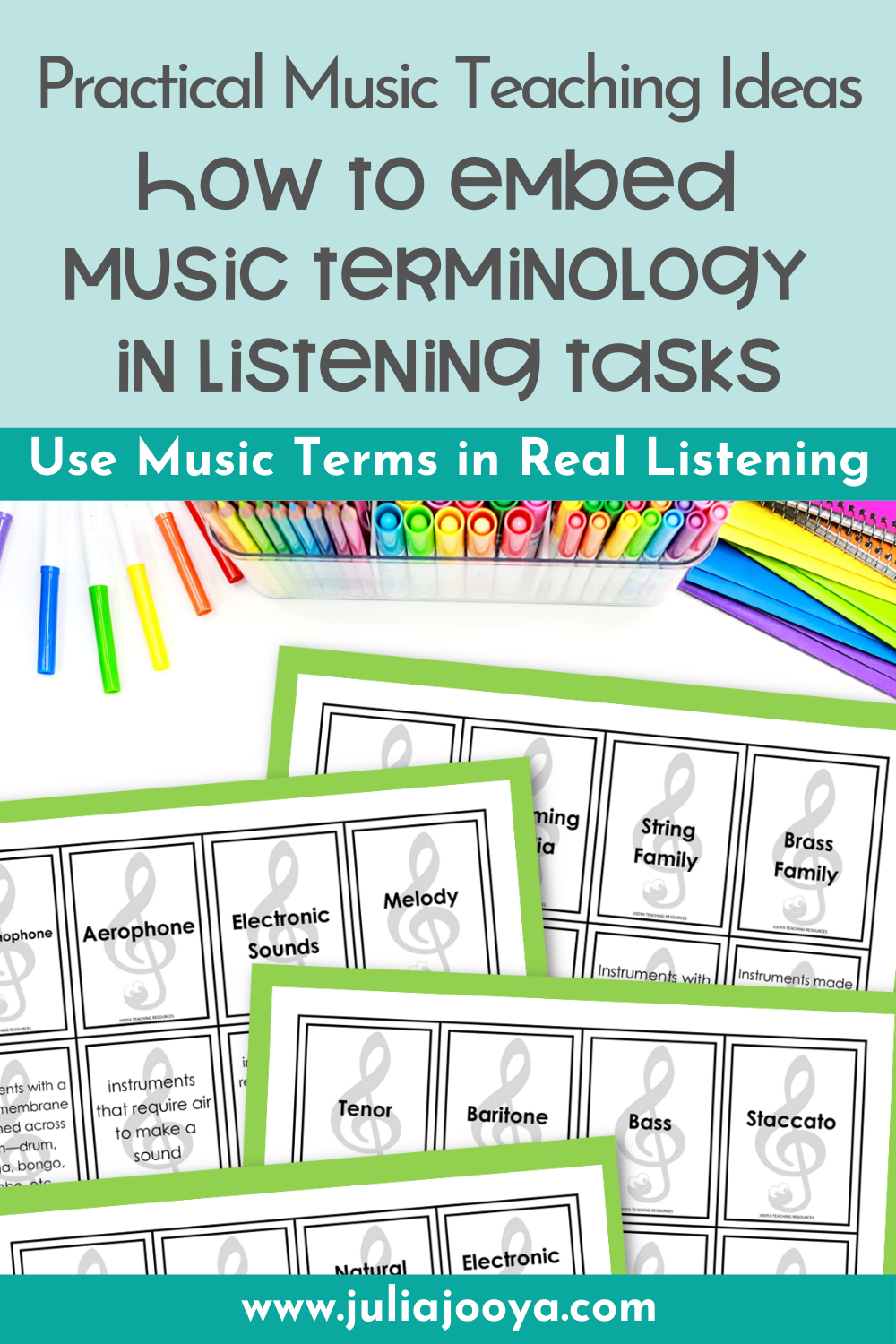
Music Vocabulary Flashcard Stations – Small Group Activity
Music terminology stations are a simple way to build repeated exposure into a lesson.
Set up short activities around the room, such as:
- matching terms to definitions
- identifying terms from short listening excerpts
- explaining a term using an example
Students rotate through stations in small groups, engaging with the same music terminology in different contexts. This approach works particularly well in longer lessons or double periods.
-
Using Music Terminology in Listening Tasks
Music terminology should be embedded into listening tasks, not separated from them.
Instead of asking students to simply “describe what they hear,” prompt them to:
- identify specific musical elements
- use correct music terminology in their responses
- explain how those elements are used
Over time, students become far more confident using music terminology because it becomes part of their normal listening routine.
I’ve turned this strategy into a printable worksheet pack you can use in class.
Get your free Stage 4 Listening Sentence Starters and Writing Pack here.
-
Music Term Games for Revision
Games can be a powerful way to reinforce music terminology without increasing workload.
Simple ideas include:
- quick-fire definition challenges
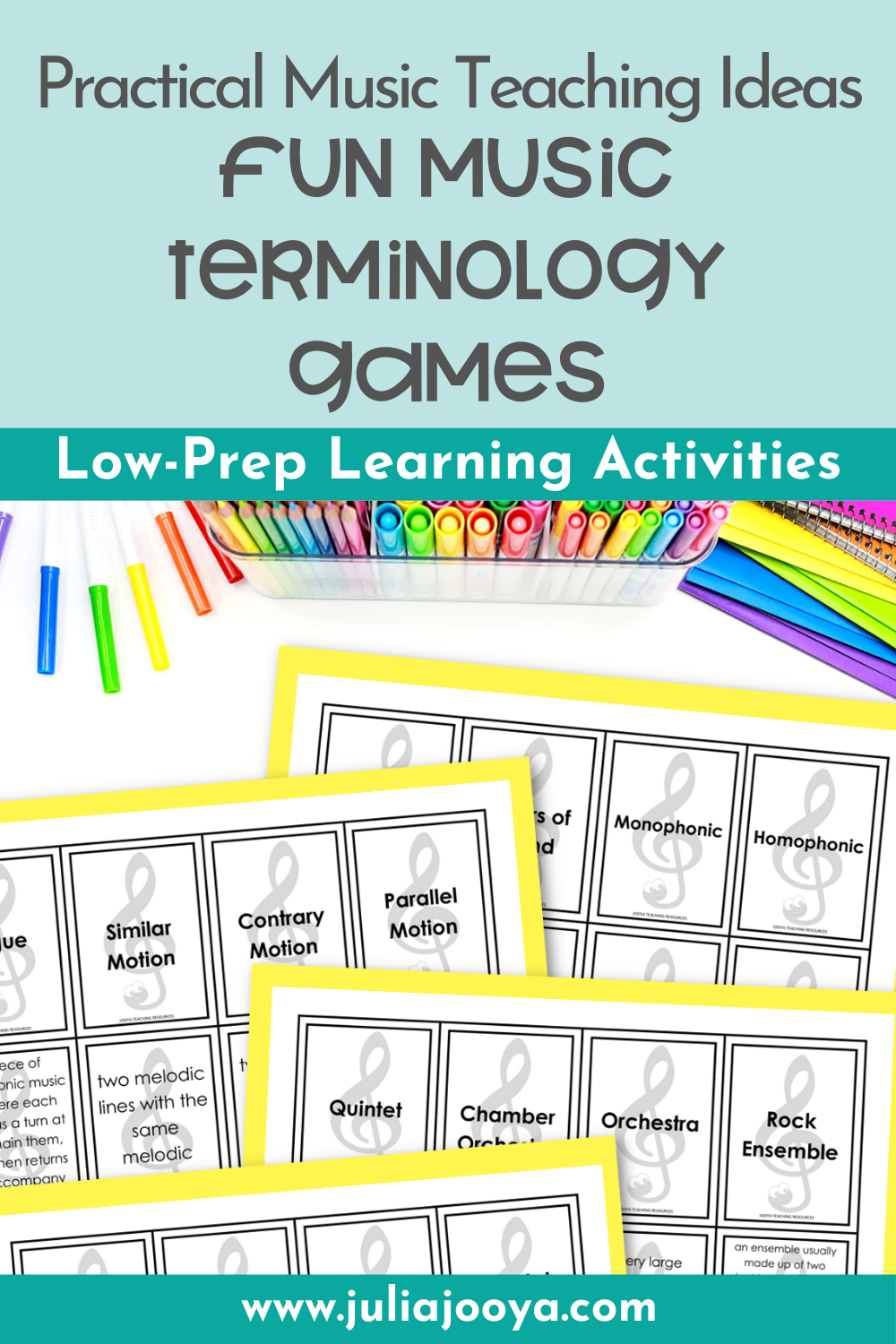
- team quizzes using terminology cards
- timed group sorting activities
These low-stress activities are ideal during busy terms or just before assessments, and they help students revise music terminology without feeling overwhelmed.
Want to take this even further?
If you’re looking for more ways to help students actually analyse music — not just describe it — you’ll love my post How to Teach How to Analyse Music in a Way That Actually Sticks. It shows you how to move your music students from surface-level answers to clear, structured musical analysis using practical classroom strategies.
Link to How to Teach How to Analyse Music in a Way That Actually Sticks.
And if you want a deeper dive into why vocabulary matters so much, don’t miss What Gets in the Way of Teaching Music Literacy Effectively. It breaks down how strong music terminology supports listening, performing, and composition across all year levels.
Both posts pair perfectly with the strategies in this article and will give you a clear, connected approach to building confident music learners.
Link to What Gets in the Way of Teaching Music Literacy Effectively
Teaching Support: Music Terminology That’s Ready to Use
One thing I learned very early on is that good music terminology resources are worth the time investment.
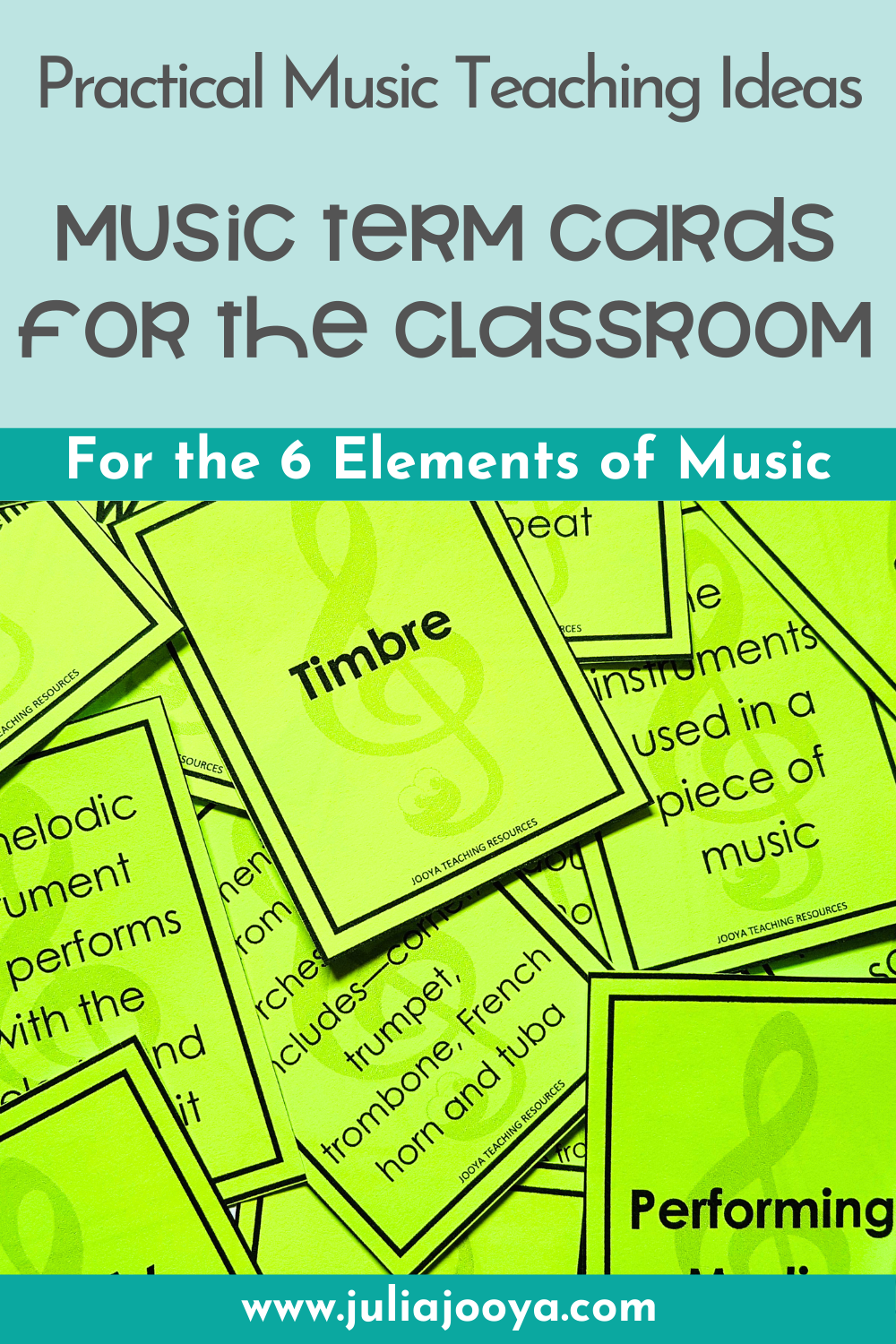
Years ago, I created my own music terminology cards because nothing existed for music teachers. Those original sets lasted me nearly a decade and were used across multiple year groups.
- Duration
- Dynamics and Expression
- Pitch
- Structure
- Texture
- Timbre
These cards are designed to support cooperative learning strategies like the ones above and are included in the 6 Elements of Music Lessons & Worksheets Bundle, or available separately.
They are suitable for Stage 4 and Stage 5 and can be reused year after year.
You don’t need to overhaul your entire music teaching and learning programs to improve music terminology learning.
Why not try one idea from this list this week:
- adapt a cooperative learning structure
- Add music terminology prompts to a listening task
- use music terminology cards in a small group activity
Small, consistent changes over time will make a big difference to the music literacy skills of all your students.
When students are confident using music vocabulary, it strengthens everything else they do in the music classroom.
And if you are ready to try these ideas why grab the NSW Elements of Music Bundle today!
Until next time
Happy Teaching
Julia from Jooya