
If you’ve ever read a student’s listening response and wondered “Did we even listen to the same piece of music?”, you’re not alone.
Many high school music teachers work incredibly hard to plan engaging music lessons, select strong and engaging listening examples, and ask thoughtful questions — yet their music students still struggle to describe what they hear. Written responses are vague, full of opinion, or the responses drift into artist biography rather than music analysis.
This is not a student motivation or engagement issue.
It’s a music literacy issue.
In this post, I want to unpack what often gets in the way of teaching music literacy effectively, why these roadblocks are so common, and what actually helps students develop the skills they need to listen, analyse, and write about music with confidence.
But, before we get into the details, here’s a free resource to help your students move from vague answers to detailed responses.
Download the free Stage 4 Listening Sentence Starters and Writing Pack today.
Why Music Literacy Is Often Assumed Instead of Taught
When I started teaching, and even during my teacher training, no one explicitly explained the importance of teaching music literacy skills in the classroom.
Music literacy was implied.
It was something students were expected to pick up along the way.
Students listened to music.
They answered questions.
They completed assessments.
But no one ever showed me how to teach students to understand, describe, and explain music using subject-specific language.
It wasn’t until after a few years into my career that I realised something important:
Successful Stage 6 music students starts in Stage 4.
If music students don’t develop music literacy for the 6 Elements of Music in Years 7 and 8, everything that follows becomes harder — not just listening tasks, but performance reflections, composition evaluations, and extended written responses.
Music literacy is not an optional add-on.
It is the language of the subject.
How this Breaks Down in the Classroom
One of the biggest roadblocks to teaching music literacy effectively is that most music students simply don’t know what to listen for.
They hear the music, but they can’t explain it.
Without clear guidance, students default to:
- vague descriptions
- personal opinions
- surface-level comments
- unrelated background information
This shows up clearly in music listening tasks and written responses. Teachers ask good questions, but students don’t have the tools or language to answer them.
This is especially common in:
- Stage 4 listening activities
- Stage 5 music analysis tasks
- middle school and high school music listening assessments
When students don’t understand the 6 elements of music — duration, pitch, dynamics and expression, structure, texture, and timbre — they have nothing solid to anchor their thinking.
Why Music Literacy Requires Explicit Teaching
Music literacy improves when it is taught deliberately and consistently, not assumed.
Just like literacy in English or Geography, students need:
- explicit teaching of vocabulary
- repeated exposure to key musical ideas and concepts
- structured opportunities to apply musical language
- repeated modelling of strong responses
Music literacy includes:
- knowing music terms
- understanding how musical elements sound
- recognising those elements in real music
- using that understanding in speaking and writing
If students don’t have access to music terminology and structured listening questions, they are guessing — and guessing does not lead to confidence or clarity.
This is exactly why I put together a free Stage 4 Listening Sentence Starters and Writing Pack — to help students structure their responses.

What Teaching Music Literacy Looks Like in Practice
In my own classroom, music literacy is built into most lessons, as well as through whole-class listening tasks, supported by structured resources.
This typically includes:
- explicit teaching of music terms
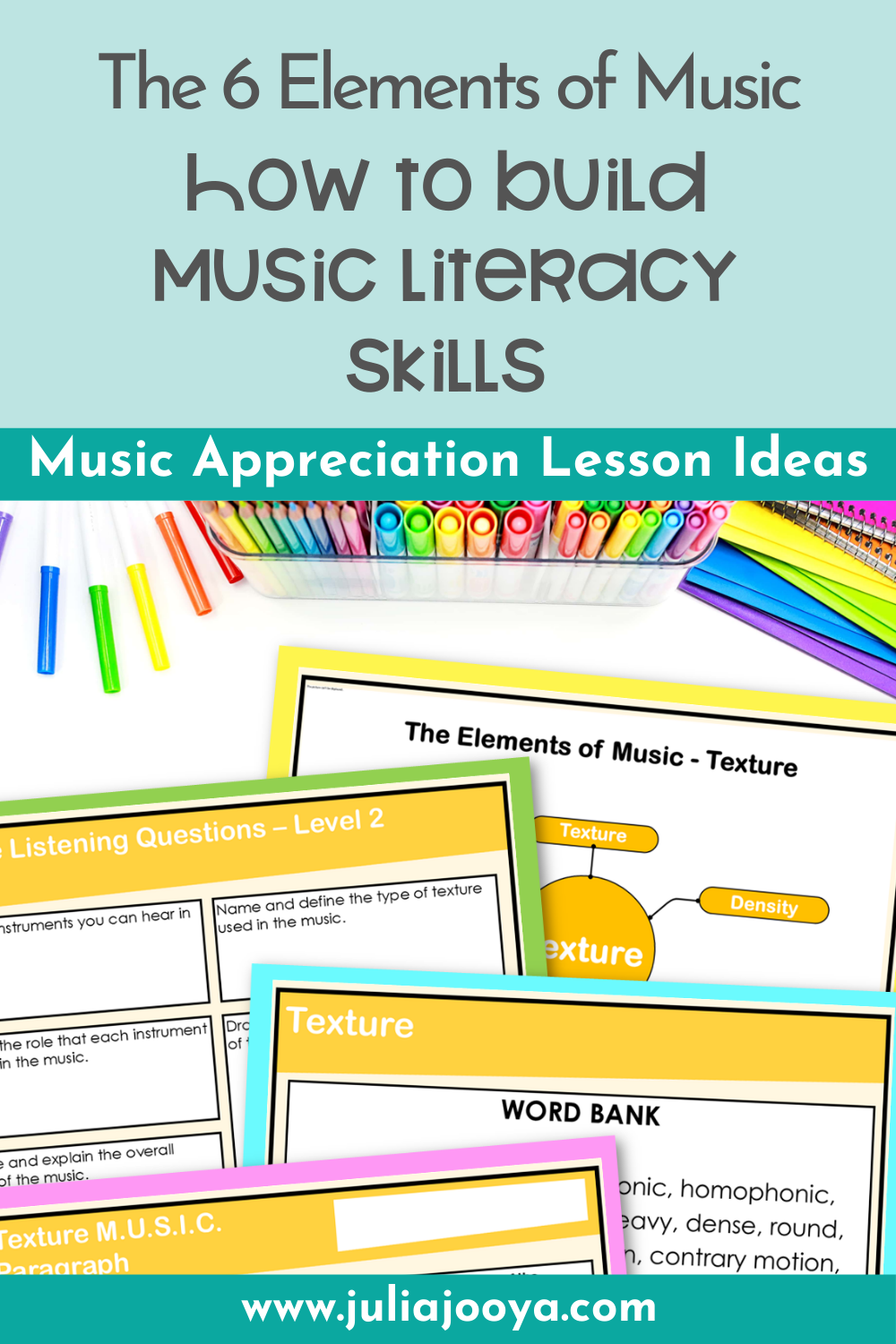
- visual supports such as mind maps
- music listening question cards
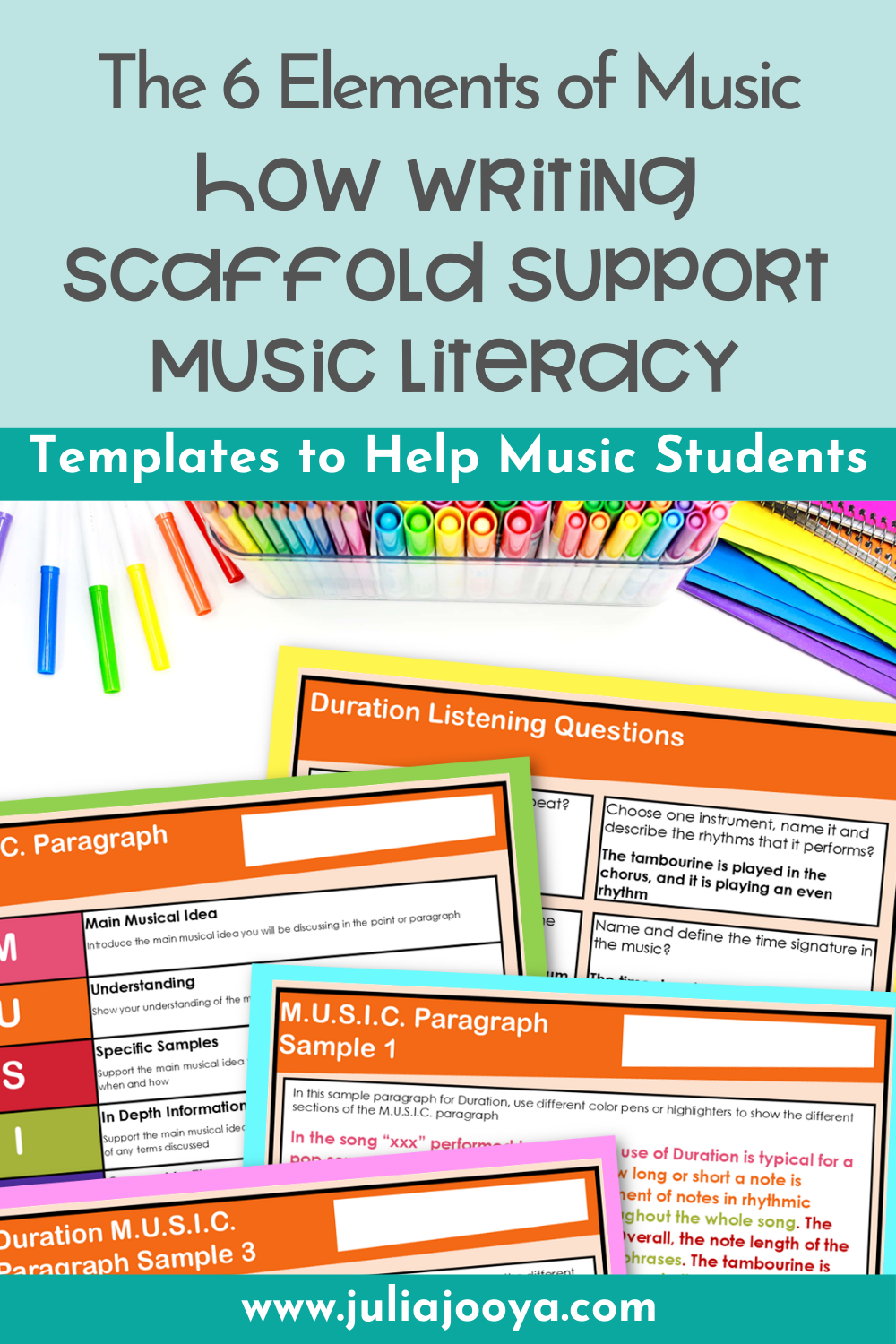
- scaffolded written responses
Rather than handing students a glossary of music terms and hoping for the best, music literacy develops through active use of language.
Students listen to music, answer focused questions, and gradually learn how to turn those answers into clear written responses.
This approach works across:
- music listening lessons
- music aural skills development
- music analysis tasks
- assessment preparation
If you would like some more teaching and learning activities to build music terminology understanding with your students, the blog post below will help you.
How to Teach How to Analyse Music in a Way That Actually Sticks
Why One-Off Activities Don’t Build Music Literacy
Another common mistake teachers often make is treating music literacy as a one-time skill.
Students don’t learn music literacy by:
- seeing a term once
- answering one listening worksheet
- completing a single assessment
They need repeated exposure across different contexts.
Music literacy strengthens when students:
- hear the same terms used consistently
- apply them to different pieces of music
- practise using them in both spoken and written form, as well as during performance and composition activities
This is why consistent musical language across several lessons, worksheets, and assessments matters so much. When students don’t have to relearn terminology every time, they can focus on the music itself.
The Role of Writing Scaffolds in Music Literacy
Over the years, I’ve seen multiple whole-school writing initiatives introduced — from W.H.Y. paragraphs to P.E.E.L., and later T.X.X.X.C. and T.X.X.X.L.
Each time there was a “new” school adoption of the paragraph writing scaffold, I had to adapt my existing music resources to align with the new scaffold.
And here’s the important part:
every scaffold worked — when paired with strong music literacy teaching.
Writing scaffolds don’t replace music literacy.
They support it.
When students understand music terminology and can answer listening questions clearly, paragraph writing scaffolds and templates help them organise that thinking into structured written responses.
This is where music literacy and literacy skills work together.
Why Music Literacy Is Not “Taking Time Away” From Music
One misconception I still hear is that teaching music literacy takes too much classroom time.
In reality, the opposite is true.
Once students understand how to analyse music:
- listening lessons run more smoothly
- fewer explanations are needed by the teacher
- assessment preparation becomes easier for everyone
- marking is faster and more meaningful
Music literacy is not separate from performance, listening, or composition.
It supports all three.
Students who have a solid understanding of music terminology:
- reflect more clearly on performances
- justify compositional choices
- compare pieces of music with confidence
How Modelled, Guided, and Independent Practice Supports Music Literacy
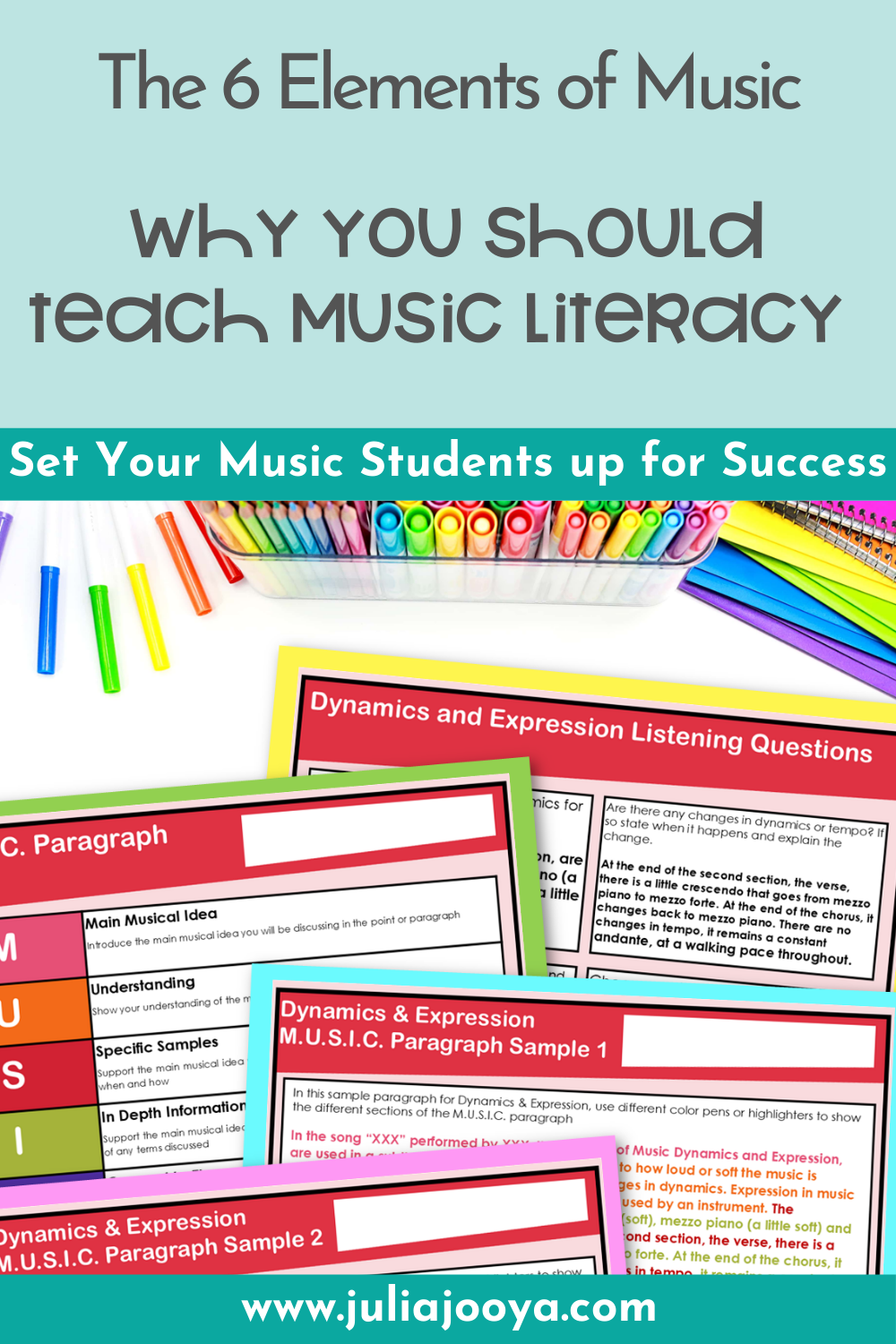
One of the most effective ways to develop music writing skills is through the modelled, guided, and independent teaching cycle.
This might look like:
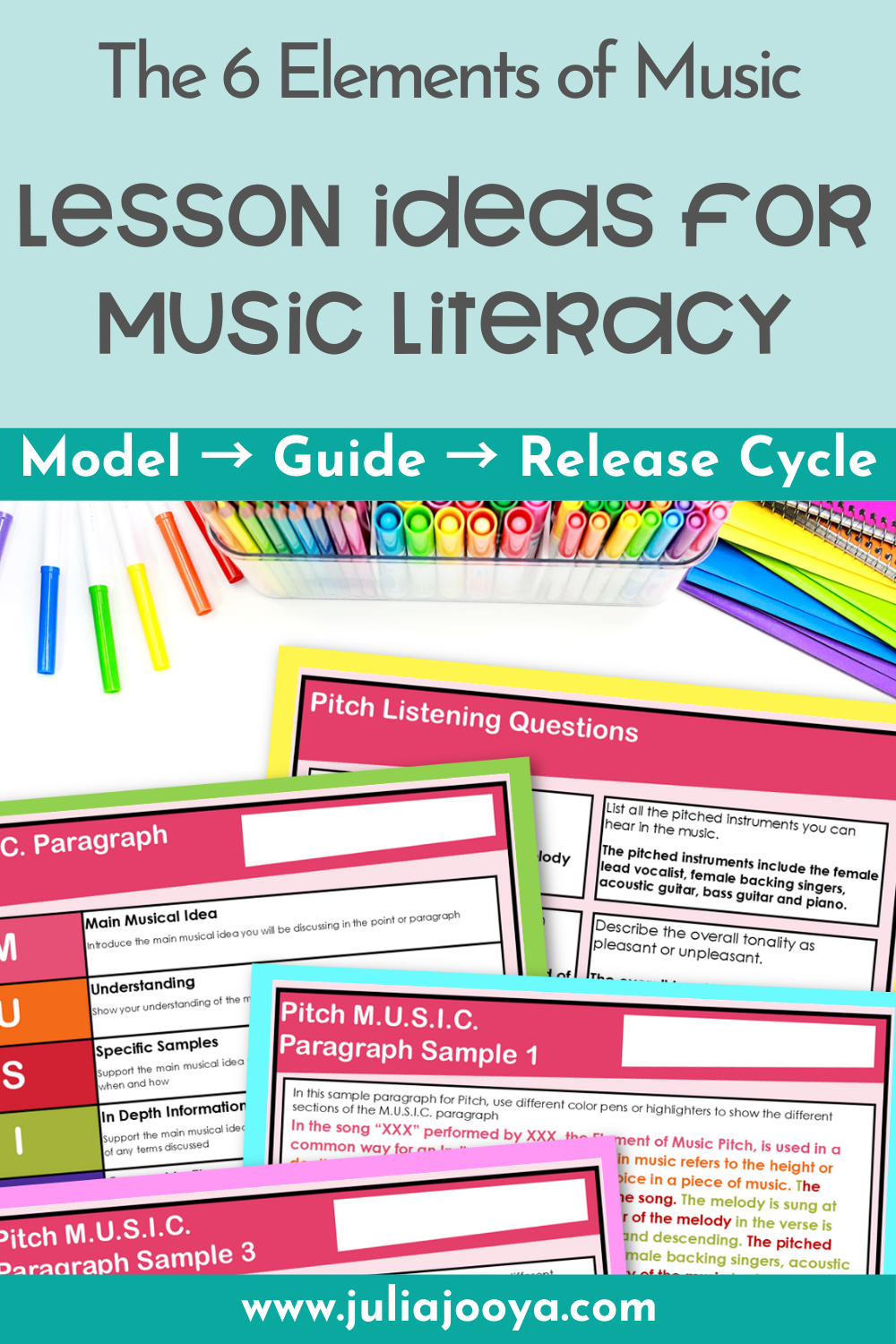
- Modelled listening — showing students how to answer questions using music terms
- Guided practice — supporting students as they apply those ideas
- Independent responses — allowing students to demonstrate understanding
This cycle should happen across multiple lessons and across each of the 6 elements of music.
Writing about music skills doesn’t develop overnight. It builds gradually through consistent and repeated practice.
Why Music Writing Activities Should Start Early and Continue Often
Music writing should be embedded into everything students do in music class.
It is not one worksheet.
It is not one lesson.
It is the culmination of:
- musical vocabulary and knowledge
- listening comprehension
- analytical and critical thinking
- structured writing
The earlier this starts, the easier it becomes for both students and teachers.
By the time students reach Stage 5 and Stage 6, writing about music should feel familiar — not overwhelming.
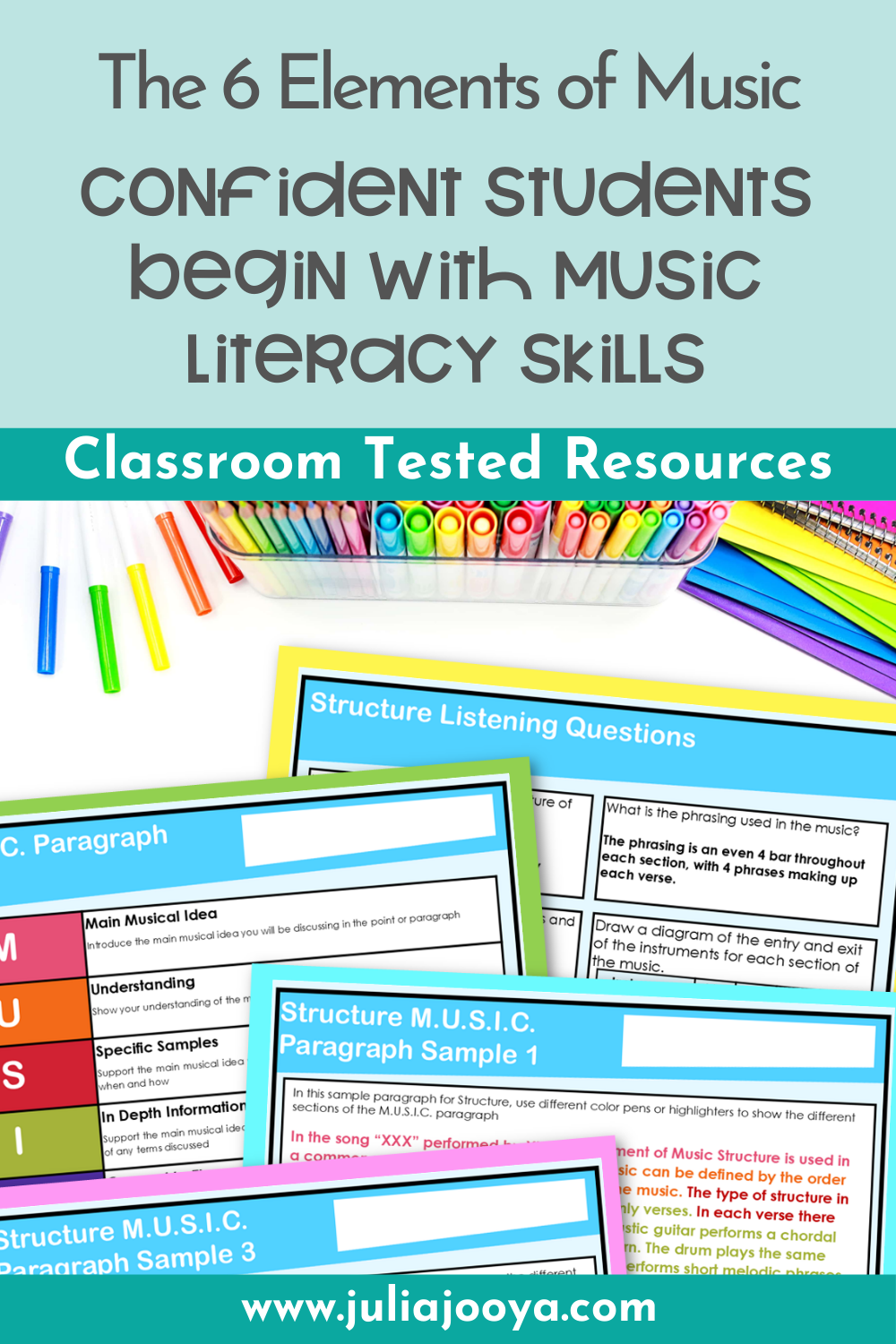
How Teaching Music Writing Skills Supports Student Confidence
When students are taught writing about music skills explicitly, something important happens.
They stop guessing.
They stop avoiding written responses.
They start taking ownership of their learning.
Music literacy gives students:
- clarity about expectations
- confidence in their responses
- language to justify ideas
- structure for assessment tasks
This confidence transfers across subjects, supporting broader literacy development of the student as a whole.
Teaching Music Literacy Without Reinventing Everything
The good news is that you don’t need to create everything from scratch.
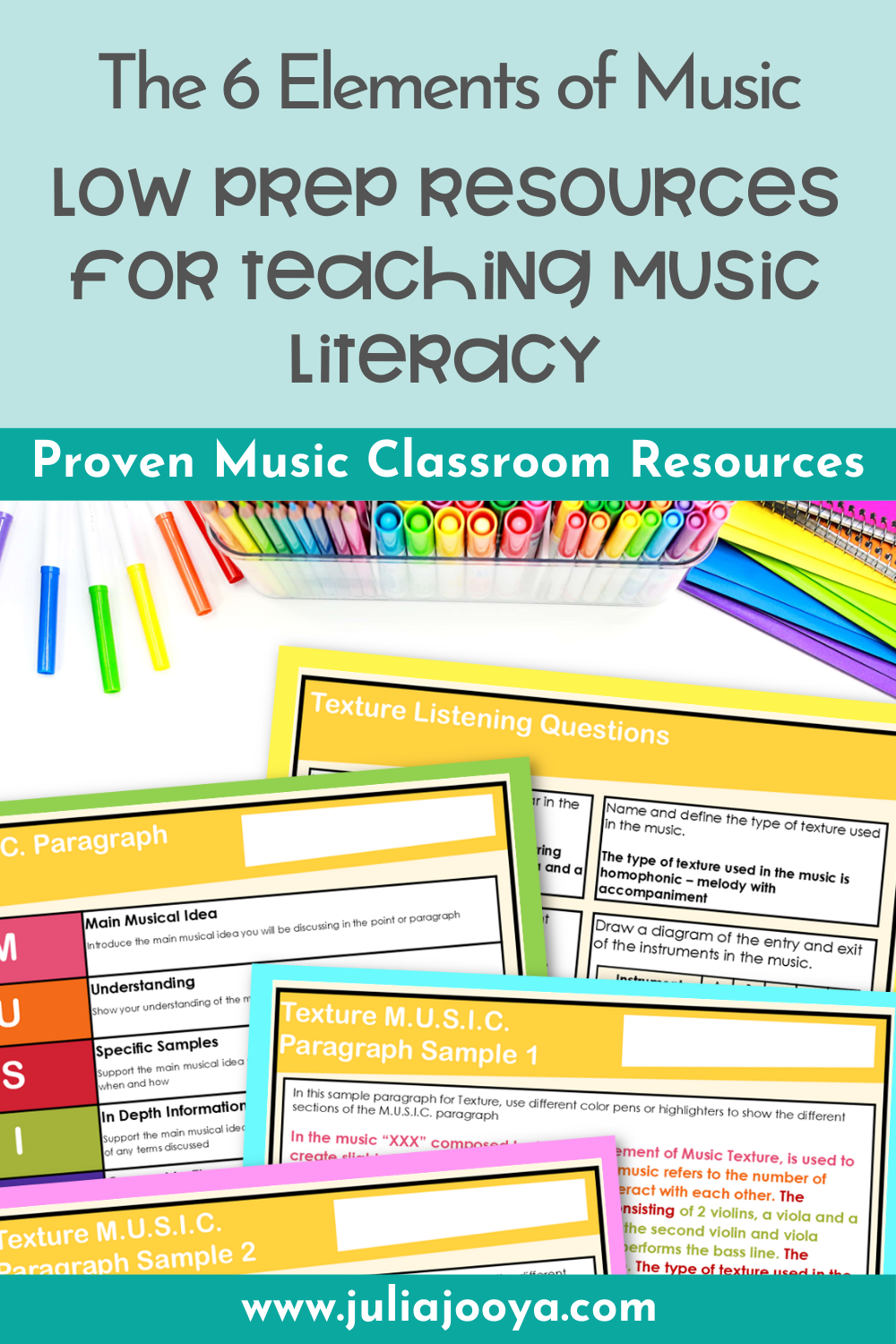
Using classroom-ready resources that include:
- music vocabulary
- elements of music explanations
- listening question cards
- scaffolded writing support
can save you significant planning time while improving outcomes in your students.
The 6 Elements of Music Lessons & Worksheets Bundle for the New NSW Syllabus was designed to support music literacy explicitly — from Stage 4 through to Stage 5.
It includes:
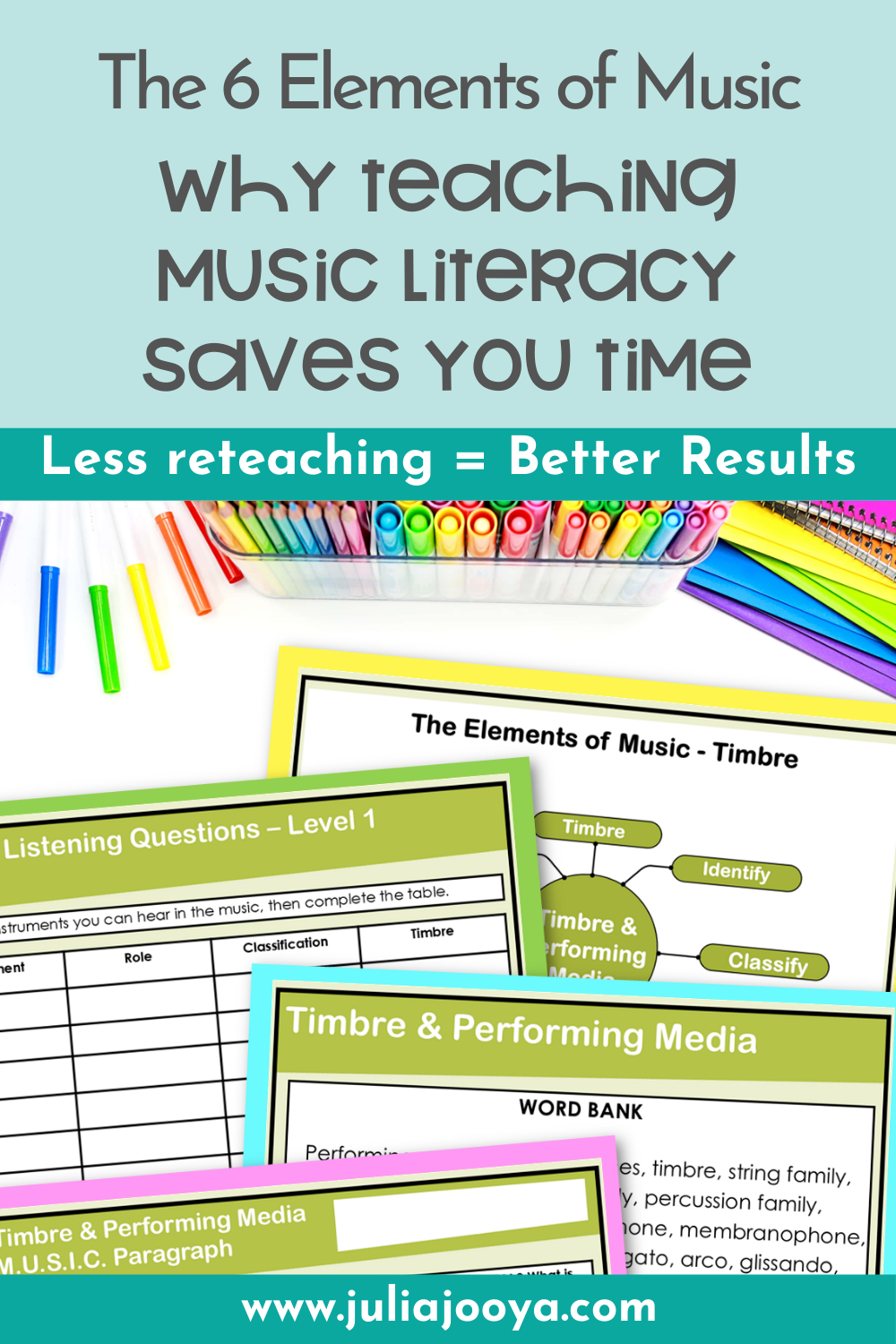
- consistent music terminology
- structured listening questions
- visual supports
- writing scaffolds
This Bundle of classroom-tested resources is much more than a textbook. It’s a flexible teaching toolkit for the 6 Elements of Music you can use year after year.
If teaching music literacy has felt frustrating or time-consuming, take a moment to reflect on one question:
Have my students been explicitly taught how to listen, analyse, and write about music — or have I assumed they already know how?
A simple starting point might be:
- modelling one listening response
- revisiting music terminology
- using structured listening questions
If support would be helpful, you can explore the NSW Elements of Music Bundle and adapt it to suit your classroom.
Music literacy doesn’t need to be overwhelming.
With the right structure and support, it becomes one of the most powerful tools in your music program.
Link to the 6 Elements of Music for NSW Bundle here.
Until next time
Happy Teaching
Julia from Jooya
One Response