
Why Teaching Band Instrument Names Can Be a Challenge
If you’ve ever tried to teach band instrument names in your middle school music class, you know it’s not as simple as handing out a list of musical instruments and calling it a day. Your students may not be a music lover, and might struggle to tell the difference between a tenor saxophone and a baritone saxophone, or they may think that all brass musical instruments sound the same. And let’s be honest—when you’re juggling rehearsals, lesson planning, and everything else on your music teaching plate, finding the time to dive deep into band instruments names can feel impossible.
Even when you do carve out time for music instrument studies, keeping your students engaged is another challenge. Reading about woodwind instruments, percussion instruments, and the string family from a textbook doesn’t exactly spark excitement. Without interactive, hands-on experiences, students quickly lose interest, making it harder for them to retain musical instrument names or understand how different instruments contribute to concert bands, jazz ensembles, and marching bands.
So, how do you make learning band instrument names fun, memorable, and effective—without adding more work to your already packed schedule? That’s exactly what we’ll cover in this post! Below, you’ll find 10 simple and fun music lesson ideas that will help your middle school and general music students recognize, categorize, and appreciate a variety of instruments while keeping them actively involved. Plus, I’ll share some ready-to-use resources that will make your life easier and save you hours of prep time.

The Benefits of Teaching Band Instrument Names
When you take the time to teach band instrument names, you’re doing more than just helping your students memorize a list of musical instruments—you’re building essential musical skills that will benefit them in the long run. By learning to recognize unique characteristics, different pitches, and distinctive sounds, your music students will develop stronger listening skills, allowing them to identify instruments in concert bands, jazz ensembles, and marching bands with confidence.
Introducing students to a variety of musical instruments also encourages musical genre exploration. Some may discover a love for the acoustic guitar, while others may be drawn to the powerful sound of a low-pitched brass instrument like the tuba, or even they may fall in love with the alto saxophone! Whether they’re fascinated by the deep resonance of a double bass, the bright tones of a tenor saxophone, or the rhythmic drive of the percussion section, understanding different types of musical instruments can spark their interest in learning a popular instrument or even joining a musical ensemble.
Beyond individual learning, studying a wide variety of musical instruments and musical instruments names prepares students for future performances. Whether they play in a brass band, jazz band, or concert band, knowing how brass musical instruments, woodwind instruments, and percussion instruments work together strengthens their overall musicianship. They’ll also develop an appreciation for various genres, from classical to contemporary, and see how different materials—like metal bars vs. wooden bars—affect an instrument’s vibrant sound.
Finally, teaching musical instrument names reinforces teamwork and collaboration. Your students will begin to understand the crucial role each instrument plays in a musical group or ensemble, whether it’s the steady beat of the bass drum, the melodic support of a baritone saxophone, or the bright tone of a small wind instrument like the flute. By recognizing how these instruments blend in band music, students develop a deeper connection to Western music and gain a greater appreciation for the art of ensemble playing.
Before You Reinforce Band Instrument Names, Start with the Basics
Before your music students can confidently identify band instrument names, they first need to understand how each instrument produces sound and how it fits into the main types of musical instruments. Teaching them about woodwind instruments, brass musical instruments, percussion instruments, and stringed instruments will help them recognize the unique characteristics, different pitches, and distinctive sounds that define each family of the orchestra. Exploring how air, strings, reeds, and percussion materials create a vibrant sound makes it easier for students to grasp the differences between a brass section and a woodwind section, or why a bass clarinet and a double bass are classified in separate families despite their low-pitched tones.
A great place to start is with the Instruments of the Orchestra Music Lessons and Worksheets for General Music. This comprehensive unit of work covers all the basics your students need to know, from instrument classification to how different materials affect sound. With engaging worksheets, listening tasks, and activities, this resource makes it easy for your students to develop a solid foundation in instrument recognition—setting them up for success before diving into band music, jazz ensembles, or marching bands. By giving your students this essential background knowledge, you’ll ensure that every future music class activity reinforces their understanding, making it easier for them to retain musical instrument names and apply their knowledge to various musical genres and performance settings.
Grab the Instruments of the Orchestra Unit of Work here
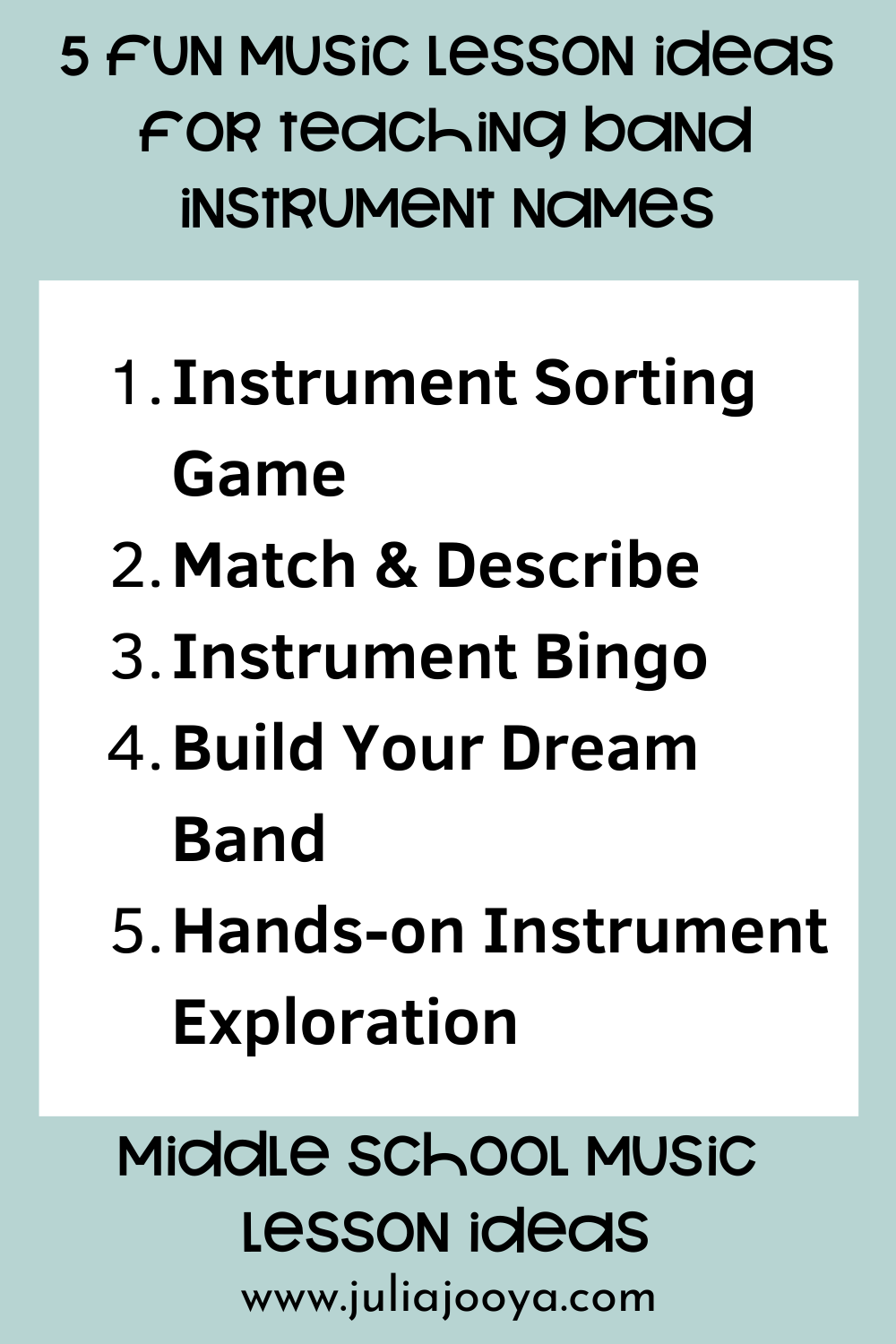
10 Fun Lesson Ideas to Teach Band Instrument Names in Music
Now that you know why teaching band instrument names is essential in your middle school music or general music class, let’s look into 10 music lesson ideas and activities that will make learning band instrument names fun and memorable for your music students.
Lesson 1: Band Instrument Names Sorting Game – Learn by Categorizing
Your students might recognize some school band instruments, but can they confidently sort them into the brass section, woodwind instruments, percussion instruments, and string family? This hands-on activity helps them categorize different types of musical instruments while reinforcing their unique characteristics.
- Use 50 Musical Instrument Flashcards for Music Games, Music Centers & Activities to create a sorting station.
- Highlight key distinctions, like single reed vs. double reed in woodwind instruments, or metal bars vs. wooden bars in percussion instruments.
- Encourage discussion on how different materials impact the distinctive sound of each instrument.
To try this activity, use the 50 Musical Instrument Flashcards here
Lesson 2: Match & Describe Challenge – Build Instrument Recognition
Students often struggle to recognize instruments just by looking at them. This music class activity challenges them to match instruments to their unique sound, role in band music, and different pitches.
- Use Instruments of the Orchestra Match It Puzzle Cards | Music Classroom Game to reinforce musical instrument names in a fun, interactive way.
- Discuss the crucial role of large instruments like the double bass and bass clarinet in an ensemble.
- Encourage students to compare vibrant sounds in brass bands, jazz bands, and concert bands.
Lesson 3: Instrument Bingo – Recognizing Sounds & Names
Your students will love this game-based approach to learning band instrument names!
- Use the Music Instrument Bingo Card game to help students learn the different instrument names and what each instrument looks like. This game also is a great addition to the music sub-tub!
- Play recordings of instruments from jazz ensembles, marching bands, and concert bands.
- Have students listen carefully and mark their bingo cards based on the instrument’s distinctive sound.
- Use Music Instrument Bingo Classroom Game to make it interactive and engaging.
- Discuss how different pitches, various genres, and different styles influence how an instrument is used in a musical ensemble.
Get your own set of the Music Instrument Bingo Classroom Game here
Lesson 4: Build a Dream School Band – Select & Organize
If your students were putting together their own school band, what instruments would they choose?
- Have students create a balanced musical group by selecting instruments for their own band music setup.
- Discuss how each variety of instruments contributes to the overall powerful sound of a band.
- Use the Orchestral Instruments Worksheet | Instruments of the Orchestra Activity to guide their selections.
- Encourage students to think about different materials, how they affect sound, and which instruments are most commonly found in marching bands and concert bands.
The 50 Instrument Cards are perfect for this music lesson activity! You can grab them here
Lesson 5: Hands-On Rhythm Exploration – Percussion Section Focus
The percussion section plays a crucial role in any band music performance. This activity helps students explore different types of percussion instruments.
- Using your own classroom percussion instruments, get students to perform simple rhythms with them
- Using your own instruments, get students to sort the instruments into different classifications based on how a sound is produced – shaken, hit or scraped. Then try getting students to make other sounds with each instrument.
- Have students compare the powerful sound of the bass drum vs. snare drum.
- Let them experiment with classroom percussion instruments to feel the distinctive vibrations and rhythms.
- Discuss how metal bars and wooden bars in percussion instruments like the xylophone create different pitches and different timbres.
Lesson 6: String Family & Guitar Comparison – Acoustic, Electric & Classical
Many students recognize the electric guitar and acoustic guitar, but can they identify classical guitars and other examples of string instruments?
- Introduce students to the string family, including the violin, viola, cello and double bass as well as other stringed instruments such as the classical guitar and harp.
- Discuss how the long neck of a guitar affects how it’s played.
- Compare the differences and similarities between the acoustic and electric guitar using a Venn Diagram. Try this activity with other stringed instruments, for example the violin and the acoustic guitar, or the double bass to the ukulele!
- Explain how different materials (wood, nylon strings, metal strings) create a unique sound in different musical groups.
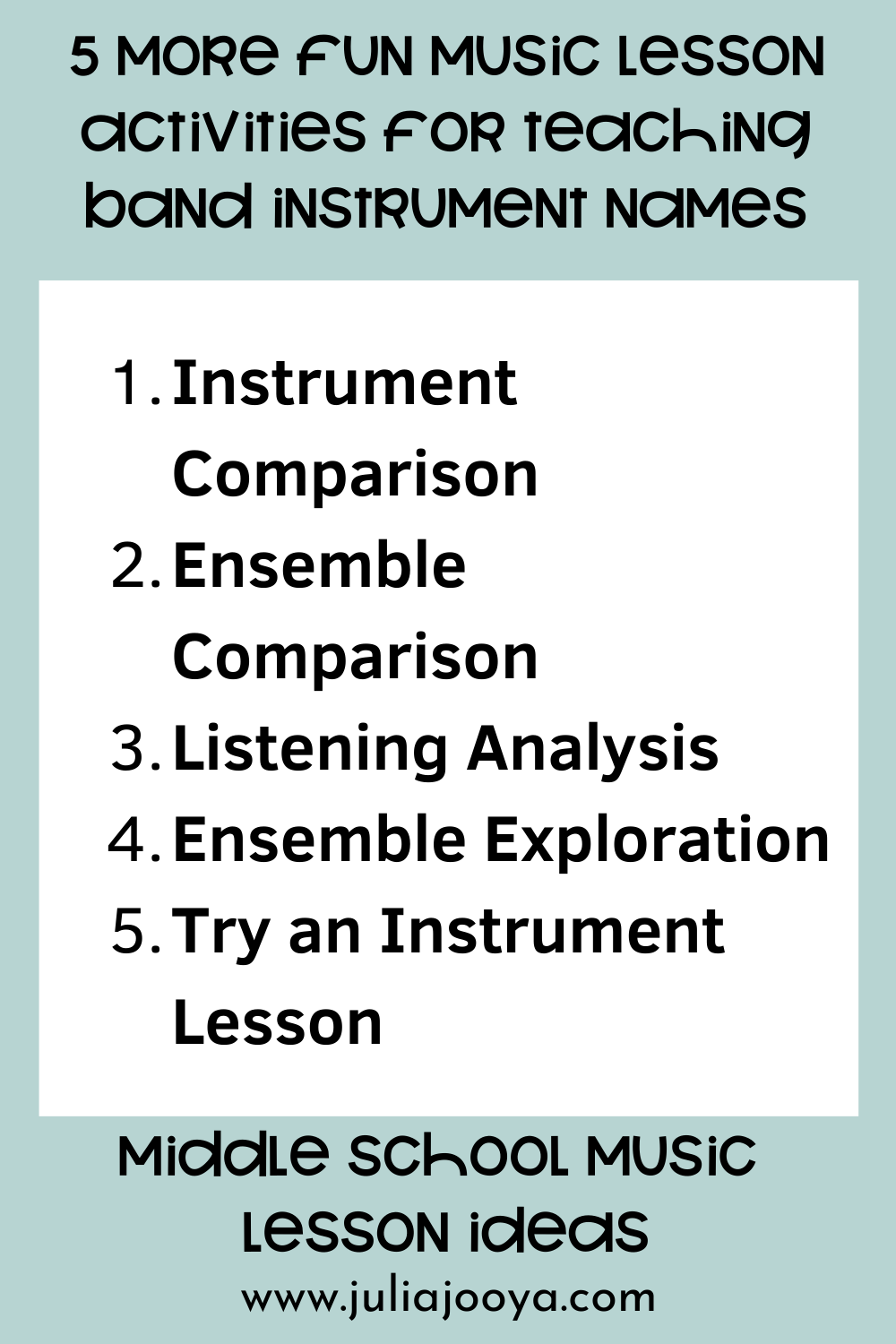
Lesson 7: Exploring Brass Band & Jazz Ensemble Sounds
The brass section is a key part of concert bands, marching bands, and jazz bands. This lesson helps students listen and compare brass musical instruments in different contexts.
- Play band music from a variety of brass bands, jazz ensembles, and concert bands.
- Focus on instruments like baritone saxophones, tenor saxophones, and low-pitched brass instruments like the tuba.
- Have students compare different notes and vibrant sounds in each piece of music selected for listening.
- Discuss the different band instruments included in each ensemble and what makes each ensemble different to the other.
Lesson 8: Instrument Listening & Writing Task – Music Analysis
Help students deepen their understanding of musical instrument names through listening and writing.
- Play a variety of band music from various musical genres.
- Have students write about an instrument’s unique characteristics using the M.U.S.I.C. paragraph writing scaffold.
- Use Instruments of the Orchestra Music Lessons and Worksheets for General Music to structure this activity.
- Try using the Elements of Music to critically analyze the music chosen for study. Want to know more about the 8 Elements of Music? Read the blog post here.
Lesson 9: Marching Band Exploration – Instruments in Motion
Introduce your students to the excitement of marching bands and how they differ from concert bands and jazz bands.
- Show videos of marching bands and have students identify various musical instruments.
- Discuss how the brass section, woodwind instruments, and percussion section work together to create a powerful sound.
- Encourage students to pay attention to how different materials affect the distinctive sound of the instruments.
Lesson 10: Instrument Exploration Day – Hands-On Learning
If possible, give your music students a chance to handle different instruments up close.
- If you have access to real school band instruments, allow students to hold and play them.
- If physical access is limited, use flashcards, videos, and digital resources to give students a close look at different types of musical instruments.
- Have students describe each instrument’s vibrant sound, size, and role in a musical ensemble.

Teaching band instrument names doesn’t have to feel overwhelming! With these 10 fun and interactive music lesson activities, your students will:
- Master the musical instrument names of the brass section, woodwind instruments, percussion section, and string family.
- Learn to recognize distinctive sounds, different pitches, and unique characteristics of each instrument.
- Develop an appreciation for various musical genres, including the orchestra, jazz bands, marching bands, and concert bands.
By incorporating these engaging activities into your middle school music or general music classroom, you’ll make learning about band music more fun and memorable—without adding extra stress to your lesson planning.
Want to make your music lessons even easier? Save time with ready-to-use resources from my Teachers Pay Teachers store!
🔹 Instruments of the Orchestra Music Lessons and Worksheets for General Music
🔹 50 Musical Instrument Flashcards for Music Games, Music Centers & Activities
🔹 Orchestral Instruments Worksheet | Instruments of the Orchestra Activity
🔹 Instruments of the Orchestra Match It Puzzle Cards | Music Classroom Game
🔹 Music Instrument Bingo Classroom Game
With these resources, you’ll have everything you need to help your students confidently learn about band instruments in a fun and engaging way!
Until next time
Happy Teaching
Julia from Jooya