

As a middle school music teacher, you understand the importance of providing engaging and effective resources to help your students learn and practise the basics of rhythm concepts. In this post, you’ll explore several different ideas and strategies for using rhythm theory worksheets in your middle school music classroom, from understanding rhythm note values to implementing worksheets in lesson plans. Whether you’re looking for tips on incorporating worksheets into your teaching toolkit or seeking inspiration for some creative activities, you should find something here to help you!

Understanding Rhythm Note Values
When introducing the concepts of rhythm note values to your students, it is important that you teach the basics in a logical sequence and order. Below is a suggested teaching sequence of concepts that will help to build a strong foundation for your music students.
Explanation of Essential Rhythmic Values
The easiest place to start teaching rhythm note values is by breaking down the basics: sixteenth notes, eighth notes, eighth note rests, quarter notes, quarter rests, half notes, and whole notes. By explaining the duration of each note and how they contribute to the overall rhythmic feel of a piece of music you will help your students to better understand the music as a whole. When explaining rhythm values, make sure to provide a variety of examples and exercises that allow your students to practise identifying and counting each value. By mastering these fundamental rhythmic values, your students will build a strong foundation for understanding more complex rhythms.
If you would like to know more about Rhythm in Music, read this blog post that is linked below.
Introduction to Time Signatures
Once your students have a solid understanding of rhythm values, the next musical concept to teach is Time signatures. Time signatures play a vital role in all rhythmic notation and are essential for your students to understand as they learn more about rhythm theory. When you introduce the concept of time signatures, you will need to explain how a time signature indicates the meter of a piece and how many beats are in each measure. Try to provide examples of common time signatures such as 4/4, 3/4, and 6/8 that are used in popular music, and guide your students through identifying the different time signatures through listening to the music. By incorporating rhythm theory worksheets and activities that require students to identify and write different time signatures, you will help your students to develop a practical understanding of this critical aspect of rhythm notation.
Clarification of Common Time
Common time, often represented by the symbol “C” or 4/4 time signature, is a familiar aspect of music notation but can sometimes be confusing for students to understand that they are one in the same. To help clarify the concept of common time try using rhythm theory worksheets that emphasize the musical significance of organizing musical beats into manageable 4 beat units. You will need to explain how each measure in common time contains four beats, typically represented by quarter notes. Having examples and exercises that allow students to practise identifying and counting beats in common time, will reinforce their understanding of this foundational element of rhythm notation.
This set of Rhythm Music Theory Worksheets for Note Values, Rests and Time Signatures is the perfect way to start teaching your students about rhythm and note values. It has both US and UK note names, you simply choose a worksheet, print and go!
Link to the best-selling resource Rhythm Music Theory Worksheets here

Exploring Rhythm Worksheets
Different Rhythm Worksheets Formats and Resource Types
When you start using rhythm theory worksheets for your middle school music students, it’s essential to consider the various formats and resource types available. From traditional paper worksheets to interactive digital resources, there’s a wealth of options to explore. You can find ready-made worksheets online, including free pdf downloads, or try and create your own that are tailored to your students’ needs. Experiment with different formats to see what resonates best with your middle school music classes, whether it’s printable worksheets, interactive quizzes, or online games. By offering a variety of resources, you can cater to different learning styles and keep your students engaged and motivated.
Some digital rhythm worksheets to try are listed below
Musicaa – rhythm reading exercises

Using Color-by-Code Worksheets to Make Learning More Enjoyable
Injecting some creativity and fun into the rhythm worksheets you use can make a world of difference in your students’ learning experience. Consider trying color-by-code or color-by-note worksheets and music coloring activities to add an element of enjoyment to rhythm practice. These types of interactive rhythm worksheets not only reinforce rhythmic concepts but are also a fun way encourage creativity and artistic expression. By assigning specific colors to different notes or rhythms, you can help students visually identify and understand musical elements while engaging their artistic side. This hands-on approach to learning rhythm can make lessons more enjoyable and memorable for your students.
This Bundle of Color by Code worksheets contains 8 different sets of Music Color by Code Music Coloring Pages and Music Theory Review Worksheets.
Link to the Color by Code Worksheets Bundle here
And if you are looking for another type of coloring activity, then these Find the Rhythm Worksheets are perfect!
Link to the Find and Color the Rhythm Worksheets Bundle for 2, 3 and 4 beats here.
Incorporating Music Symbols and Music Notation in Your Rhythm Worksheets
When using rhythm worksheets with your music students, it’s crucial to incorporate correct music symbols and standard notation. These elements provide the foundation for understanding, reading and interpreting rhythm in musical notation. Ensure your worksheets include clear and concise explanations of music symbols such as notes, rests, and time signatures. Incorporate standard notation reading and identification exercises that require students to identify and write rhythms using traditional notation. You can also supplement these exercises with visual aids to help reinforce learning. By integrating music symbols and standard notation into your worksheets, you provide your students with the tools they need to become proficient in reading and understanding rhythm theory.
One way to reinforce what each rhythm value looks like is to have it displayed in your classroom. This Rhythm and Note Values Music Classroom Decor set is a simple printer friendly set that looks great when printed onto colored paper.
Grab your own Rhythm Note Value Class Decor set by clicking the link here.

Implementing Rhythm Worksheets in the Classroom
Tips for Incorporating Worksheets into Lesson Plans
When integrating rhythm theory worksheets into your middle school music lesson plans, consider utilizing them for a variety of purposes. Use rhythm worksheets for independent work stations or music centers, allowing students to practice rhythm concepts at their own pace. By including worksheets as part of your usual music lesson rotation, you provide students with valuable reinforcement and practice opportunities while freeing yourself up to work with small groups or individuals. Rhythm worksheets are also great as lesson starters, exit tickets, for early finishers and even for homework!
Here are seven more ways that rhythm worksheets can be used in a middle school music lesson:
- Introduction to New Concepts: Use rhythm worksheets at the beginning of a lesson to introduce new rhythmic concepts such as note values, time signatures, or rhythm patterns. Start with simple exercises to build foundational understanding before progressing to more complex concepts.
- Guided Practice: Incorporate rhythm worksheets as part of guided practice activities during the lesson. Work through the worksheets together as a class, providing explanations and feedback as students complete the exercises. This allows for real-time support and clarification of any misconceptions.
- Independent Practice: Assign rhythm worksheets for independent practice to reinforce concepts covered in the lesson. After providing initial instruction and guidance, allow students to work through the worksheets at their own pace, demonstrating their understanding of rhythm concepts.
- Assessment: Use rhythm worksheets as assessment tools to gauge students’ comprehension and mastery of rhythmic skills. Design worksheets that assess specific learning objectives or standards, and use them to evaluate students’ ability to identify, notate, and perform rhythms accurately.
- Differentiation: Utilize rhythm worksheets to differentiate instruction and meet the diverse needs of your students. Offer a variety of worksheets with varying levels of difficulty, allowing students to select worksheets that align with their skill level and learning goals. Provide additional support or extension activities as needed.
- Integration with Technology: Incorporate technology into rhythm worksheets by using digital platforms or apps that offer interactive features such as audio playback, rhythm games, or virtual manipulatives. This adds an engaging and multisensory dimension to rhythm practice and allows for immediate feedback.
- Extension Activities: Extend the use of rhythm worksheets beyond the lesson by incorporating them into follow-up activities or homework assignments. Encourage students to apply their understanding of rhythm concepts in creative ways, such as composing their own rhythms, improvising variations, or performing rhythmic ostinatos. This reinforces learning and promotes transfer of skills to real-world musical contexts.

Using Rhythm Worksheets for Sub Plans
Rhythm theory worksheets are essential resources for sub plans and supplemental material, that make it easier to cater to students of different levels and abilities. Make sure to prepare a wide selection of rhythm worksheets that are tailored to various skill levels, ensuring that all your students can engage with meaningful activities during your absence. Help the non-music sub teacher by providing clear instructions and an answer key with the correct answer for each worksheet to support them in facilitating effective learning experiences. Additionally, consider offering worksheets as supplementary material for students who need extra practice or enrichment opportunities, allowing them to reinforce their understanding of rhythm outside of regular class time.
Including rhythm worksheets in your emergency sub plans for your middle school music classes can be highly beneficial for you, your students and the substitute teacher. Here are five reasons why rhythm worksheets make a perfect addition to your sub tub:
- Maintains Continuity in Learning – Rhythm worksheets help maintain the continuity of the music curriculum even in your absence. They allow students to practice and reinforce concepts they have already learned, ensuring that their progress isn’t interrupted. This continuity is crucial for skill retention and development, especially in subjects like music where regular practice is key
- Engages Students Effectively – These worksheets are designed to be engaging and interactive, which helps keep students focused and productive during the class. They provide a structured activity that students can complete independently or with minimal guidance, making it easier for substitute teachers to manage the class and keep students on task
- Development of Fundamental Rhythm Reading Skills – Rhythm is a foundational element of music education. Regular practice with rhythm worksheets helps students develop their sense of timing, beat, and meter, which are essential skills for any aspiring musician. Including these worksheets ensures that students continue to build and refine these crucial skills, even in your absence
- Provides Easy Assessment Opportunities – Rhythm worksheets offer a straightforward way to assess students’ understanding and proficiency in rhythm. When you return, you can quickly review the completed worksheets to gauge each student’s progress and identify any areas that may need further attention. This immediate feedback loop helps in planning future lessons and addressing gaps in knowledge.
- Versatile and Adaptable – Rhythm worksheets can be easily adapted to suit different grade levels and abilities, making them a versatile tool in your sub plans. Whether you’re working with beginners who need to practice simple rhythms or more advanced students tackling complex patterns, you can include a variety of worksheets to cater to different needs. This adaptability ensures that all students can benefit from the activity, regardless of their skill level.
By incorporating rhythm worksheets into your emergency sub plans, you ensure that your music class remains productive, engaging, and educational, even when you’re not there to lead it.
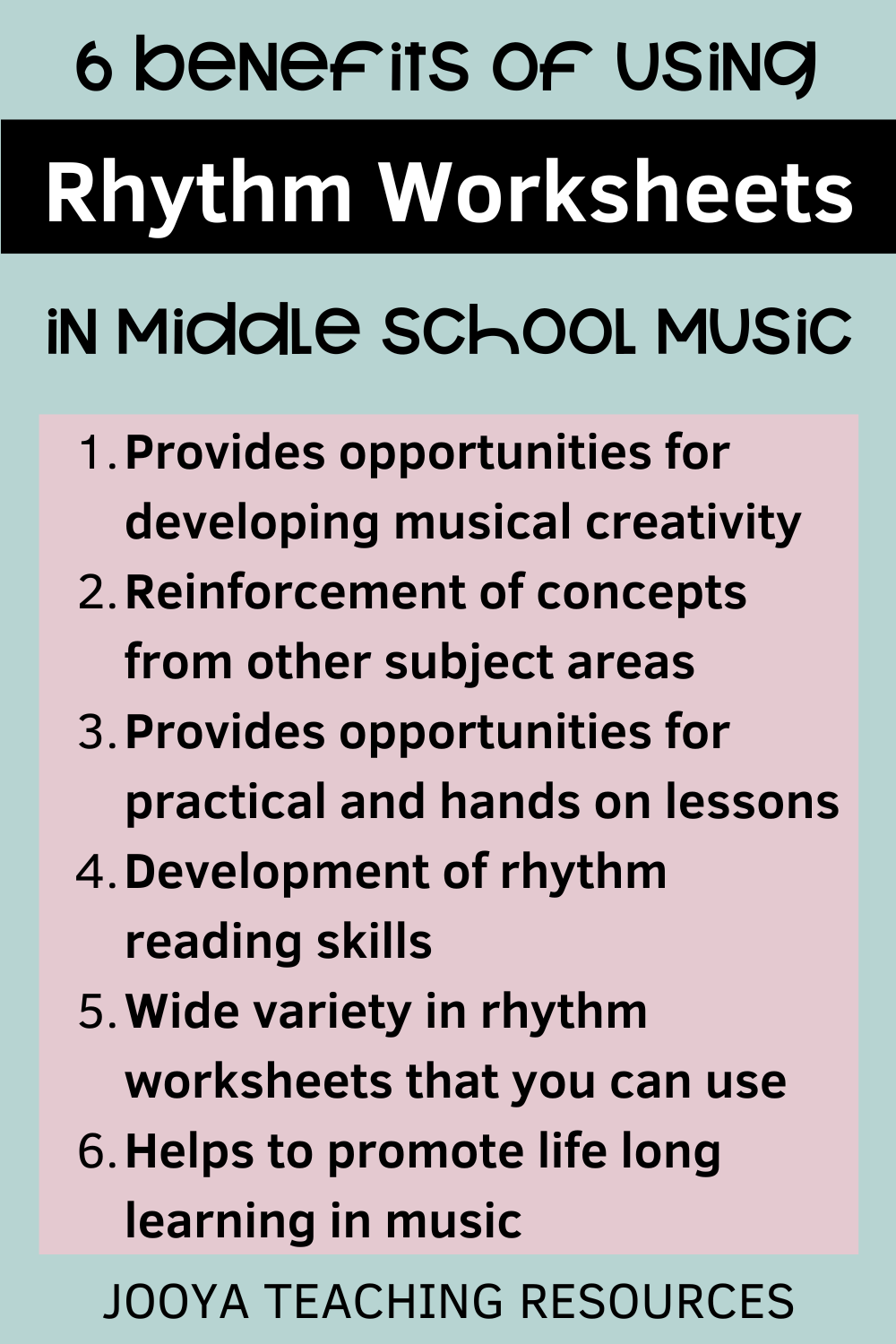
Ideas for Incorporating Worksheets into Activities
Expand the use of rhythm worksheets beyond traditional practice exercises by incorporating them into creative activities and exercises. Explore musical math fact worksheets, which combine rhythm theory with mathematical concepts such as counting, fractions and substitution. These types of rhythm worksheets not only reinforce rhythmic skills but will also help to strengthen students’ math fluency in a musical context and is a perfect opportunity for cross-curricular lessons. To extend and apply the skills learned in class, try integrating worksheets into music composition exercises, where students use rhythmic notation to create their own musical compositions. This hands-on approach to learning rhythm will develop creativity and allows students to apply their understanding in a practical and meaningful way, especially if they use classroom instruments to perform their compositions!
Incorporating rhythm theory worksheets into your middle school music curriculum is a powerful way to reinforce learning, engage students, and foster a deeper understanding of rhythm concepts. By providing clear explanations, offering diverse resources, and implementing creative activities, you can create a dynamic learning environment where your students can learn and thrive. Whether you’re using worksheets for independent practice, guided instruction, or assessment purposes, remember that using a variety of worksheets can help you to tailor your approach to meet the unique needs of all your students. With thoughtful planning and innovative strategies, you can make rhythm theory worksheets an integral part of your music classroom and inspire a lifelong love of music in your students.
Until next time
Happy Teaching
Julia from Jooya